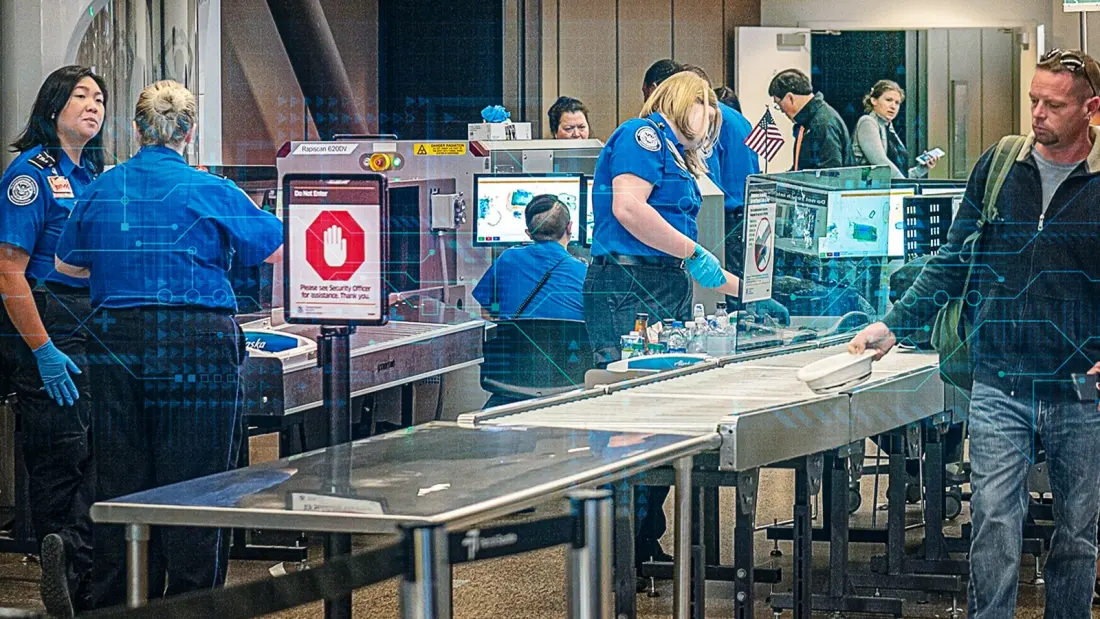
You packed everything legally, yet security still waves you aside for a bag check. Often the culprit is something completely ordinary — a jar of cranberry sauce, a tub of protein powder, or the wrong driver's licence. Based on current TSA guidance and 2026 enforcement rules, here are the items most likely to derail your trip through the checkpoint.
The most serious misstep is a firearm in a carry-on. Weapons found at security trigger immediate police involvement, civil penalties of up to roughly $15,000 and a five-year loss of TSA PreCheck. Guns are only allowed unloaded, locked in a hard-sided case, and declared at the check-in counter for checked baggage — no exceptions.
Sharp objects catch plenty of people out too. Multi-tools with small blades, bladed corkscrews and kitchen knives are all banned from the cabin; only blunt butter knives make the cut. One traveller at Dane County, Wisconsin even taped a knife to the underside of a carry-on to dodge a checked bag fee — a reminder that trying to sneak blades through never ends well. Bladeless corkscrews are the easy workaround for wine lovers.
Holiday food gifts are a classic trap. Anything spreadable or liquid — eggnog, sauces, jams, preserves — counts as a liquid once it tops 3.4 ounces (100ml), and oversized jars go in checked luggage only. Wrapped gifts exceeding the limit will be unwrapped and inspected, or surrendered at the belt.
Hair tools have their own quirks: cordless butane curling irons are allowed in carry-ons only with a safety cover fitted over the heating element, and spare butane cartridges are banned entirely — from both carry-on and checked bags.
Powders over 12 ounces (350ml), including protein powder and baby powder, trigger mandatory separate screening because large quantities can obscure X-ray images. If officers can't identify the contents, you may be asked to dispose of them. Decant into smaller containers or check the tub to skip the hassle.
Medical liquids get more leeway, but not a free pass. Prescription liquids are exempt from volume caps if declared before screening, and officers may run vapour analysis on flagged items. Contact lens solution over 3.4 ounces can also set off alarms, so separate it out and declare it early.
Finally, the biggest 2026 change: REAL ID is now strictly enforced, and non-compliant state licences no longer get you through. Travellers caught out can use the TSA ConfirmID programme, launched in February 2026, which costs $45 for a 10-day window — non-reimbursable, and you'll need to show a printed or electronic receipt at the checkpoint. Checking your ID weeks before you fly is far cheaper and less stressful.
For anyone flying domestically in the US this year, a two-minute packing audit — liquids under 100ml, powders under 350ml, no blades, no butane spares, compliant ID — is the difference between sailing through security and starting your holiday at a secondary inspection table.