France's perfect châteaux get the crowds, but the country's half-collapsed shells tell better stories. A recent roundup from France Today highlights five ruins where history is still visible in the stonework — and where a visit feels more like discovery than ticking off a sight.
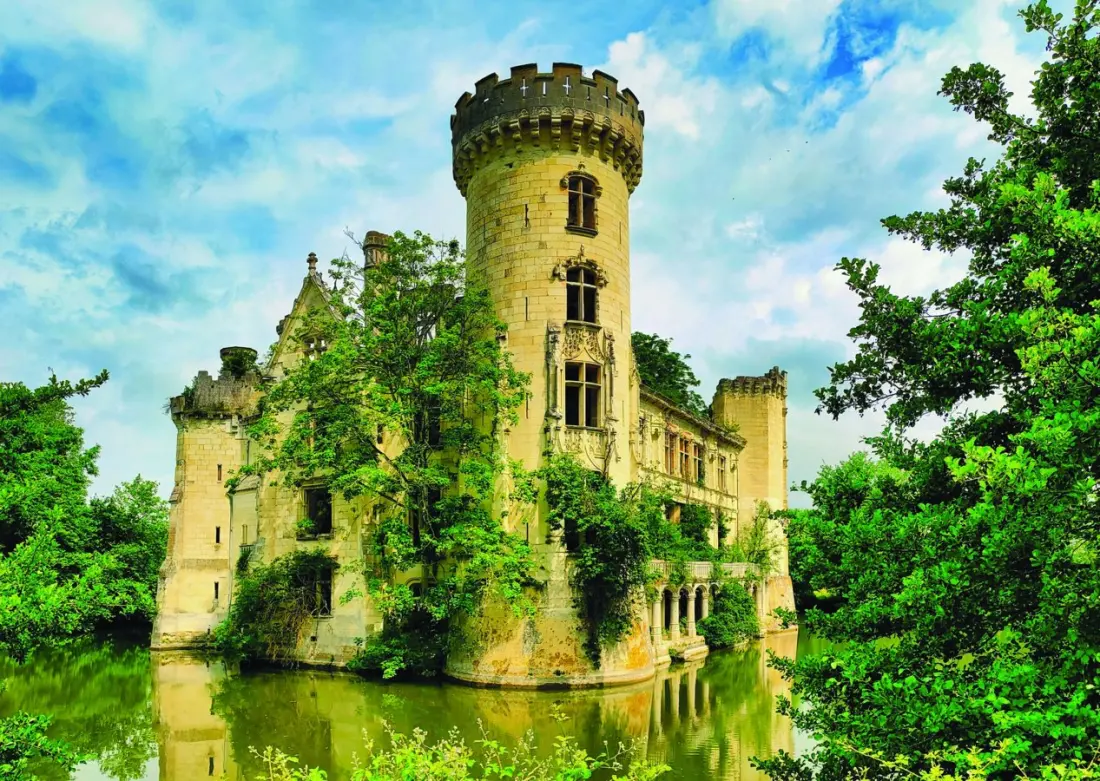
The most romantic of the lot is Château de la Mothe-Chandeniers near Les Trois-Moutiers in Vienne, about an hour from Poitiers. This neo-Gothic castle was gutted by fire in 1932 and left to the ivy, then made headlines in 2017 when thousands of small donors bought it collectively via crowdfunding. You can now visit, join treasure hunts, stay in a nearby eco-lodge, and even buy a symbolic share of the place through the Dartagnans platform.
In Normandy, Abbaye de Jumièges sits in a bend of the Seine with 46-metre white limestone towers rising over the ruined cloister. Founded in 654, wrecked by Vikings in 841, hit again in the Hundred Years' War and sold as a quarry after the Revolution, it still earned the title of "most beautiful ruin in France" from Victor Hugo. Its 15-hectare park is reason enough for the trip.
Château de la Ferté-Vidame in Eure-et-Loir was a ducal showpiece where the second Duke of Saint-Simon wrote his celebrated memoirs of Louis XIV's court. Looted in 1795 and demolished soon after, its grand facade now presides over one of France's largest surviving Enlightenment-era French-style parks.
For a proper fortress, head to Château de Bonaguil in Lot-et-Garonne. Built on a rocky spur from the 13th century and heavily fortified by Bérenger de Roquefeuil from the late 1400s, it was among the last great fortified castles in France — four-metre-thick walls on three levels of rock, and so intimidating it was never actually attacked. It's remarkably intact: an audio-guided tour covers the keep, cave and drawbridge, and summer brings music and dance events.
Finally, Abbaye de Beauport in the Bay of Paimpol, Brittany, was founded by Premonstratensian monks in the 13th century and secularised in 1790. Roofless Gothic buildings ring the cloister, and since 1992 the coastal protection agency has overseen its second life as a venue for exhibitions and performances. Hikers on the GR34 coastal path, the old Sentier des Douaniers from Mont-Saint-Michel to Saint-Nazaire, can simply walk right up to it.
It's worth knowing that places like these have a guardian: Stéphane Bern's Mission Patrimoine, funded partly by heritage lottery receipts, channels money into everything from church roofs to windmills. Donations and project details are at fondation-patrimoine.org.
Why bother with ruins over a polished palace? Because they leave room for imagination — and because they're often quiet, cheap and set in gorgeous countryside. Anyone road-tripping through Normandy, the Loir-et-Cher backroads, southwest France or the Breton coast can slot one of these into a day with minimal effort. Notably, the famous Cathar castles of Languedoc didn't make this list — the magazine is saving them for a dedicated feature.