Palau rarely tops travellers' lists, mostly because plenty of people can't place it on a map. The tiny western Pacific nation — roughly 7 degrees north of the equator, east of the Philippines — is far better known for its WWII history than its paddling. But a week-long guided kayak trip run by Southern Sea Ventures through the Rock Islands makes a strong case that this archipelago belongs on any serious sea kayaker's radar.
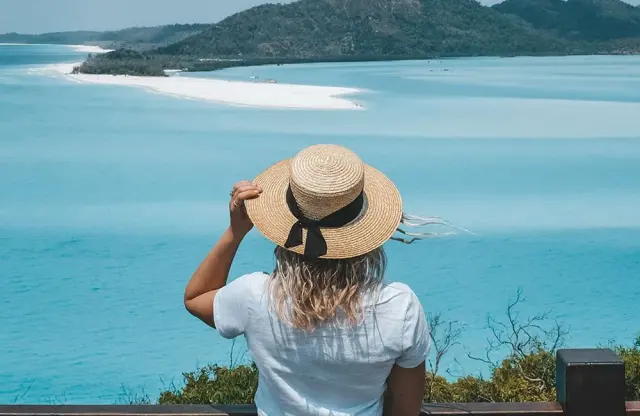
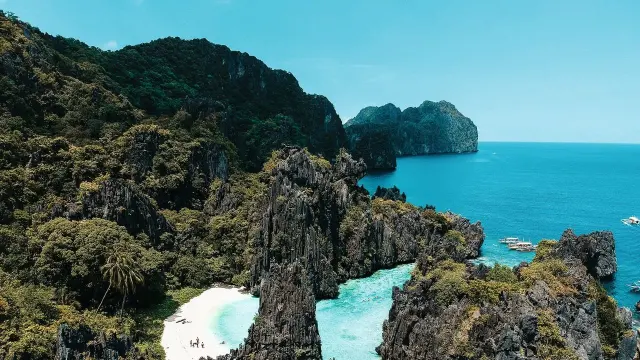
The Rock Islands are a scatter of jungle-topped limestone islets, carved by millennia of tides from an ancient uplifted coral reef. The karst geology means beaches are scarce — vertical walls dominate — so the Palauan government has set up ten "Adventure Camps" on the rare sandy patches. They come with picnic tables, tent space and long-drop toilets, and can't be booked online; multi-day kayak groups effectively have them to themselves.
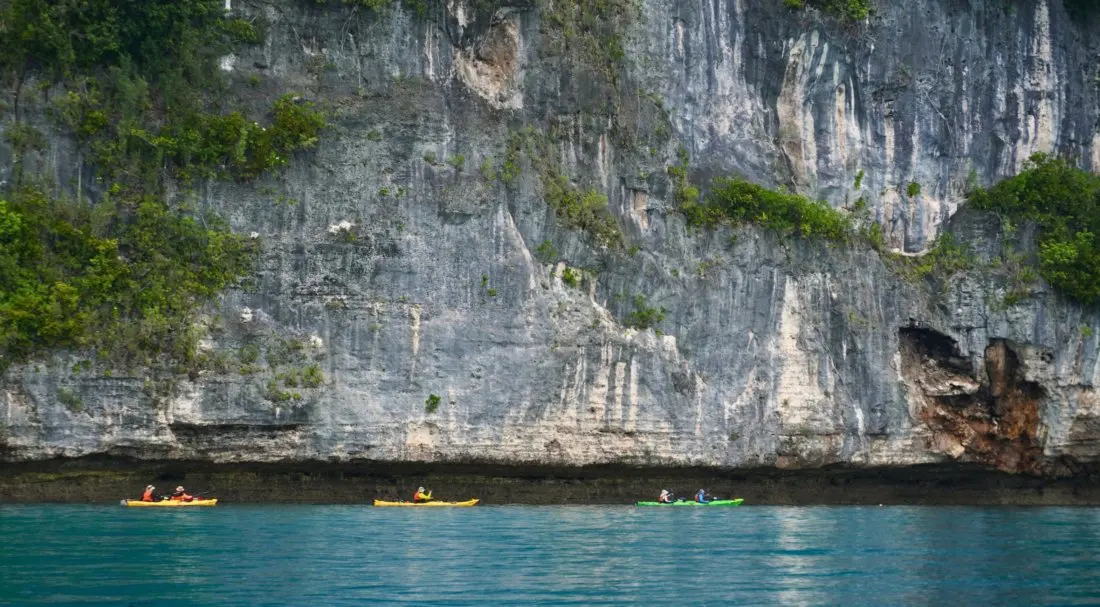
A typical itinerary starts from Koror, the small capital (where Spam fries are a genuine local treat), before heading to islands like banana-shaped Ulong — where the East India Company's Antelope wrecked in 1783, and whose chief sent his son, Prince Lee Boo, back to England, where he died of smallpox. Days are spent weaving through undercut islets that look like giant craggy mushrooms, gliding over glassy lagoons and snorkelling among soft coral. Between paddles, Palauan guides cover everything from Micronesian migration history to the quartzite quarries that supplied Yap's giant stone currency, 2,000km away.
The war is never far away. Japanese Zero wreckage rests a few metres under the turquoise lagoon at Ngchus, concrete bunkers pockmarked by shellfire dot the flat ground, and Palau was home to one of the Pacific's last wartime holdouts — Lt. Ei Yamaguchi and 32 men only surrendered in early 1947, years after the brutal Battle of Peleliu.
The underwater life justifies the trip on its own. Visibility is excellent, giant clams up to a metre wide glow purple and rust from the seabed, and off Ngermeaus beach a guide chumming with fish guts drew in eleven black-tipped reef sharks, several of them pregnant females, cruising within arm's reach.
Conditions are forgiving: water sits around 27°C year-round and air temperatures hover in the low twenties. June is shoulder season — occasional squalls, but cloud cover makes paddling more comfortable. Travellers should note that famous Jellyfish Lake has seen its stingless jellyfish population crash in recent years (blame warming seas and sunscreen from some 100,000 annual swimmers), so don't build a trip around it.
Who is this for? Confident paddlers who want an expedition feel without the logistics headache — organising permits, camps and boats in a country this remote is genuinely hard solo. It also suits hikers whose knees or legs have retired from summits but not from adventure. With one operator reporting repeat clients on their fifth and even tenth trips, the formula clearly works. Come for the limestone labyrinth, stay for the sharks.