
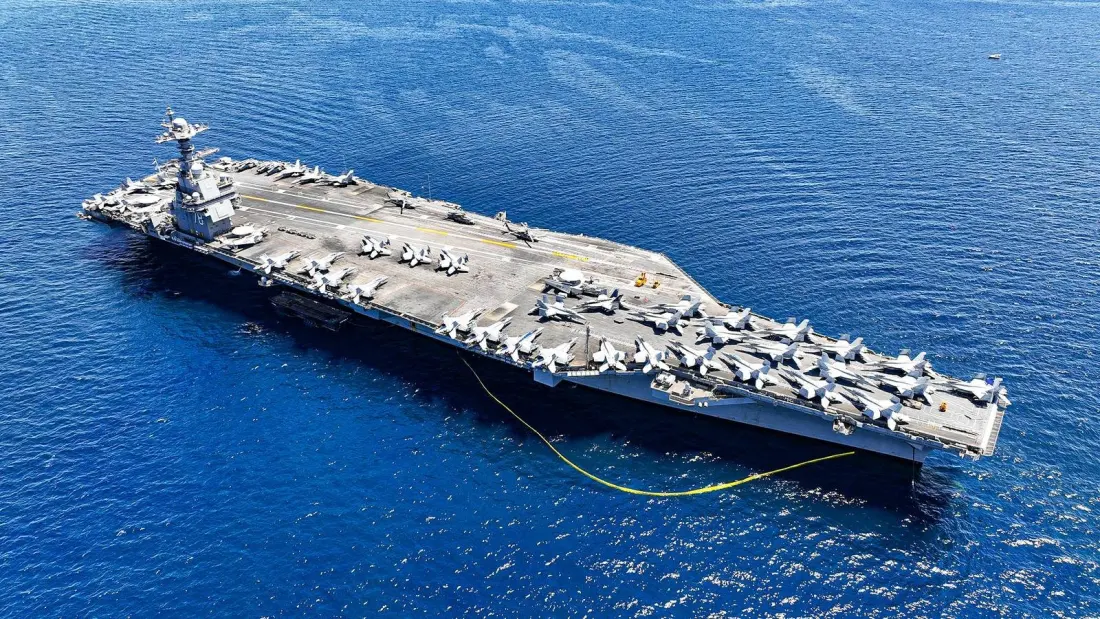
The US Navy has built some of the largest warships ever to sail, and a recent ranking of its five most powerful carrier classes reads like a timeline of modern naval aviation. For travellers with a taste for engineering on an epic scale, it's also a reminder that one of these giants is now a walk-through attraction you can board.
The ranking starts with the Midway class of 1945 — roughly 65,000 tons, designed with heavy armour, and capable of carrying around 130 propeller aircraft at launch. Upgrades like angled flight decks kept them flying jets for decades; USS Midway served an astonishing 47 years, through Korea, Vietnam and the Cold War. Next came the Kitty Hawk class of 1961, at about 83,000 tons carrying 70–85 aircraft. These oil-fired ships were the last of their kind before nuclear power took over, and USS Kitty Hawk's years based in Japan set the template for America's ongoing carrier presence in Asia.
Third place goes to a genuine one-off: USS Enterprise, the world's first nuclear-powered carrier, commissioned in 1961. With eight reactors, it could steam for years without refuelling, and famously wore E=mc² painted on its flight deck. Its 2017 decommissioning ended more than 50 years of service and directly shaped the two-reactor Nimitz class that followed.
The Nimitz class, in service since 1975, remains the backbone of the fleet: ten ships, each about 100,000 tons, carrying around 90 aircraft and able to run for more than 20 years between refuellings. They've launched missions from Desert Storm to Afghanistan to operations against ISIS. At the top sits the Gerald R. Ford class, entering service in 2017 with electromagnetic catapults (EMALS), advanced arresting gear, more automation and hundreds fewer crew needed than a Nimitz. The Navy plans ten of them; three more are already under construction.
Why should a holidaymaker care? Because you don't need security clearance to stand on a flight deck. The retired USS Midway is now a museum ship in San Diego, one of the most-visited naval attractions in the world, and New York's Intrepid — a different wartime carrier class — offers a similar experience on Manhattan's west side. These ships give you a tangible sense of just how enormous 65,000 to 100,000 tons really is: four-and-a-half acres of flight deck, hangars, galleys that once fed thousands. For anyone plotting a trip around military history, pairing San Diego's harbour and its aviation museums with the city's beaches makes an easy, fascinating few days — and a reminder that the newest Ford-class carriers you read about in the news are the direct descendants of the ship docked at the Embarcadero.
Piece based on reporting by Simple Flying.