
Egypt's pyramids get the crowds, but Africa's most extraordinary ancient sites are scattered far beyond Giza. A new roundup from Matador Network highlights 11 ruins across the continent, and several rank among the most impressive historical sites anywhere on Earth.
In southeastern Zimbabwe, Great Zimbabwe is the headline act: a late Iron Age capital built between the 11th and 15th centuries that once housed up to 18,000 people across 1,700 acres, making it the largest ruin complex in sub-Saharan Africa. Its mortarless dry-stone walls still stand in three distinct zones — the Hill Complex, Valley Complex and Great Enclosure. Entry runs $15–25 for foreign visitors, and it's an easy 20-minute trip from Masvingo. Its successor capital, Khami, sits 22 miles west of Bulawayo, built between 1450 and 1650 with distinctive chevron and checkered wall patterns, including the longest decorated wall in the region. Bring a picnic — the riverside setting is part of the appeal.
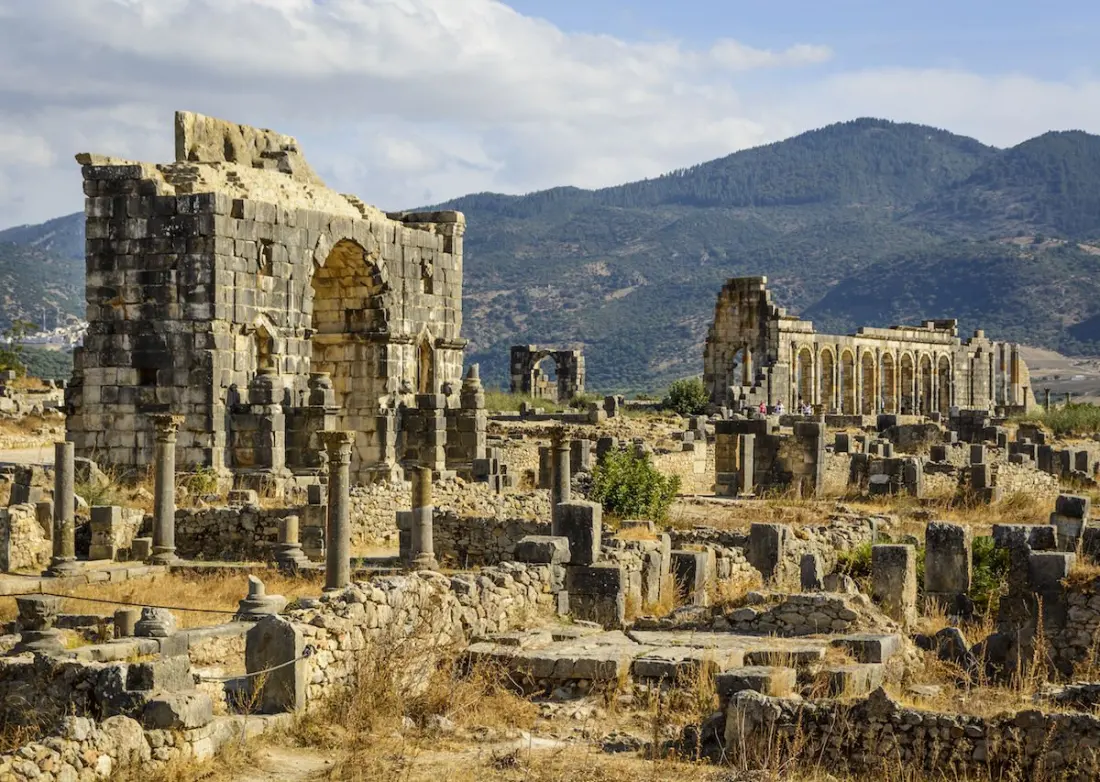
Morocco offers Volubilis, a UNESCO-listed Roman-and-beyond town near Meknes and Fez, where half-excavated mansions hold some remarkably intact mosaics. Entry is around $3, though you'll need a taxi or rental car since no buses stop there. In Ethiopia, the Aksum ruins near the northern border feature giant stelae and royal tombs — including one 108-foot obelisk lying where it fell, possibly the largest monolith humans ever attempted to raise. A $3 ticket covers the sites; an English-speaking guide costs $12 more.
Further afield, Tanzania's Kilwa Kisiwani island was the seat of a sultanate that controlled the whole Swahili coast from the 13th to 15th centuries. The Great Mosque is the oldest still standing on the East African coast, and the clifftop Palace of Husuni Kubwa was once sub-Saharan Africa's largest building. Visits require a permit from Kilwa Masoko plus a guide and boat, roughly $40 all in. Kenya's Gedi Ruins, hidden in the Arabuko-Sokoke Forest near Watamu, are a medieval Swahili-Arab walled town of coral brick that the local Giriama consider sacred — and it costs about $2 by tuk-tuk plus $5 entry.
The more adventurous picks: the Nok Caves in northern Togo, where Moba communities hid from slave raiders in the 18th and 19th centuries; Adam's Calendar in South Africa, a stone arrangement some claim is more than 75,000 years old; Laas Geel near Hargeisa in Somalia, with cave paintings dating back as far as 9,000 BC (note it requires a permit and an armed escort); and Egypt's Luxor Temple, best explored after dark when it's lit and the heat has eased. Libya's Leptis Magna is called one of the Mediterranean's finest Roman sites, but current conflict makes it a no-go for now.
For travellers who've done the classic circuit, these sites offer something the big-name landmarks often can't: space, silence and stories most visitors have never heard. Zimbabwe is the standout two-for-one destination, pairing Great Zimbabwe and Khami in one trip.