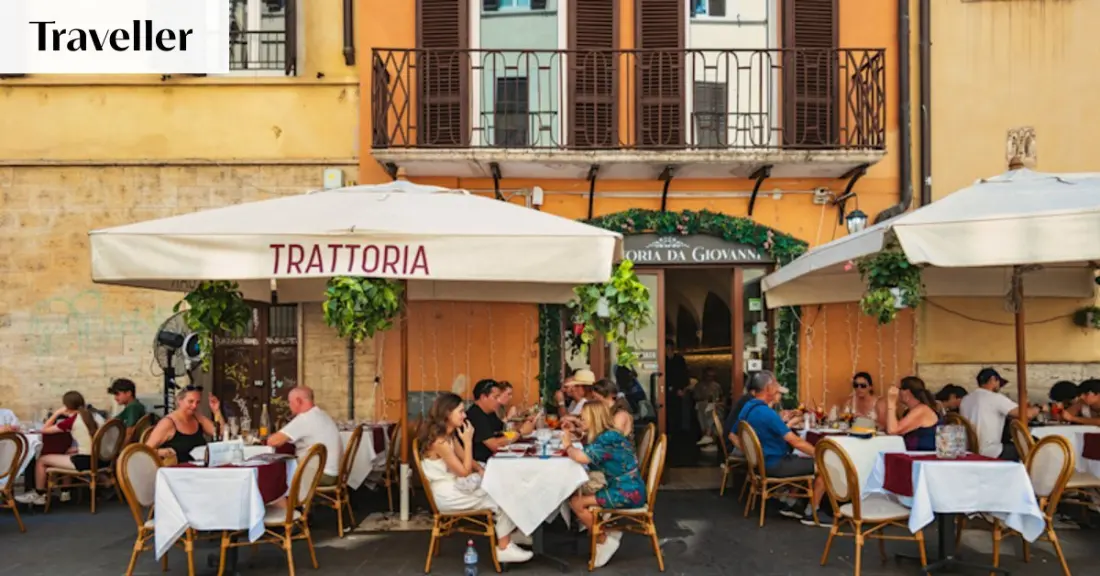
Ordering pasta is the easy part in Italy. The trickier bit is understanding how Italians actually behave at the table — because eating there is a ritual, not a refuelling stop, and turning up hungry at 7pm marks you out instantly.
First, timing. Locals don't sit down to dinner before 8pm, and restaurants tend to be calm places — no thumping music or shouting across tables. Expect leisurely service and long conversations; you won't be hurried out the door. Dogs are often welcome under tables, and famously well-behaved ones at that.
Second, structure. A traditional meal runs antipasto (starter), primo (usually pasta), secondo (meat or fish), with contorni — vegetable sides — and dolce to finish. But nobody expects you to order every course. Skipping the primo, or choosing cheese instead of dessert, is completely normal. One etiquette point: a large antipasto platter with multiple ingredients is meant for sharing, but individual antipasti stay individual — offering to swap would raise eyebrows.
Third, that bread basket. It arrives unasked and it's rarely anything special — but don't wave it away. It exists for la scarpetta, "the little shoe", the universally beloved habit of mopping sauce from your plate. It's considered a small pleasure, not bad manners.
Fourth, respect the region. Italian food is fiercely local. You won't find pesto on every menu, and bistecca alla Fiorentina is basically a Tuscany-only affair. Emilia-Romagna is often called the country's food capital, though don't say that too loudly outside Bologna. Even familiar dishes differ from their export versions: fettuccine alfredo in Italy is simply butter and freshly grated parmesan finished with a scoop of starchy pasta water — no cream, no pancetta.
Fifth, wine. Locals lean towards their own region's bottles, and they know them well. If you've tasted something local and liked it, say so — it's a guaranteed conversation starter. Otherwise, let an Italian at the table steer the order.
Finally, mindset. Talk about the food — Italians start young; one traveller recounts being cornered by ten-year-olds selling a cookbook of their mothers' recipes. Meals are about company, gossip and argument as much as what's on the plate. As the saying goes: you don't grow old at the table.
Why it matters: knowing these unwritten rules turns a good dinner into a genuinely Italian one. Travel from Bologna to Palermo and the dishes will change, but the rhythm holds — arrive late, order light, mop your sauce and stay a while. Anyone eating their way through Italy, from first-timers in Rome to repeat visitors in the countryside, will get more out of every meal for knowing it.