Semi-private US airline JSX has quietly bought a bankrupt carrier, and the deal could change how many seats you get on its flights. The purchase of New Pacific Airlines — for roughly $3.1 million, completed in August 2026 but only revealed in a Department of Transportation filing on November 20 — hands JSX something more valuable than aircraft: a Part 121 operating certificate from the FAA.
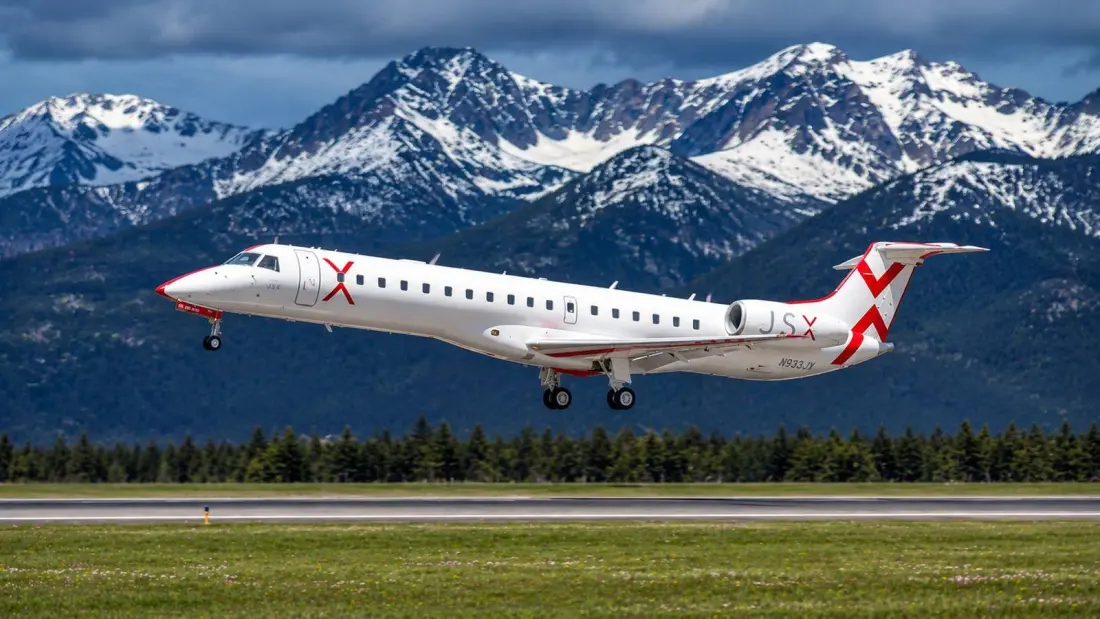
That matters because of how JSX currently flies. The carrier, known for its lounge-style 30-seat cabins on regional jets, operates under a patchwork of rules: Part 135 for flying, Part 380 public charter rules for selling tickets. Those rules cap its planes at 30 seats, even though the Embraer ERJ145s it uses were built to carry more. Under the new certificate, JSX plans to relaunch as "JSX Air" with two ERJ145-LRs leased from its sister company, growing to six aircraft within five months. Seating rises from 30 to 42 — a 40% capacity bump — with projections of about 10,100 flights and 309,000 passenger boardings in year one on routes averaging 230–345 miles.
The obvious catch: part of JSX's appeal is the roomy cabin, with individual seats and side tables. Squeezing 12 more passengers aboard could dilute the semi-private feel, though the airline hasn't detailed the interior layout yet.
There's a second motive beyond seats. The FAA has floated stricter oversight of public charter operators following pushback from major airlines and pilot unions over JSX's model. Owning a Part 121 certificate gives JSX a fully certified airline platform as a hedge, letting it grow under conventional rules while keeping its existing business intact.
As for New Pacific itself, its collapse was a saga of pivots. Founded as Northern Pacific Airways, it dreamed of linking North America to Japan and South Korea via an Anchorage hub — until Russia closed its airspace in 2022 and the route geometry fell apart. It switched to domestic flying (Ontario, California to Las Vegas, then Reno and Nashville), rebranded in 2023, dropped scheduled service in 2024 for charters including a money-losing NHL sports-team contract, and by January 2026 was in Chapter 11 after burning around $5 million a month at its worst. Flying stopped in November 2025 and about 115 staff lost their jobs. Its certificate was the main asset left — now JSX's gain.
The certificate could also unlock more from JSX's newer turboprop push. It started flying 30-seat ATR 42-600s in December 2025 and has talked about a fleet of up to 25, possibly including the larger ATR 72-600. Under Part 121, an ATR 42 could theoretically seat 50 and an ATR 72 as many as 70 — though only the 42-seat ERJ plan is confirmed for now.
For travellers, the practical takeaway: expect more JSX flights on short regional routes, potentially lower fares thanks to better per-seat economics, and a question mark over whether the famously spacious cabin survives. If you fly JSX routes like Burbank, Las Vegas or Dallas from 2027 onwards, check which brand — JSX or JSX Air — and which seat count you're booking.