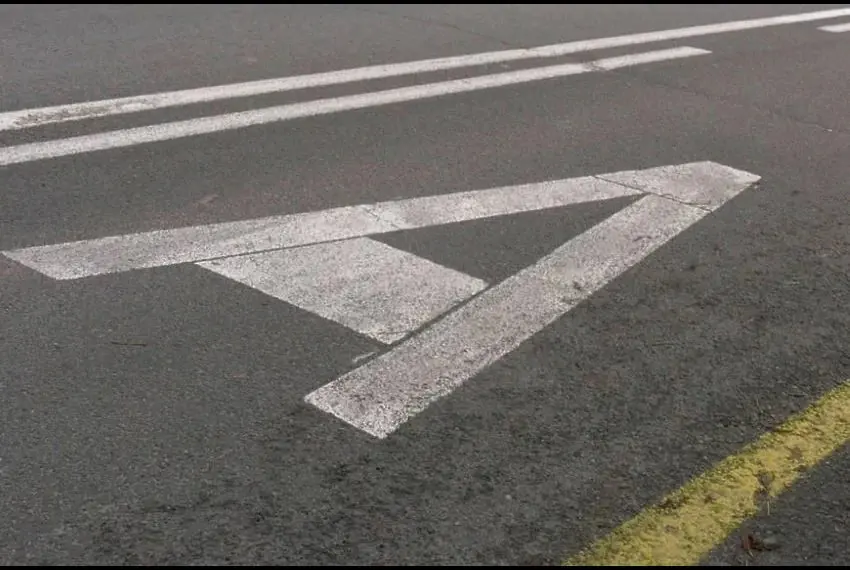
Bishkek is cracking down on drivers who hog its public transport lanes. The city's deputy mayor, Ramiz Aliev, has announced that cameras will be installed on dedicated bus lanes to automatically detect traffic violations — starting with Abdrakhmanov Street and Chui Avenue, then expanding to one or two more routes the following week.
The logic behind the lanes is simple. As Aliev put it, a private car carries three or four people at most, while a single bus can move 60 to 70. Giving buses their own stretch of tarmac means they don't get stuck behind private traffic during rush hour — a real concern in a capital where congestion has grown quickly.
For anyone driving in Bishkek, the rules are worth memorising. The dedicated lanes are off-limits to private vehicles on weekdays from 8 a.m. to 8 p.m. But there's a generous window: after 8 p.m., before 8 a.m., and all day on Saturdays and Sundays, ordinary drivers can use them freely. Until now, enforcement has relied on the presence of traffic police; cameras will make violations much harder to talk your way out of.
Most visitors to Kyrgyzstan explore the country by shared taxi, marshrutka or hired car with a driver, so this may feel like someone else's problem. But Bishkek is increasingly a base for travellers — people rent cars for trips to Ala Archa or the lakes, and ride-hailing apps are common in the city. If you're self-driving, staying out of the marked lanes during weekday hours is the easy way to avoid a fine arriving by post.
There's also a rider's silver lining. Faster, more reliable buses mean the city's inexpensive public transport becomes a genuinely practical way to get around, leaving more budget for the mountains, horseback treks and yurt stays that people actually come to Kyrgyzstan for. Expect the bus down Chui Avenue to be a little less stuck in the months ahead.
First reported by 24.kg.