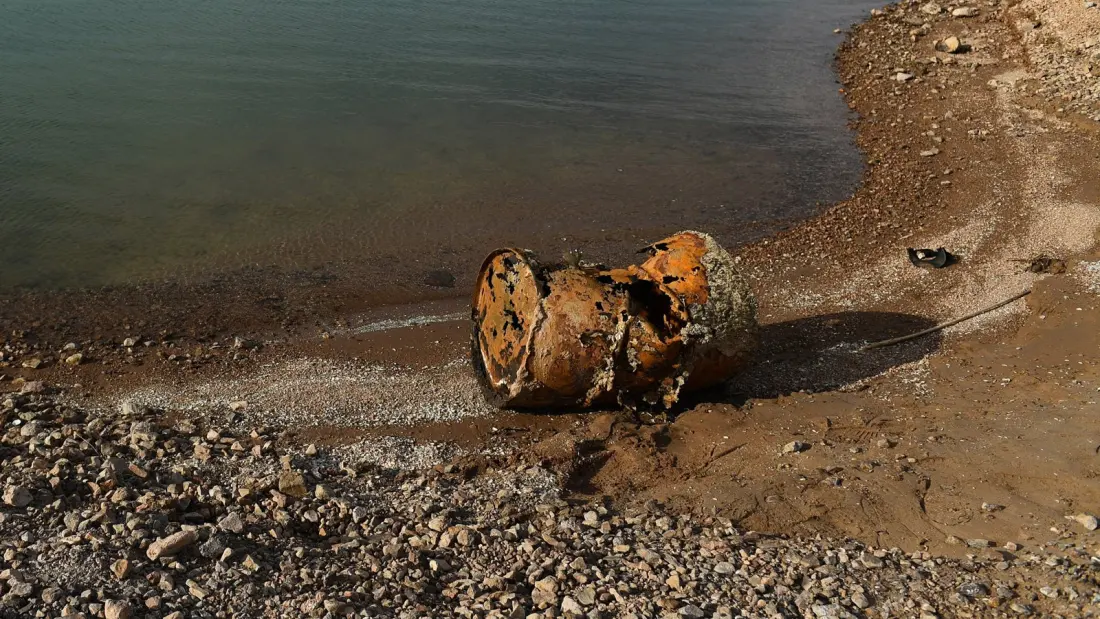
Lake Mead has produced plenty of strange sights as its water levels keep dropping, but none gripped the public like the rusted steel drum that surfaced near Hemenway Harbor in May 2022. Inside were human bones and decades-old clothing — and after four years of detective work, Las Vegas police have finally identified the man.
He was Edward Lelburian Jackson, an Arkansas native who vanished in the early 1980s, likely in his early fifties at the time. The break came when DNA from bone samples was sent to an FBI lab in 2024, then matched through genealogy work with Oklahoma State University's forensic science department. Investigators tracked down Jackson's relatives, and a family DNA sample confirmed the match, according to Clark County coroner Melanie Rouse.
Jackson had led a restless life: married in California in the seventies, based in Los Angeles, a brief arrest in Salt Lake City on suspicion of arson, and extensive travels through the seventies and eighties. He was last seen visiting family in the early eighties, which lines up with when police believe he was shot in the head and sealed in the barrel. The murder itself remains unsolved. Despite years of mafia speculation, Lieutenant Robert Price of Las Vegas Metro says there's no evidence tying the killing to organised crime.
The discovery set off a very Lake Mead kind of frenzy — photos circulated on social media, a podcast dispatched divers to hunt for more remains, and the National Park Service had to issue a blunt reminder that visitors are not allowed to search the park for cold-case evidence on their own. A second set of bones, including a jawbone found by a visitor walking the dry lakebed at Boulder Beach in August, was later confirmed as human, and a skull was recovered by divers shortly after the 2022 barrel find.
Why does this matter to travellers? Lake Mead is one of America's most visited recreation areas, and what's happening to it is impossible to ignore. In October 2026 the reservoir dropped to 1,037 feet — the lowest level ever recorded, three feet below the 2022 mark — and it's sitting at just 26 percent of capacity. Receding water keeps exposing terrain submerged since the mid-twentieth century, which is why more discoveries, grim or otherwise, are likely. If you're boating, swimming or hiking the shoreline, stick to marked areas, leave anything that looks like an artefact or bone alone, and report it to rangers instead. The park's beaches, marinas and dam tours are still very much open; the lake is just visibly, dramatically changed.