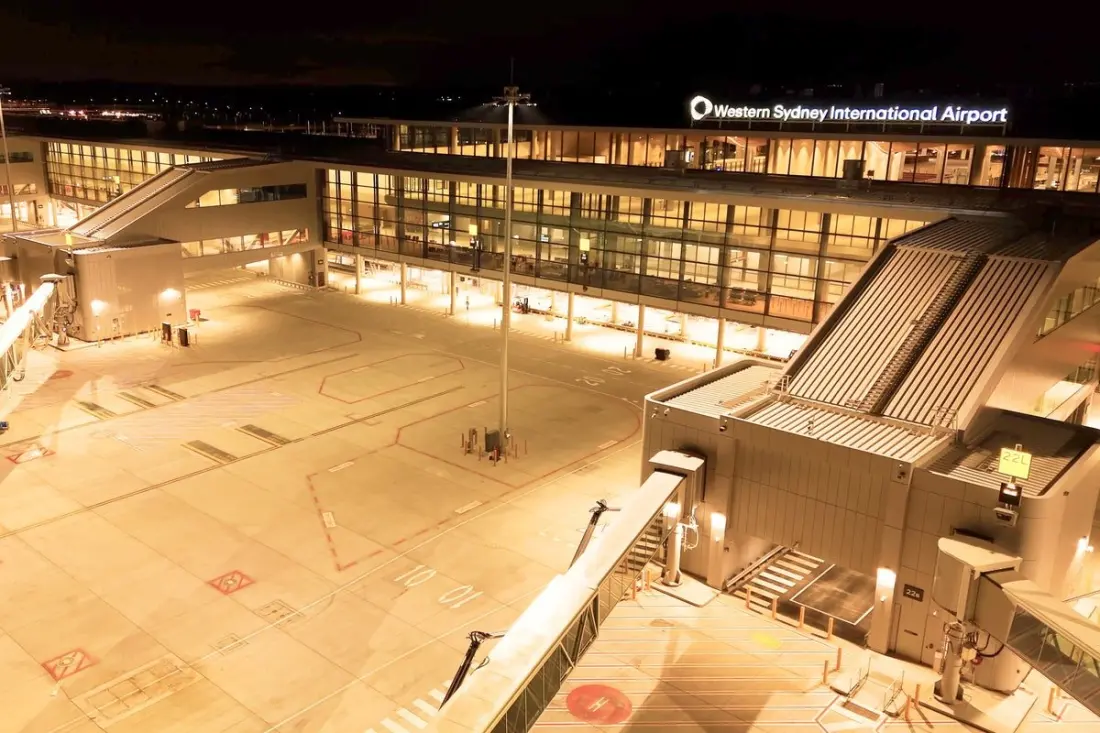
Sydney is about to have two international airports. Western Sydney International Nancy-Bird Walton Airport (WSI) begins operations on 25 October, after eight years of construction, giving Australia's biggest city a long-awaited second gateway to complement the crowded Kingsford Smith hub near Botany Bay.
Named after a pioneering Australian aviator, the new airport has a 3.7km runway and initial capacity for around 10 million passengers a year. The long-term ambition is far bigger: WSI is earmarked to become the country's primary gateway, with a planned capacity of 82 million annual passengers.
For UK travellers, the most interesting detail is Singapore Airlines joining the roster from 23 November, adding another London-to-Sydney option via Changi to the classic UK-Singapore-Australia routing. Other carriers already signed up include Qantas, Jetstar, Vietjet Air, Fiji Airways and Air New Zealand. The international route map grows quickly through 2025: Ho Chi Minh City flights start in January and Nadi in Fiji from March, plus Auckland services, with domestic routes to Melbourne, Brisbane and the Gold Coast approved from opening day.
Location is the real selling point. The airport sits on Sydney's western edge, putting destinations that are usually a slog from the city centre much closer — the Blue Mountains, Featherdale Sydney Wildlife Park, Liverpool and Campbelltown. Anyone planning a Blue Mountains escape can now land and be heading west rather than crossing the entire city first.
Getting there is still a work in progress. A Metro station connecting the terminal to the city is under construction, so for now a free shuttle bus runs from St Marys train station. By road, the new toll-free M12 motorway leads straight to a 6,000-space car park, and the drive from central Sydney takes just under an hour — compare that with about 20 minutes to Kingsford Smith. Australia's transport department expects the project to create jobs and open up overseas markets for businesses in Western Sydney.
Why does this matter for holidaymakers? More runway capacity in Sydney should mean more flight choices and, over time, keener fares on the ultra-competitive Kangaroo Route. It also makes multi-stop itineraries easier — fly into WSI from Singapore, head straight for the Blue Mountains, and use Kingsford Smith for the return leg. If your Australian trip leans west of the city, the new airport could save you hours of transfers.
One caveat: expect the usual new-airport teething period. Ground transport is limited until the Metro opens, and not every airline has moved in yet, so check which side of Sydney your flight actually uses before booking. For travellers bound for western Sydney or the mountains, though, the equation has just changed for good.