North Dakota is the state most Americans skip — a 2025 YouGov survey found only 14% have ever visited — but that's exactly why its biggest hiking gem still feels like a secret. The Maah Daah Hey Trail, which threads through more than a million acres of Little Missouri National Grassland in the state's western badlands, has been named in Stephanie Pearson's upcoming book "100 Hikes of a Lifetime U.S.A." (2026).
The name comes from the Mandan language and roughly translates to "an area that will be around for a long time." The original 96-mile route opened in 1995-era plans realised in July 1998, fell into disrepair by 2013, and was rescued by a local nonprofit called Save Maah Daah Hey. In 2014 a southern extension nicknamed "The Deuce" added roughly 48 miles, creating today's 144-mile route from Burning Coal Vein Campground in the south up to the CCC Campground in the north.
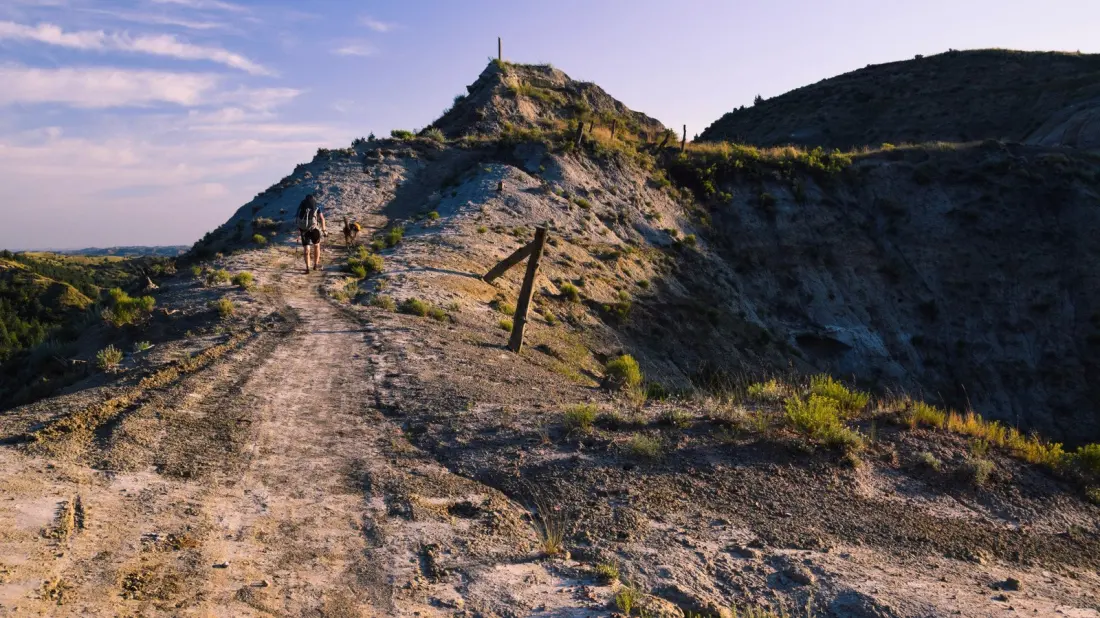
What makes it special is the terrain: rolling prairie, rugged canyons, steep buttes and long views over the Little Missouri River, all in one of the quietest corners of the country. Hikers, horse riders and mountain bikers share the route — it's non-motorised only, so e-bikes, ATVs and snowmobiles are banned. The IMBA has given it EPIC status for backcountry riding, and Bicycling magazine handed it a 2022 Travel Award for Best Hidden Gem in the US.
You don't have to commit to all 144 miles. The system includes shorter spur trails from 0.3 to 18.9 miles, plus standout sights along the main line: Devil's Pass near mileposts 100-101 (a narrow ridge with 150-foot drop-offs on both sides), ice caves around posts 108-109, and the striated clay formation known as China Wall at posts 128-129. Bison, bighorn sheep and free-roaming horses are realistic sightings, especially near Theodore Roosevelt National Park, which the Buffalo Gap Trail skirts.
Overnight logistics are refreshingly simple. Eleven campgrounds are spaced roughly 20 miles apart; most Forest Service sites cost $10 a night and come with a picnic table, fire ring and seasonal water. The biggest, Cottonwood Campground in the park's South Unit, has 76 sites and now takes reservations, while many others remain first-come, first-served. Thru-hikers usually need a week or more; everyone else can base themselves in Medora, a small town about two hours west of Bismarck, where you can grab maps, food and supplies before heading out.
Timing matters more than usual here. Prairie summers can be brutally hot and winters bitterly cold and windy, so May-June and September-October are the sweet spots. For anyone craving a genuinely remote American hike without permit lotteries or crowds, this is one of the last easy-to-plan options left.