Central Asia used to be one of the trickiest places on earth to reach, but the five former Soviet republics of Kazakhstan, Kyrgyzstan, Tajikistan, Turkmenistan and Uzbekistan are opening up fast. British passport holders can now enter three of the five visa-free, trains connect the great Silk Road cities, and border crossings shut for years have reopened. The payoff: in about three weeks you can walk the tiled squares of Samarkand, sleep in a yurt at 3,000 metres, and stand in Ashgabat, the city that holds the world record for white marble buildings.
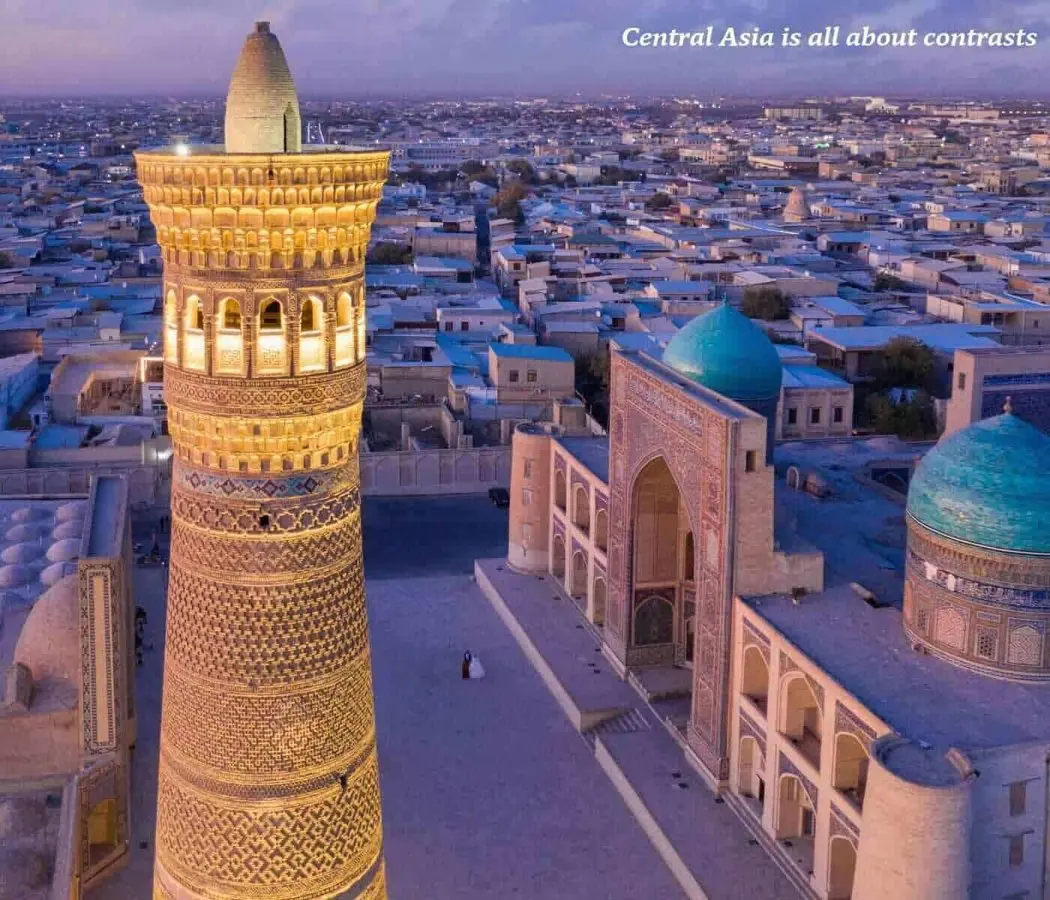
The classic route runs 15 days to four weeks, either westward from Almaty or eastward from Ashgabat. A typical three-week split: four days in Kazakhstan taking in Almaty, the red-rock towers of Charyn Canyon and the alpine Kolsai Lakes; then Kyrgyzstan's Bishkek and Lake Issyk-Kul, a vast mountain lake that never freezes, with yurt camps on high pastures like Song-Kul. Days nine to eleven cover Tajikistan's capital Dushanbe and the Fann Mountains, home to the turquoise Iskanderkul and the Seven Lakes valley. Uzbekistan gets the longest stretch: Samarkand's Registan, Bukhara's trading domes and 12th-century Kalon Minaret, and Khiva's walled old city — all UNESCO sites, linked by fast Afrosiyob trains. The trip finishes across the Karakum Desert to Turkmenistan, with the ruins of Merv, Konye-Urgench and the Darvaza gas crater — though note its famous flames have dimmed noticeably since engineers cut the gas supply.
Practicalities matter here. Kazakhstan, Kyrgyzstan and Uzbekistan are visa-free for Brits for up to 30 days; Tajikistan needs an e-visa (plus a separate permit for the Pamir region) and Turkmenistan only issues visas against a letter of invitation from a licensed operator. Uzbekistan and Kyrgyzstan also require visitors to register their stays, which hotels handle if you're on an organised trip. Cards work in the big cities, but carry clean US dollar notes for rural areas and Turkmenistan, where internet access is heavily restricted too.
Timing is key. Spring (April to early June) and autumn (late August to October) suit a five-country trip best — July and August push past 40°C in Uzbekistan and Turkmenistan, while winters close the mountain passes. Pack layers regardless: desert afternoons and mountain evenings are wildly different.
Should you go independent? It's possible, but a group tour earns its keep on this route. You'll face at least four border crossings, two countries need advance paperwork, and Kazakhstan alone is the ninth-largest country on earth. Russian remains the common language, and English rarely extends beyond city hotels. Tours capped at 16 people move through border posts and yurt camps more easily, and guaranteed departures mean you can book flights without worrying about cancellations. Food-wise, expect plov, hand-pulled laghman noodles and beshbarmak — vegetarians should plan ahead, though bazaars overflow with fruit, nuts and dairy.
If the full five-country run sounds like too much, Uzbekistan is the easiest standalone option, with one- to ten-day itineraries covering Tashkent, Samarkand, Bukhara and Khiva — and many travellers return later for the rest of the region.