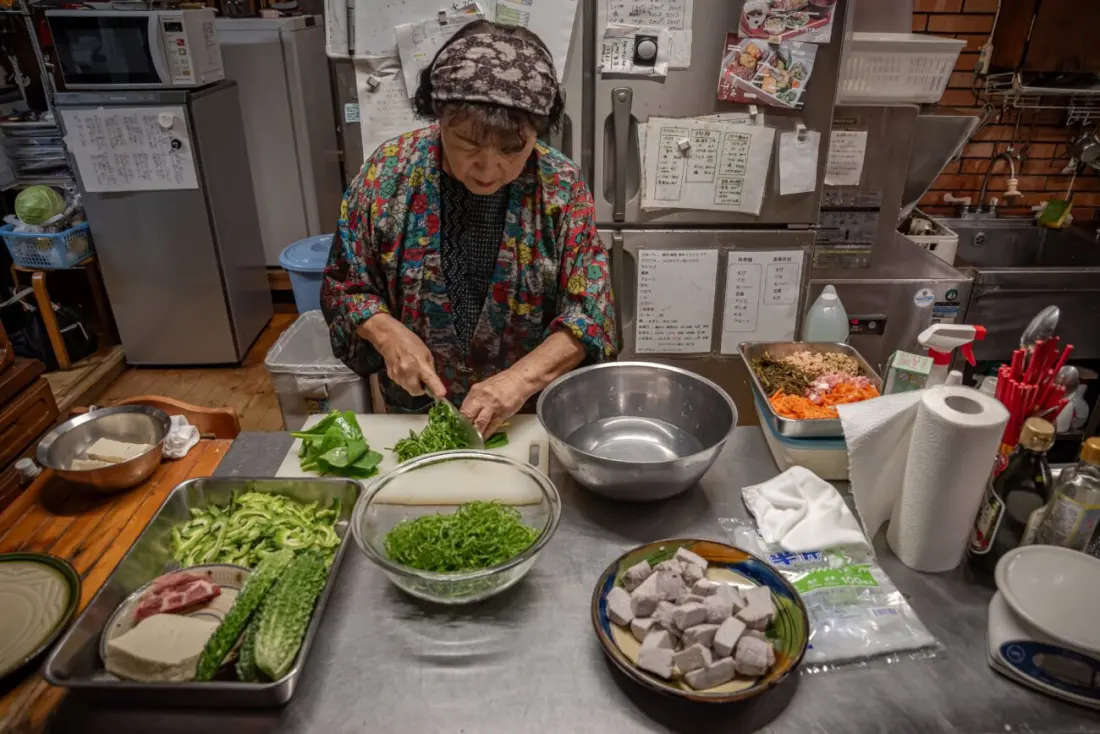
Ogimi, a small village on Okinawa's western coast, has spent decades in the spotlight as the heart of one of the world's five original Blue Zones — places with unusually high numbers of healthy centenarians. But the island's famed longevity is slipping. When Emiko Kinjyo opened her restaurant, Emi no Mise, 38 years ago, Okinawa topped Japan's life expectancy rankings. Today it sits near the bottom, a striking reversal for a prefecture that once defined the longevity conversation.
Kinjyo, now 78 and a respected dietician, is working to hold on to what made the islands special. Across from her restaurant she keeps a small community garden of herbs and vegetables, picking what the day's cooking requires. Her guiding idea is simple: the kitchen and the field were connected — food came from close by, followed the seasons, and was eaten in step with daily life.
To understand what was being lost, Kinjyo spent years visiting elderly women across Okinawa, watching what they cooked and how their meals moved with the rhythms of the day. She calls those women her teachers, and she folded what she learned into her restaurant, a cookbook, and educational programmes aimed at passing the island's food culture to younger generations. The worry is generational: the people who earned Okinawa its Blue Zone status grew old eating a diet that younger islanders rarely eat today.
For travellers, this makes Ogimi more than a scenic stop. Eating at Emi no Mise is a chance to taste the Okinawan diet in its original form — plant-forward, garden-grown, and tied to the rhythms that researchers believe underpinned the islanders' long lives. Okinawa itself rewards slow travel: the northern Yanbaru forests, the Motobu Peninsula, and quiet coastal villages offer a very different island from the resort-heavy south, with goya (bitter melon), mozuku seaweed, and shikuwasa citrus appearing on local tables throughout the year.
The story also carries a useful lesson in food travel more broadly. 'Blue Zone' eating was never a fad diet — it was a way of living, growing and sharing food that persisted for generations. Ogimi's village garden and Kinjyo's kitchen offer a rare, authentic window into that lifestyle while it still exists in living memory. Go now, eat slowly, and ask about the herbs on your plate.