This week's roundup of internet finds has plenty for travellers with a taste for the obscure — but the standout is a cluster of crumbling stone huts in southern Italy that most visitors will never have heard of.
Pietragalla, a hilltown in Basilicata, is dotted with palmenti: small cave-like buildings where, until roughly the 1960s, locals carried out the first pressing and fermentation of grapes from vineyards across the surrounding countryside. They weren't just workplaces — they were the social heart of the town. Around 60 survive today, most grouped in the Parco Urbano dei Palmenti at the eastern edge of town, with a few more scattered through nearby fields. The wine industry they served has largely vanished, which makes the survivors quietly poignant. One has even been converted into a restaurant, so you can eat inside a piece of vanished viticulture.
Elsewhere on the list, architecture fans get two treats. St Martin's Church in Cwmyoy, Wales, is a gloriously wonky 12th–13th century church, famously skewed by landslips on the hillside above — one of the most photographed oddities in the Brecon Beacons area. And a Victorian-era look back takes us to Paris's 15th arrondissement, where Henri Lachambre built gas balloons, captive balloons and early dirigible envelopes from 1875 at what's now 22–24 rue des Favorites. His clients ranged from the US Signal Corps to S. A. Andrée's ill-fated 1897 Arctic balloon expedition. Nothing of the workshop survives — modern apartments stand there now — but the street itself makes a good detour for anyone who likes standing where aviation history happened.
New York gets a double mention. A then-and-now comparison of Broadway at 84th Street from 1879 shows the Upper West Side before it was paved flat, when Manhattan was genuinely hilly. And in 1965 Ford pulled off one of the great publicity stunts: a Mustang disassembled into four pieces, hauled to the top of the Empire State Building and rebuilt on the observation deck.
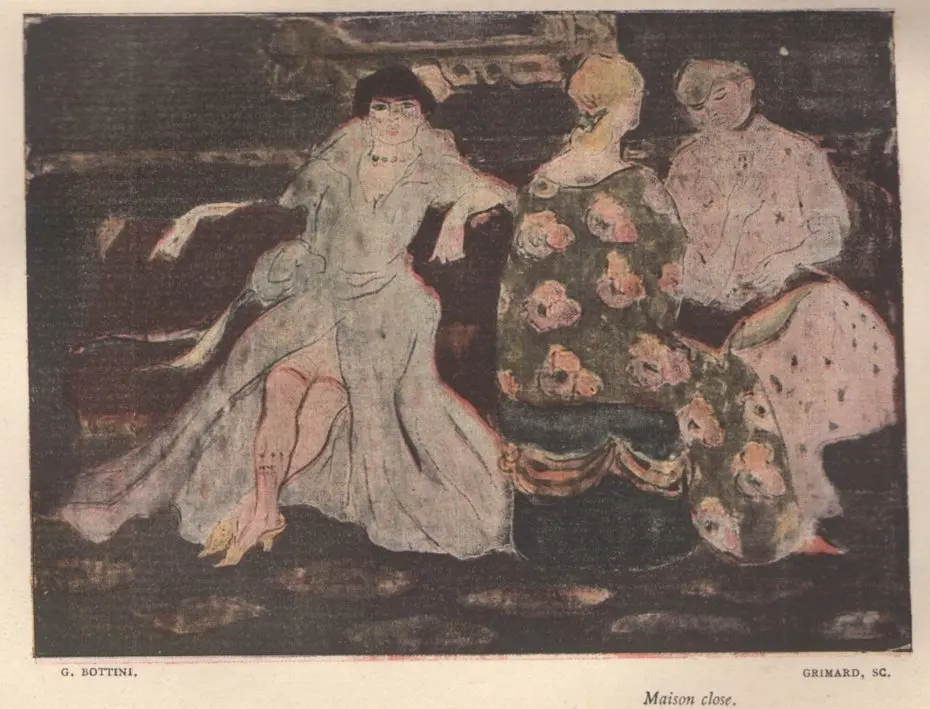
Rounding things out: 16th-century French physician Jean Liébault counted a double chin among the marks of a beautiful woman (a comfort for anyone chasing today's sharp jawlines); Frederick William Bond photographed the stomach contents of a London Zoo ostrich around 1930; Elizabeth Taylor's custom $75,000 Hollywood dressing-room trailer spent years forgotten in an Oregon barn before selling at a 2012 memorabilia auction; Danilo Donati's costume designs for 1980's Flash Gordon are ripe for rediscovery; French artist George Bottini illustrated Montmartre's brothels and cabarets in 1904, dying at 33 without the fame his friends found; plus Iranian felt art by Parastook and an illustrated guide to dormer windows, or lucarnes.
Why care? Because the best trips are often built from exactly this kind of material — a strange church in Wales, a wine village in Basilicata, a Paris street with a hidden story. The palmenti alone justify a day trip if you're touring southern Italy's less-visited regions.