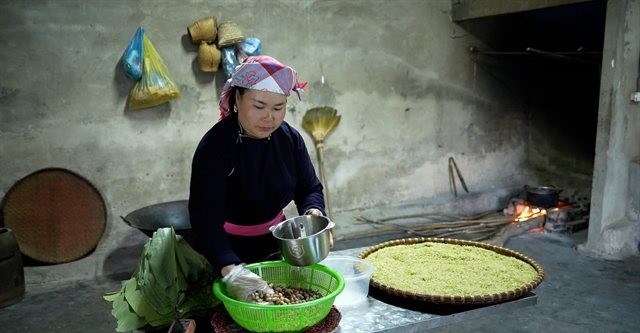
In a village kitchen in Cáng Village, Hợp Thành Commune, a cook named Phạm Thị Bền steams batches of bánh cốm every day for a growing stream of visitors. What makes these cakes from Vietnam's northern Lào Cai Province different is the filling: alongside minced pork and crushed peanuts, they contain finely chopped boiled duck and its broth — a savoury twist on the sweet versions most people know.
The cake starts with cốm, young green rice flakes that are a signature of the Tày ethnic people here. The timing of the harvest is everything. Grains picked too young turn mushy; too mature, and the flakes harden and lose their chew. The rice is roasted slowly in cast-iron pans, cooled on flat bamboo trays, then hand-pounded in a stone mortar and winnowed until only plump, soft, naturally green flakes remain. Lào Cai's temperate climate and fertile soil give its cốm a subtle fragrance that locals consider unique in Vietnam.
The duck isn't a random flavour choice. In Tày tradition, the duck is a messenger carrying human prayers to the deities and the spirit of the rice, which is why duck meat is central to offerings at the New Rice Festival — the annual ritual thanking ancestors for the harvest. Bánh cốm began as part of those offerings and has been handed down through generations of families, before evolving into a local speciality sold at trade fairs across the province.
Once the filling is seasoned — with the region's signature hạt dổi, a wild spice seed that gives a faint anise-like note — the mix rests for about 30 minutes so the flavours meld. Portions are then wrapped in broad dong leaves and steamed in a wooden steamer over boiling water for roughly half an hour. Eaten warm, the cake layers chewy young-rice fragrance with rich duck and pork, nutty peanuts and that hint of hạt dổi.
Why it matters for travellers: this is exactly the kind of food experience that's hard to find outside the villages that make it. Hợp Thành's cakes have become well known nationwide, and visitors buy boxes to carry home. If you're travelling through northern Vietnam — perhaps combining Lào Cai with Sapa or the Hà Giang loop — seeking out a family kitchen like Bền's turns a scenic trip into a genuine cultural one. You're not just tasting a snack; you're eating a harvest ritual that has fed a community's spiritual life for centuries and now sustains the families who make it.