Croatia's third city is quietly building a tourism story that doesn't depend on the usual sun-and-beach playbook. New figures show Rijeka welcomed 22,690 tourist arrivals in September 2026, a two percent bump on the same month last year, while overnight stays held steady at 61,672.
The real headline is the domestic market. Croatian guests grew 17 percent in arrivals year on year, to 4,035, with overnight stays up 15 percent at 7,604. Foreigners still dominate - 82 percent of September arrivals - but locals are discovering Rijeka in growing numbers, a pattern that has held across the whole year. January to September saw 193,716 arrivals and 568,868 overnight stays, roughly level with 2025, with domestic arrivals up 14 percent over the period.
Germany remains the engine of Rijeka's inbound market, topping the table with 71,764 overnight stays in the first nine months. Poland follows on 56,842, then Italy on 41,053, Hungary on 30,437 and Austria on 25,932. Germans led again in September itself with 9,945 overnight stays.
The demographic profile is strikingly young. Travellers aged 19 to 30 accounted for 137,776 overnight stays - more than 24 percent of the total - ahead of the 41-50 and 31-40 brackets. Combined with the fact that private accommodation takes 59 percent of all nights (335,776), against 145,876 in hotels and 41,573 in hostels, the picture is of an affordable, apartment-and-guesthouse city popular with younger Europeans rather than a resort strip of big-package tourism.
Stays are short: foreigners averaged 3.18 nights, domestic visitors just under two, for an overall average of 2.94. That makes Rijeka less of a week-long beach base and more of a city break, a stop on a road trip down the Kvarner coast, or a jumping-off point for the islands and the Gorski Kotar hinterland.
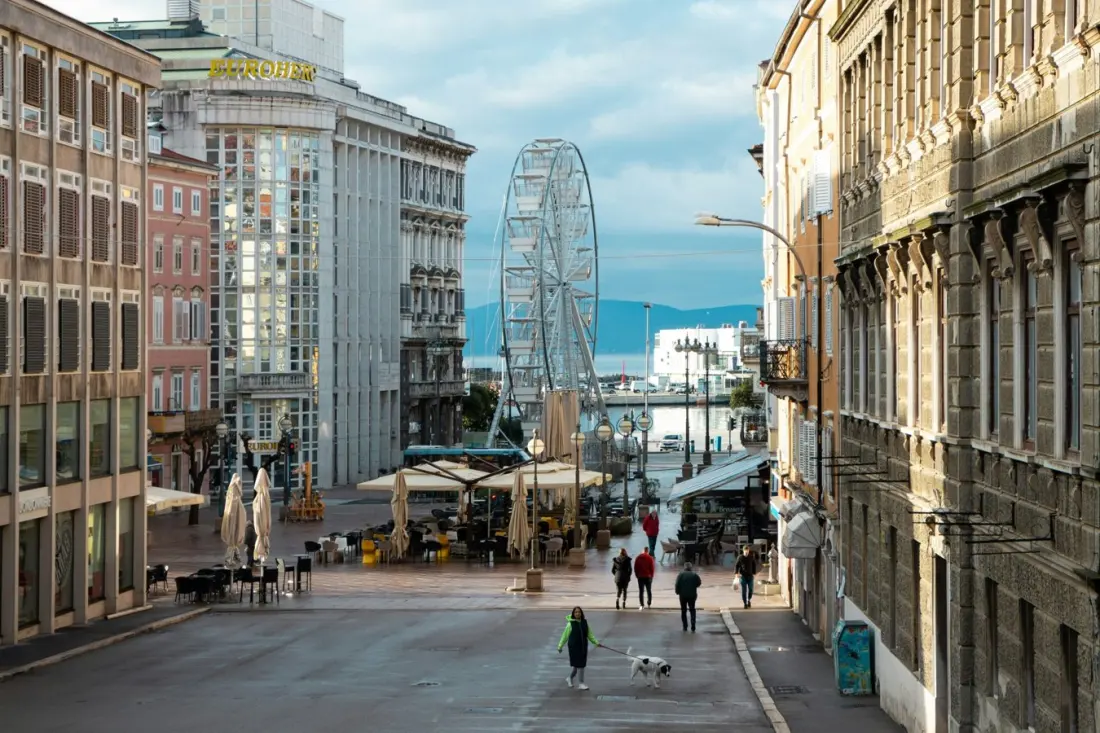
For travellers, the takeaway is simple: Rijeka is growing in popularity but hasn't tipped into overtourism, prices and availability remain reasonable outside the peak weeks, and it works particularly well for a two-to-four-night trip. Come for the Habsburg-era architecture, the buzzing Placa riverside, the up-and-coming food scene and the easy ferry links to Cres, Krk and Rab - and expect to share the streets with plenty of Germans, Poles and Italians, plus a fast-growing crowd of Croatians exploring their own coast.