Skip the obvious safari-and-beach itinerary for a moment: some of Africa's most rewarding travel is about what people built, and when. A recent round-up highlights seven destinations where architecture carries the story — from 12th-century churches sunk into rock to art deco cinemas and earth-walled fortresses.
Ethiopia claims two of the strongest entries. Lalibela's eleven medieval churches were carved straight down into volcanic rock in the 12th and 13th centuries, linked by trenches and tunnels, in what tradition says was an attempt to build a new Jerusalem. The most photographed, Bete Giyorgis, is a perfect cross whose roof sits below ground level. Gondar, meanwhile, became Ethiopia's royal capital in 1636, and its fortified compound, Fasil Ghebbi, still holds castles that mix Ethiopian, Arab, Hindu and Baroque elements.
Asmara in Eritrea is a different story entirely — a time capsule of Italian colonial modernism from the early 20th century. Its Fiat Tagliero petrol station, completed in 1938, has concrete wings that mimic an aeroplane, and Cinema Impero is a textbook Art Deco survivor. UNESCO granted the city World Heritage status in 2017, though the guide is honest that this legacy is inseparable from colonial-era segregation.
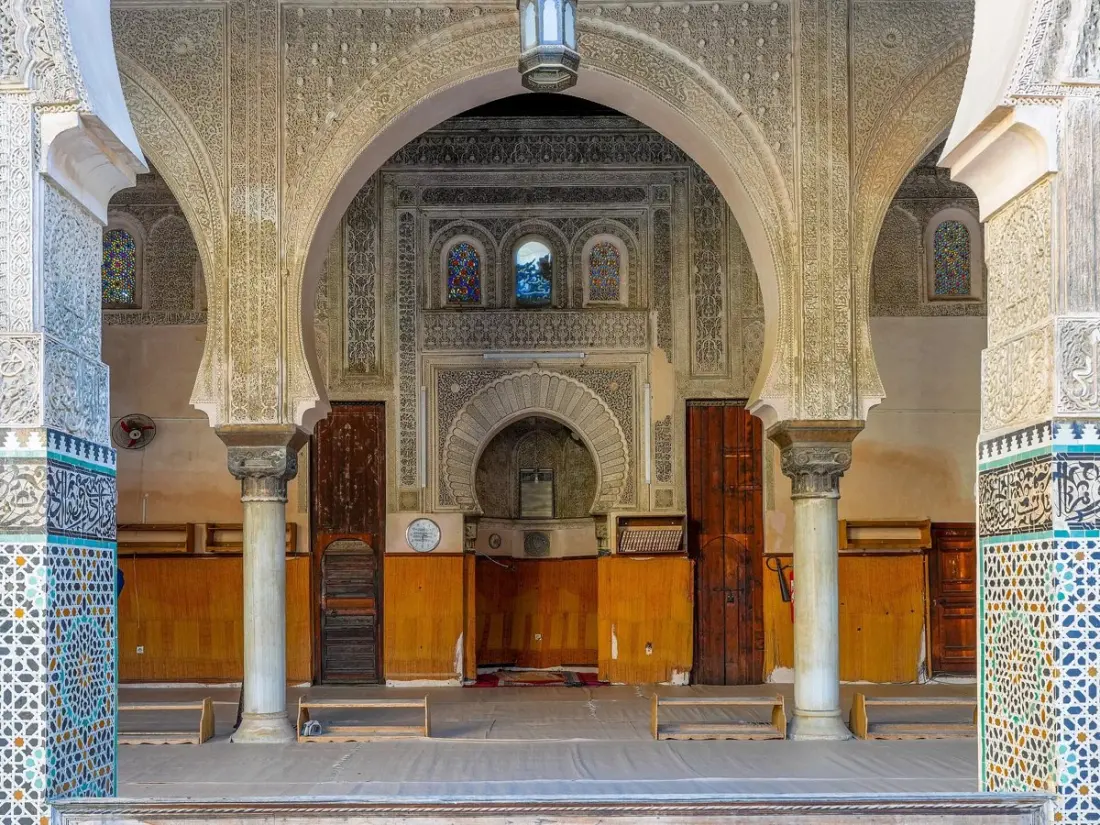
Morocco also appears twice. Aït Benhaddou, on the southern side of the High Atlas, is a ksar — a walled village of packed-earth towers that once served caravans running between the Sahara and Marrakesh via the Draa Valley and the Tizi-n'Telouet Pass. In Fez, founded in the late 8th and early 9th centuries, the best architecture hides behind plain walls: inner courtyards with carved cedar, geometric tilework and intricate plaster. The Bou Inania Madrasa is the standout.
Two islands round out the list. Stone Town in Zanzibar packs Swahili, Arab, Indian and European influences into narrow lanes, most memorably in its huge carved wooden doors — though the town's role in the East African slave trade is a difficult history any visitor should engage with. And off northern Mozambique, the Island of Mozambique, a Portuguese post from 1507 and later capital of Portuguese East Africa, splits visually in two: a stone-and-lime former colonial quarter and the Macuti neighbourhood of palm-roofed Swahili houses.
The practical advice from the source is simple: explore these districts on foot, hire a local guide who can decode the details, dress and behave appropriately at religious sites, and always ask before photographing people. It also flags a genuine caveat — access and security conditions vary across these countries, particularly where conflict is a concern, so check current travel advisories before committing to a booking. That matters most for Eritrea and parts of Ethiopia and Mozambique, where permits, flight schedules and border situations can shift.
Who is this for? Travellers who like their holidays layered — people who'd rather spend a day in a medina or a rock-hewn church than on a lounger. Several of these places pair naturally: Fez with Aït Benhaddou on a Morocco road trip, or Lalibela and Gondar on Ethiopia's historic northern circuit.