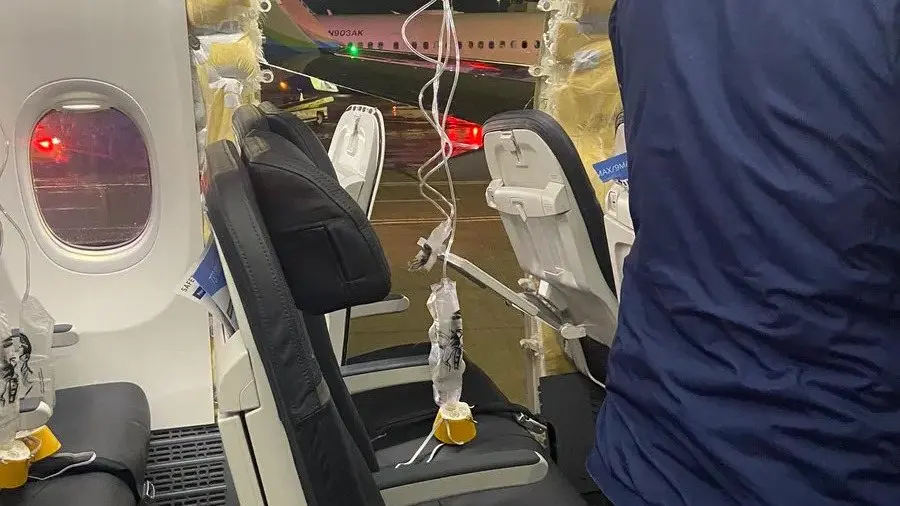
When Alaska Airlines flight 1282 lifted off from Portland on January 5, 2024, nobody aboard expected the side of the plane to open. At nearly 15,000 feet, a door plug blew out of the Boeing 737 MAX 9 fuselage. The passenger seated closest was a 15-year-old boy travelling with his mother, Cynthia Tisher. His seat pitched toward the hole and the rush of air tore his shirt clean off. His mother grabbed him, convinced he might be pulled out too. Oxygen masks dropped, panels and insulation came loose, and other passengers helped the pair move to safety before the crew turned the aircraft around and landed back in Portland without further injuries.
The subsequent investigation read like a checklist of manufacturing failures. Spirit AeroSystems built the fuselage in Kansas and shipped it to Boeing's Renton, Washington factory, where the plug had been opened so Spirit workers could repair defective rivets. When it was closed back up, the four bolts that stop it from sliding upward were never reinstalled. A whistleblower flagged the missing bolts before the NTSB's preliminary report confirmed it. The agency's final findings also pointed to inadequate documentation, a skipped required inspection, and problems with Boeing's training, instructions and oversight — with the FAA's own monitoring falling short as well.
Now the legal fallout has taken a turn. The US District Court judge handling Tisher's lawsuit has thrown out the family's bid for punitive damages against Boeing and Spirit AeroSystems. They can still pursue compensation for actual injuries, but the punitive element — designed to punish and deter corporate misconduct — is off the table. The same outcome went to the flight's captain, Brandon Fisher, whose request for punitive damages over his physical and emotional injuries was dismissed in August.
The ruling came down to a question of geography. Oregon, where the incident happened, allows punitive damages for sufficiently serious misconduct. Washington, where the aircraft was assembled, generally does not permit them unless a statute expressly authorises them. Applying Washington's choice-of-law rules, the court weighed where the injury occurred against where the alleged misconduct took place. Because punitive damages exist to punish conduct, the location of that conduct — Washington — carried the day, closing off the harsher remedy.
Why should travellers care? The case explains a quiet limit on your rights as a passenger when something goes wrong in the air. Even in a near-catastrophe with clear regulatory findings behind it, suing for punitive damages can depend on which state's law a court applies — something most people never think about until they're filling out legal forms. Separately, the blowout triggered fleet-wide inspections of the 737 MAX 9 and put door plug installations under scrutiny, changes that directly affect the aircraft many flyers board every day. If you're booked on a MAX 9, the plug doors are now subject to enhanced checks, but this lawsuit shows the accountability side is messier than the engineering side.
Reported by View from the Wing.