You don't need a long-haul flight to escape the British winter. Parts of Spain hover around 20C in December, February and the grey months in between — and the Canary Islands in particular give you around six hours of sunshine a day while London manages barely more than one.
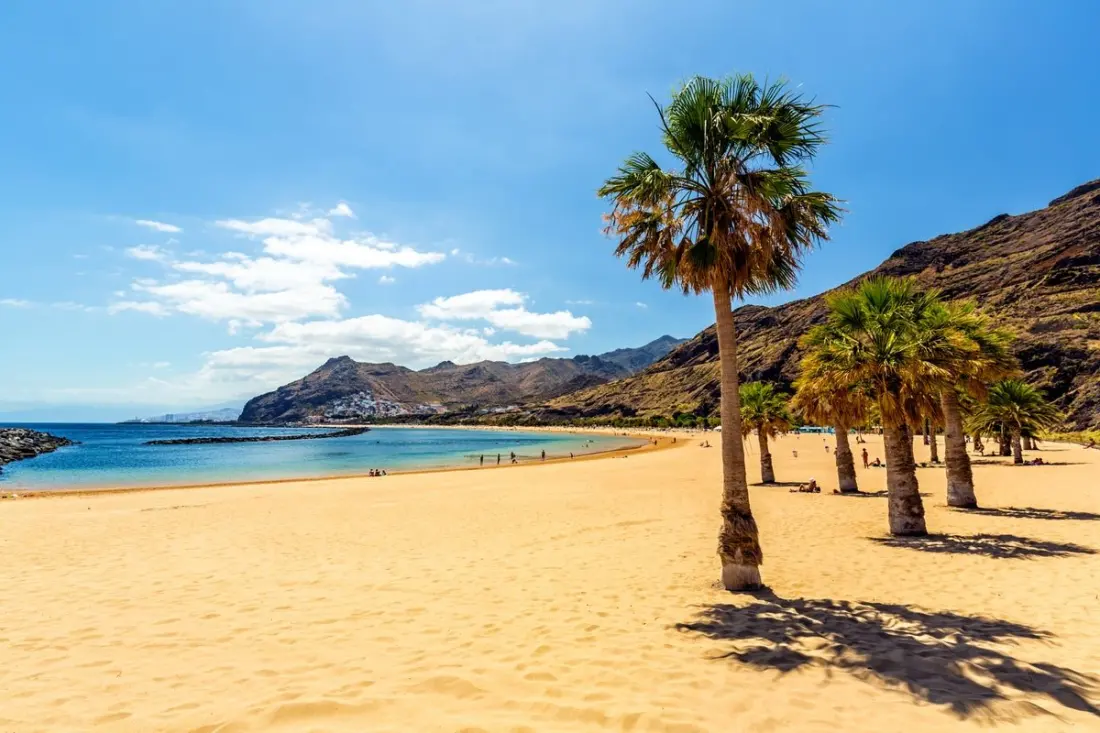
Tenerife is the archipelago's headline act, with average winter highs near 22C. Beyond the beach resorts of Costa Adeje, the island's big draw is Mount Teide, Spain's highest peak and an active volcano you can hike or summit by cable car. The capital Santa Cruz, with Playa Teresitas nearby, makes a good city-meets-sand combo.
Lanzarote is the other Canary pick, and it earns its spot on scenery alone. Timanfaya National Park is a near-lunar sprawl of red rock and volcanic soil you can only cross on guided hikes or bus tours, while Jameos del Agua pairs a cave network with a cultural centre in something close to an oasis. The capital Arrecife is smaller than Las Palmas but has city beaches, colonial architecture and a lively nightlife scene.
On the mainland, Seville shines from December through March. Summer highs of 36C keep crowds away, but winter's 16-18C is ideal for walking between the Old Town, cathedral, La Giralda, the Moorish Alcazar and Casa de Pilatos — all close together. Save another day for Maria Luisa Park and Plaza de Espana, where you can row a boat past the pavilions left over from the 1929 Ibero-American Expo.
Malaga pairs those mild temperatures (average highs around 18C) with proper city sights: Picasso's birthplace now houses a museum with over 200 of his works, the Thyssen museum covers 19th-century Spanish painting, and the Alcazaba's stone palaces and palm-lined courtyards make a convincing mini-Alhambra. The long city beach and port are better for strolls and churros than swimming, but that's no hardship in January.
Two gentler options round out the list. Nerja, 30 miles east of Malaga, tumbles down cliffs to the Alboran Sea, with whitewashed streets, the Balcon de Europa viewpoint and a cave system stretching more than three miles, decorated with paintings thought to be 40,000 years old. And Valencia, cooler at around 17C, is arguably at its best in winter: cycle the five-mile Turia park to the City of Arts and Sciences (home to Europe's largest aquarium), wander Ruzafa and Carmen, or take New Year's Eve drinks outdoors without melting.
Why it matters: all six are short-haul, well connected and cheaper than the Caribbean, and winter means fewer crowds at exactly the sights you'd otherwise queue for. Beach weather varies — the Canaries deliver, the mainland is more about city breaks with sunshine — so pick according to whether your priority is swimming or sightseeing.