
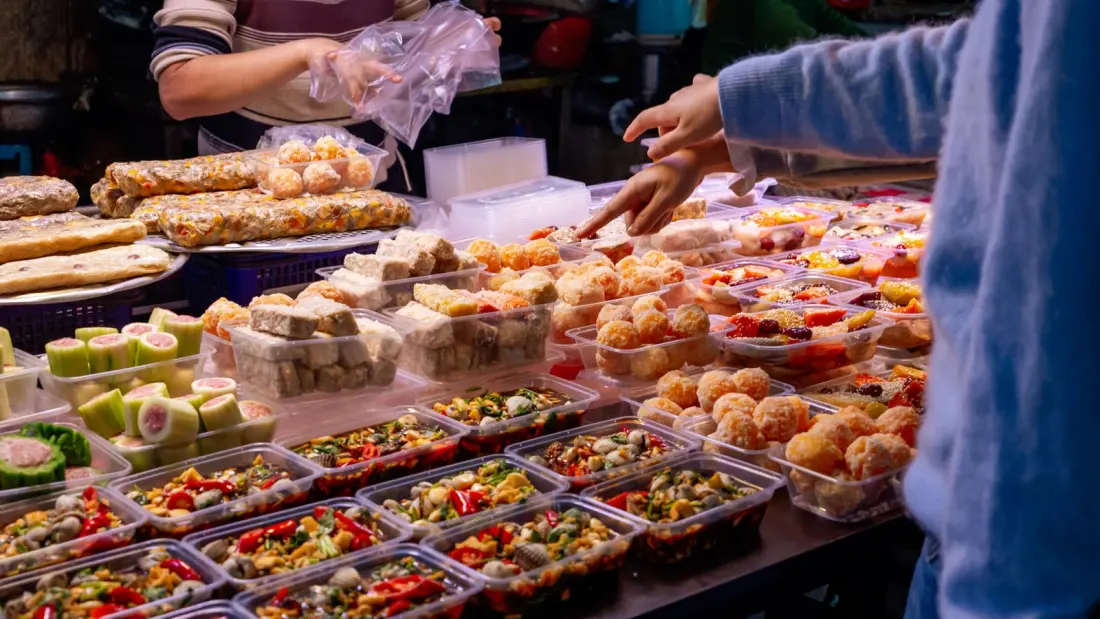
Street food is often the cheapest, tastiest way into a new destination — but a bad plate of lukewarm noodles can flatten a holiday faster than almost anything else. Rather than skipping the stalls altogether, a few simple habits will let you eat your way through a market with confidence.
First rule: follow the crowds, especially local ones. A queue means food isn't sitting around going tepid while bacteria multiply, and regulars already know which vendors are worth their money. Timing ties into this — eat when locals actually eat, whether that's a breakfast cart or a night-time satay grill, so you're getting dishes made fresh at peak turnover.
Heat is your friend. Food cooked at high temperature kills off most pathogens, so favour something sizzling over anything left sitting in a warm pot. The same logic applies to sauces, which are often served barely warm and sometimes made with unfiltered water — a quiet risk people forget. And those raw fruits and veggies washed in local tap water? Same caveat.
Watch the setup, not just the food. Flies hovering over a stall aren't an automatic no, but they do carry bugs like Salmonella and E. coli, so weigh it. Check the chef too: someone coughing, sweating over the wok, or handling food with bare, unwashed hands is a warning sign, while gloves are a plus. Inspect cutlery — if it looks dodgy, ask for a different set or give it a wash yourself.
A medical step worth taking before you fly: Hepatitis A is a foodborne illness spread faecal-to-orally and found worldwide, and there's a two-shot vaccine (given six months apart) that prevents infection up to 90% of the time. Talk to a travel clinic a few months before a big trip to fit both doses in.
And the tip experts rate above all the others? Wash your own hands. That curry-and-roti you eat with your fingers after a full day of sightseeing is picking up whatever your hands collected — and more than one case of food poisoning is self-inflicted. Soap and water before you eat beats sanitiser gel, which doesn't shift visible grime or certain pathogens well.
None of this means being paranoid. Vendors who cook at high heat, serve fast-moving local crowds and keep their stations tidy are usually running a safer operation than some restaurant kitchens. Use the checklist — busy stall, hot food, no lukewarm sauces, clean hands, vaccinated — and the market is yours. Travellers heading anywhere with a strong street-food culture, from Southeast Asia to Mexico City, will get the most out of this guidance; it costs nothing and might save you several days of your trip.