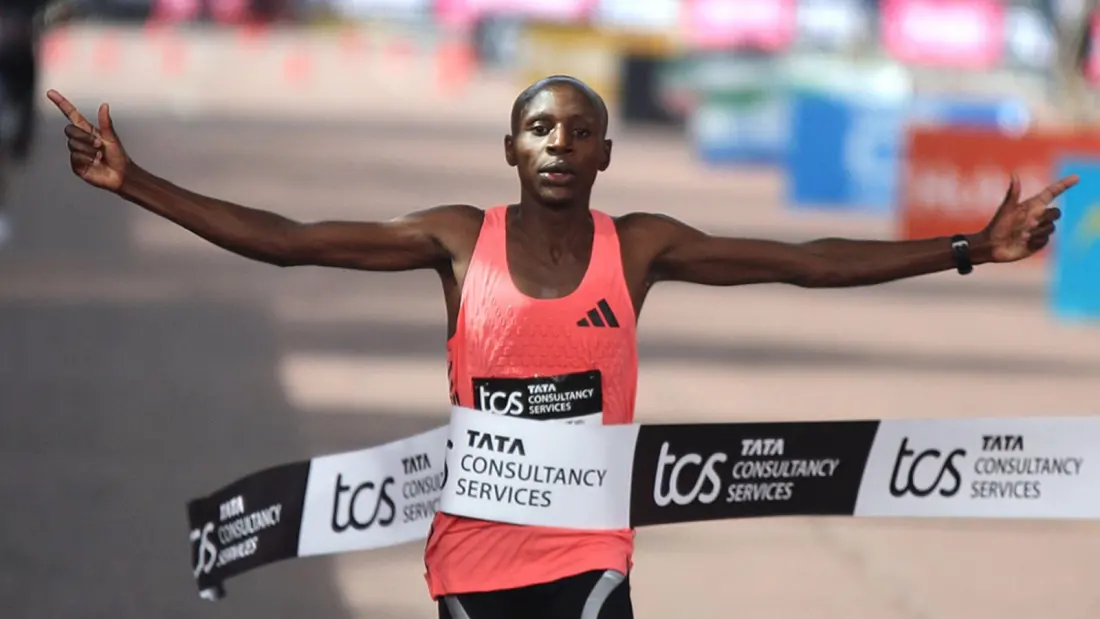
For decades, the two-hour marathon lived in the same mythical space as the four-minute mile — a number everyone could quote and no elite runner could touch in legitimate competition. That changed on 26 April 2026, when Sabastian Sawe of Kenya crossed the line at the London Marathon in 1:59:30, the first sub-two clocking in a record-eligible race.
The path here was long and strangely indirect. Paul Tergat cracked 2:05 in Berlin back in 2003; Haile Gebrselassie ran 2:03:59 in 2008; Dennis Kimetto shaved it to 2:02:57 by 2014. Then Nike spent millions on its Breaking2 project, bringing Eliud Kipchoge within 30 seconds of the barrier on a flat Italian F1 track in 2017, and he finally dipped under two hours in 2019 — but with rotating pacers shielding him from the wind on a closed loop course. Monumental, yes. An official race, no.
What makes Sawe's run remarkable is that it happened under normal racing conditions, on a genuine point-to-point course, against rivals. The 2026 London race stacked the field: Sawe defending his title, 2025 Chicago champion Jacob Kiplimo, and track ace Yomif Kejelcha making his marathon debut. On a clear, calm morning, the leaders passed halfway in 60:29 — meaning they had to run the second half roughly a minute faster, about five seconds per mile quicker than their opening pace.
Kiplimo dropped back around mile 18, but Kejelcha refused to budge, shadowing Sawe all the way to the final four minutes. Sawe's eighth 5K segment, from roughly mile 21 to 24, took just 13:42 — about 4:25 per mile — as he ratcheted the tempo up again and again. Kejelcha finished 11 seconds back in 1:59:41, and even third-placed Kiplimo's 2:00:28 beat the old world record. Three men under or effectively at the barrier in one race is the real story: it wasn't one genius with a super-shoe and a choreographed event, it was competition itself dragging the times down.
For anyone heading to London in late April, the race is worth building a trip around. Streets along the Thames route fill with crowds from Greenwich to the Mall, and the city's parks and pubs make an excellent weekend of it even if you never lace up. The takeaway from this year's edition: book accommodation early, pick a spectator spot near Canary Wharf or the Embankment, and expect history — apparently the barrier-breaking kind.
One caveat for sports-history purists: Kipchoge's 1:59:40 in Vienna still stands as the fastest ever run; Sawe's mark is the fastest in official race conditions, which is exactly what makes it the more meaningful milestone for the sport.
Story via Outside Online.