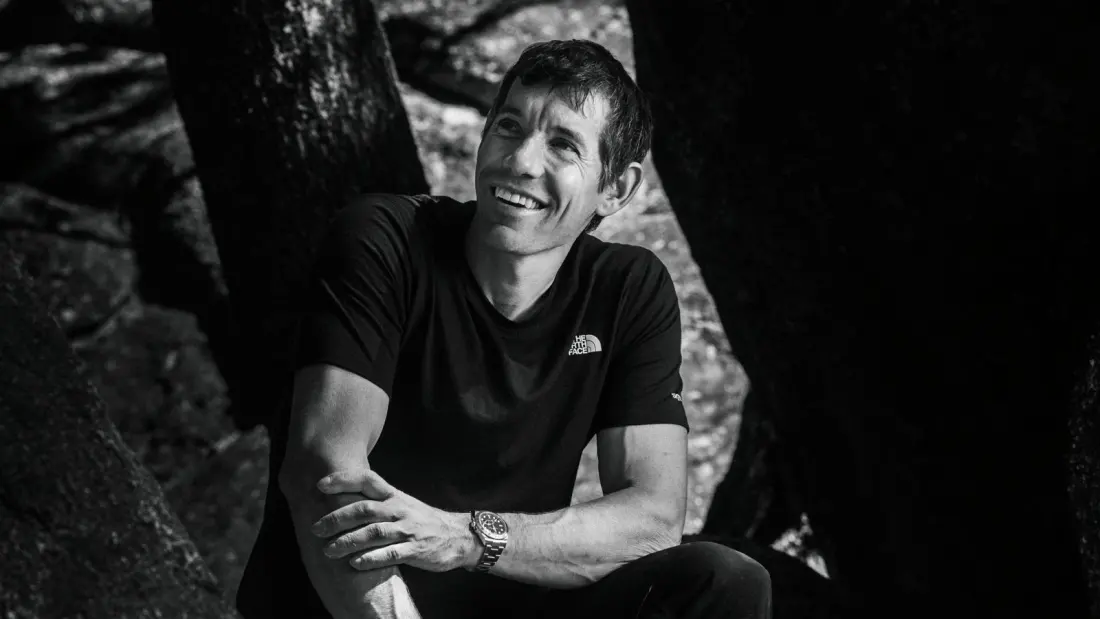
The most famous rock climber on the planet is standing in his kitchen at 8 a.m., holding a bowl of Cheerios, late, and scowling at the clock. Outside Online spent a day with Alex Honnold at his family cabin in South Lake Tahoe, and the picture that emerges is surprisingly mundane: preschool drop-offs, a magazine photo shoot, lunch with a visiting aunt, packing for a trip to Italy, then a goodbye barbecue. "These days I feel like a ping-pong ball," he admits.
Honnold's fame hit a new level in January when his Netflix special Skyscraper Live beamed into millions of homes, and Outside named him an Outsider of the Year. The 40-year-old now juggles paid speaking gigs, sponsor events, two podcasts (Climbing Gold and Planet Visionaries), an Outside TV show, and family life with wife Sanni McCandless Honnold and daughters June, 4, and Summer, 2.
The twist: climbing itself has become the thing he squeezes in. Long granite days have given way to two-hour gym sessions in his garage, which doubles as a home climbing wall and weight room. "This year I can count on one hand the number of times I've really been proud of something I've climbed on rock," he says, before delivering the quote of the piece: "The frustration of sucking is the essence of middle age."
The profile also pushes back on the old mythology. Since his Oscar-winning Free Solo and the 2011 National Geographic cover of him on Half Dome's Thank God Ledge, people have hunted for exotic explanations — a blunted fear response in his amygdala, speculation about autism. Honnold isn't buying it. He was scared most days, he says; he just spent roughly 25 years climbing hundreds of days a year. Longtime climbing partner and filmmaker Cedar Wright agrees it was obsession and volume, plus a willingness to take risks most elite climbers like Tommy Caldwell and Adam Ondra want nothing to do with.
For travellers, the takeaway is oddly comforting. A lifestyle writer watching Honnold's chaotic morning — spilled spoons, fruit pouches in car seats, a two-day backpacking trip that covered only a few miles — concluded that the free-solo legend has become recognisably ordinary: another outdoorsy parent wedging adventure between school pickups. If he can accept climbing less and still call the best times "still ahead," the rest of us probably can too.