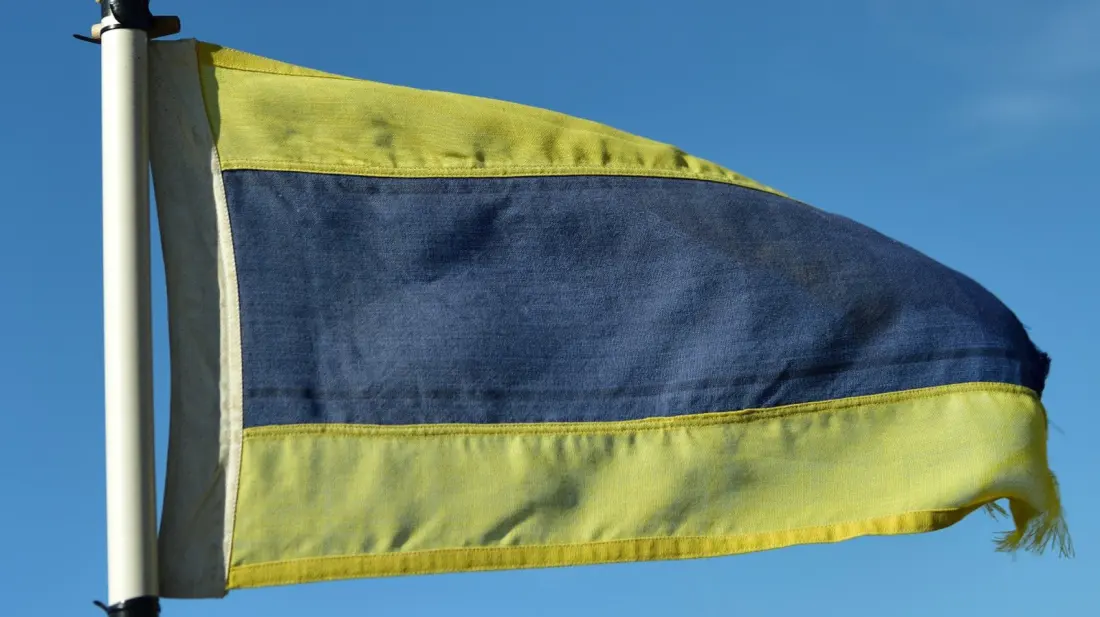
If you spot a boat flying a yellow flag with a wide blue horizontal stripe, don't ignore it. This is the Delta flag, part of the International Code of Signals, and it means the vessel flying it cannot manoeuvre properly. In plain terms: keep well clear.
A boat displaying the Delta flag may have limited steering or power — think mechanical failure or equipment problems. Sometimes the flag signals a working vessel that simply can't stop or turn quickly, such as one towing other craft. In other cases, the ship's sheer size makes it sluggish to respond. Whatever the reason, the message is the same: this boat cannot get out of your way, so you need to get out of its.
The rules here are clear. A vessel flying the Delta flag effectively has right of way over more manoeuvrable craft. If you see one, slow down immediately and give it the widest berth you can until you're safely past. If your boat has a VHF radio, monitor Channel 16 while nearby — that's the international hailing and distress frequency, and it's where any further instructions or warnings will come through.
What makes this genuinely useful knowledge is that nautical flags mean the same thing everywhere. The Delta flag carries identical meaning whether you're chartering in the Bahamas, sailing off the coast of North Carolina, or cruising the Mediterranean on a sailing holiday. Commercial vessels are required by regulation to carry signal flags and display them when needed, so you're most likely to see them flown by working ships rather than fellow leisure boaters.
Recreational boaters, notably, aren't obliged to carry a full set of signal flags in most circumstances — but recognising them is still considered basic seamanship. With more than a dozen flags in the code conveying vital information, the Delta flag is arguably the one worth learning first, because misreading it puts both crews at risk.
For anyone planning a charter holiday or a first sailing trip, this is a small piece of knowledge with real payoff. Ten seconds spent learning what a yellow-and-blue stripe means could be the difference between a comfortable near pass and an emergency. Before you take the helm anywhere new, it's worth brushing up on the basics of the International Code of Signals alongside the buoy and navigation marks you'll be taught anyway. Harbour traffic, ferries and tugboats are exactly the vessels most likely to fly restriction flags, and they're also the ones you'll encounter most often near marinas and busy channels.
So if you're heading out on the water this season, add one item to your pre-departure checklist: know your flags. The Delta is the stand-out — yellow field, blue stripe, keep clear.