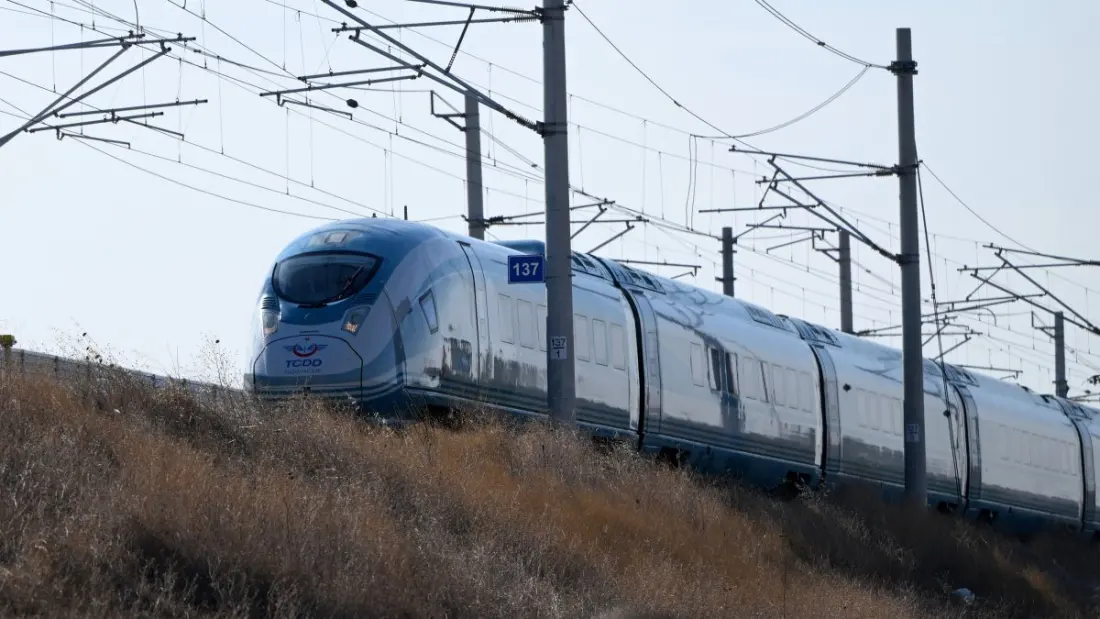
A new 153-kilometre stretch of railway opened last Friday puts Turkey's high-speed network within touching distance of Europe. The section runs from Çerkezköy in Thrace to Kapıkule, the country's busiest border crossing with Bulgaria near Edirne, and completes most of the 229-kilometre Halkalı–Kapıkule line that starts on Istanbul's western edge.
For passengers, the headline change is speed. The trip between Halkalı and Kapıkule drops from four hours to roughly 90 minutes, and the line is built for 200 km/h services. Three more provinces — Tekirdağ, Kırklareli and Edirne — now sit on the high-speed map, bringing Turkey's total to 14. Annual passenger capacity on the route is expected to jump from 600,000 to around 3 million.
The ceremony drew EU Enlargement Commissioner Marta Kos alongside President Erdoğan, and the European co-financing signals where this is heading: Kapıkule is the point where Turkish rails meet the EU network, plugging the line into the Trans-European Transport Networks and the so-called Middle Corridor that links Asia to Europe via the Caucasus and Anatolia. Freight matters just as much here — transit times fall from 8.5 hours to 3.5, and annual freight capacity is slated to grow from 1.5 to 9.5 million tons.
Travellers get more than a faster ride to the border. Rebuilt stations at Edirne and Kapıkule, plus new buildings at Babaeski, Lüleburgaz and Büyükkarıştıran, should make overland journeys through Thrace far more comfortable. Edirne itself — with the Selimiye Mosque and a lively bazaar — is one of Turkey's most underrated city breaks, and a quick train from Istanbul makes a weekend there much easier. Once cross-border services firm up, the same logic extends toward Bulgaria: think Istanbul to Plovdiv or Sofia without the notorious Kapıkule road queue.
The line also slots into bigger ambitions. Erdoğan tied it to the $20 billion Development Road project, which aims to move goods from Iraq's Grand Faw Port to Europe via Turkish rail, and to a 2053 target of growing the national network to 28,590 kilometres. Nearly 4,900 kilometres of track are under construction right now.
Why it matters for holidaymakers: overland travel between Istanbul and the Balkans has long meant long bus rides or slow trains. A proper high-speed link to the EU border changes the calculus for anyone planning an Istanbul-plus-Balkans route, and it is worth watching for cross-border timetables as services ramp up.