
David Palmer and Doris Demers have spent decades hunting sinkholes across Mexico's Yucatán Peninsula, sometimes ticking off two or three in a single day during month-long trips. The Canadian couple have now seen around 140 of them, and their obsession has produced a new English-language guidebook, "A Guide to the Cenotes of the Yucatán Peninsula," due out shortly.
The idea came by accident, after a chat with a Canadian couple who ran a bookstore in Puerto Morelos, Quintana Roo. Visitors kept asking for an English-language guide to the region's sinkholes, and none existed. Since the pair were touring them anyway, they started keeping notes.
There is plenty to document. An estimated 10,000 cenotes are scattered across the states of Yucatán and Quintana Roo, though only about 250 can actually be visited — the rest are hidden underground. The Yucatán has almost no permanent surface rivers; rainwater seeps through porous limestone into a vast subterranean network. The word cenote comes from the Maya tsʼonoʼot, meaning accessible groundwater, and without these water sources the Maya civilisation would likely never have flourished. The region also holds a world record: Sistema Ox Bel Ha is the longest underwater cave system ever explored, and second only to Kentucky's 686-kilometre Mammoth Cave among all cave systems.
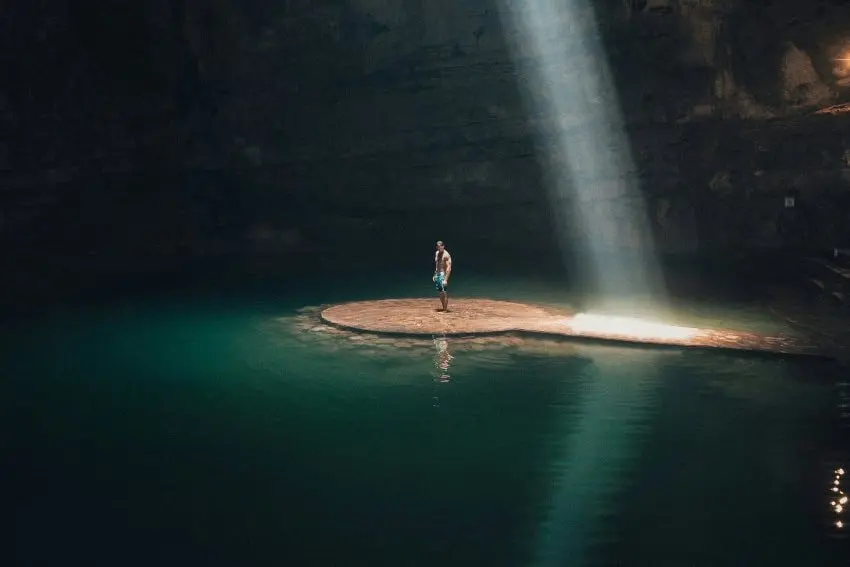
So where should you swim? Palmer's pick of the showstoppers includes Cenote Zaci in Valladolid, a 50-metre-wide, 80-metre-deep sinkhole right in town between Calle 37 and 39. But a local hardware store owner insisted nearby Dzitnup was "10,000 times better" — an underground cavern entered through a hole in the ground, where a shaft of light plays across turquoise water and some of the region's finest limestone formations. Dzitnup made cenotes famous internationally when National Geographic put it on its cover in 1995.
Further afield, Cenote X'Batun near San Antonio Mulix, about 50 kilometres south of Mérida, is an open, low-walled pool where the jungle runs down to glassy water — bring binoculars for the kiskadees, orioles and motmots. Just watch the slippery 20-metre stone staircase down. And Cenote Xooch, with its dramatic Alamo tree roots cascading into blue water, is already an influencer favourite that also happens to be superb for snorkelling thanks to its clarity and depth.
Why it matters: English-speaking travellers have long had to piece together cenote info from Spanish-language sites and social media. A dedicated guidebook written by people who have physically visited 140 of them is a genuinely useful new tool for anyone planning a road trip through the Yucatán — and a reminder that beyond Instagram-famous spots like Xooch, hundreds of swimmable sinkholes sit quietly waiting.