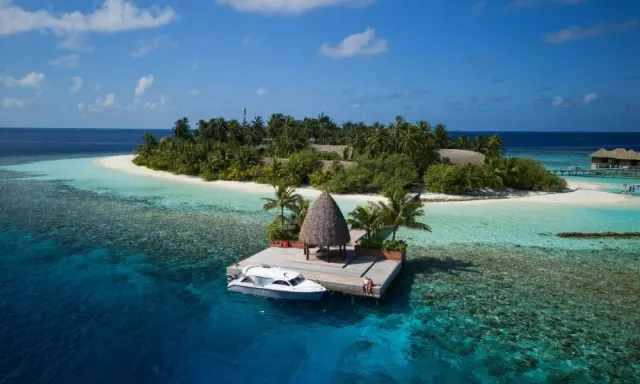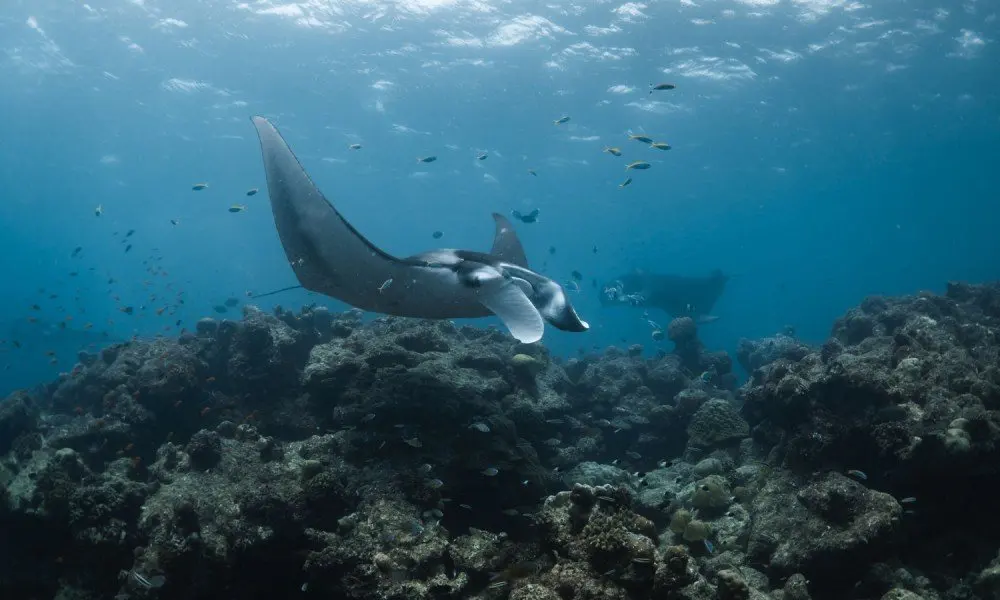
Four Seasons Resort Maldives at Landaa Giraavaru has just marked 20 years of backing manta ray conservation, with a week of talks, field trips and community events running 11–17 September 2026 — the finale landing on World Manta Day under its 2026 theme of Collaboration.
The numbers behind the anniversary are striking. What started in 2005 as Dr Guy Stevens' Maldivian Manta Ray Project — the country's first full-time manta research effort — became the Maldives Manta Conservation Programme after Stevens joined the then-new resort as resident marine biologist in 2006. It later spawned the Manta Trust, now an international organisation backing more than 30 projects worldwide. Using photo-ID of the unique spot patterns on each ray's underside, researchers have catalogued over 6,000 individual reef mantas from more than 80,000 sightings, plus 1,000+ oceanic mantas — making the Maldives home to the world's largest documented reef manta population.
That science has had real teeth. It underpinned the 2009 protection of Hanifaru Bay and Anga Faru as marine protected areas, Baa Atoll's UNESCO Biosphere Reserve status in 2011, and the Maldives' 2014 decision to protect every ray species nationally. In 2025, all ten manta and devil ray species were moved to CITES Appendix I, the strictest barrier against international commercial trade. Still, the anniversary was clear-eyed about the threats: all ten species remain at risk, largely from fishing and bycatch.
Why should a traveller care? Because this is one of the rare resorts where you can genuinely join the science. The on-site Marine Discovery Centre staffs 14 full-time marine biologists and offers a full-day Trainee Manta Biologist programme. During manta season — roughly May to December — guests signed up to the Manta-On-Call scheme get pinged when rays are spotted nearby and can head out on guided snorkel trips run to responsible wildlife rules. If you'd rather stay dry, the resort's Hologram Room projects life-size virtual marine animals, and a free app, Manta Story, walks you through manta feeding, cleaning and courtship behaviour. Behind the scenes, the partnership also funds community programmes like Ocean School and Ocean Women, so the work reaches well past the resort's lagoon.
For anyone plotting a Baa Atoll trip, the practical upshot is simple: time your stay between May and December for the best chance of swimming with mantas, book the manta-related experiences early since they depend on weather and sightings, and treat Hanifaru Bay — a short hop away — as the centrepiece of any snorkelling itinerary. It's a holiday that leaves the ocean measurably better off than it found you.