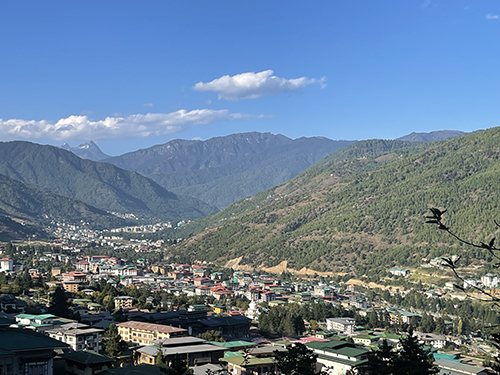
Thimphu looks like a capital with a housing paradox: shopfronts sitting empty in places like Babesa while tenants crowd into shared rooms and basement extensions. New reporting from Bhutan's Ministry of Infrastructure and Transport lays out just how wide that gap has become.
The numbers are striking. The 2017 census recorded about 30,465 households in the city, roughly 77 percent of them renting, with a vacancy rate of just 1.6 percent. Around one in ten tenants lived in basements, attics or building extensions with poor light and ventilation. Nationally, urban households grew by 50 percent between 2005 and 2017 while urban housing stock grew only 34 percent — a shortfall of roughly 8,000 homes. Shrinking household sizes, down from 4.6 people in 2005 to 3.7 in 2025, keep adding demand for separate units.
For ordinary workers, the maths is brutal. One small-shop owner profiled in the piece shares a flat in Upper Motithang with two friends, splitting Nu 16,000 a month plus water charges, then spends Nu 250 a day on taxis because she cannot find anything affordable near her workplace. A salesperson has hunted for a year without success and is staying with a cousin meanwhile. On the supply side, a building owner in Babesa has cut the rent on his empty commercial space from Nu 50,000 to Nu 30,000 a month — and still has no takers; he may convert it to apartments.
Officials blame high construction costs, fragmented governance and a landlord-driven supply model — individual owners adding floors bit by bit rather than large developers. No condominium law means buyers and lenders are wary of multi-unit projects. Public housing is stretched thin: the National Housing Development Corporation has a waiting list of over 1,500 applicants in Thimphu, with waits from six months to three years. Local area plans zone land as 'residential' without earmarking plots for affordable or rental housing, and weak enforcement has let residential land slip into other uses.
Change is coming, slowly. A September 2026 draft National Housing Strategy — six objectives, 29 actions — treats rental housing as central rather than a poor cousin of homeownership. About 1,000 affordable units funded by an Asian Development Bank project are under construction across Thimphu, Phuentsholing and other towns, and a Housing Bill is in the works.
For travellers, this isn't a reason to skip Bhutan — guesthouses and hotels operate on a separate track from the local rental market — but it explains why Bhutanese cities feel compact and why local wages stretch less than visitors might expect. Short-term visitors are unaffected; long-stay remote workers eyeing Thimphu should know rentals are scarce and pricey relative to local incomes, so book furnished stays early. If anything, the story is a useful primer on the real Bhutan beyond the postcard: a small capital growing fast, experimenting with green affordable housing, and trying to bring its gungtongs — empty rural houses — back into use.