Language, family stories and community festivals are the three pillars holding Vietnamese identity together for families living abroad, according to Lê Thương, who chairs the Vietnamese Association in Japan's Kansai region. Speaking to the Vietnam News Agency ahead of Việt Nam Culture Day (24 November) and the Great National Unity Festival (18 November), she laid out how the diaspora keeps its roots watered while building lives in Japan.
Her argument starts at home. Children absorb culture through everyday Vietnamese conversation, tales of grandparents and ancestors, and the big celebrations — Tết at Lunar New Year and the Mid-Autumn Festival. Affection, respect for elders and mutual support are what keep family members tied to each other and to the homeland, she says.
Community spaces do the rest. In Kansai, the Cây Tre Vietnamese Language School runs in-person classes plus online options for kids whose schedules don't fit a classroom. Thương is clear that lessons shouldn't be dry drills: language teaching should weave in folk games, songs, food, history and stories, with contests and exchanges to keep children engaged. She'd like to see families, schools, Vietnamese associations, embassies and educators in Vietnam coordinate on teacher training, materials and keeping classes running long-term.
One point that stands out is her insistence that preservation and integration go hand in hand. Japan's Vietnamese community spans long-settled residents, recent arrivals, students, factory workers, entrepreneurs and Japan-born young people — groups with very different needs. She cites Resolution 23-NQ/TW, a 2026 Politburo directive on overseas Vietnamese affairs, arguing that unity has to respect that diversity rather than paper over it. Pairing older generations' cultural knowledge with younger members' languages and tech skills, she suggests, turns a fragmented community into a network.
There's also an economic angle. Thương sees the diaspora as a bridge — connecting Vietnamese schools, researchers, businesses and cultural organisations with Japanese counterparts, and helping turn traditional material into books, films, design, educational games and cultural tourism, provided the original culture is treated accurately. She wants Hanoi to build proper mechanisms: databases of experts and partners, sectoral forums and clear points of contact for community proposals.
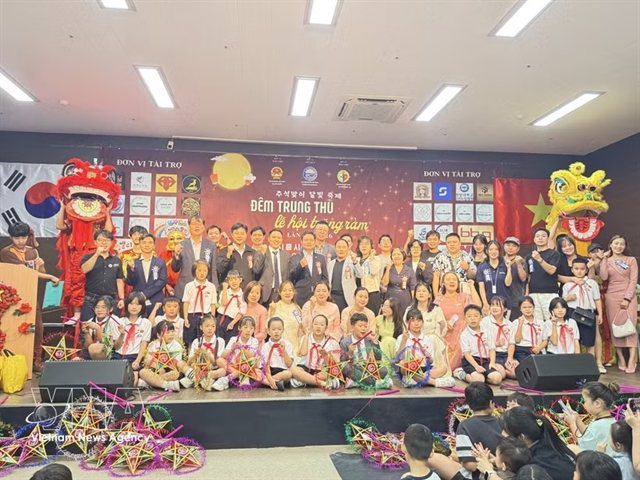
For travellers, the takeaway is that Vietnamese culture in Japan isn't confined to restaurants. The Việt Nam Culture-Great National Unity Week (18–24 November) brings áo dài, cuisine, music, exhibitions and charity events to communities like Kansai, and Tết and Mid-Autumn celebrations are increasingly public. If you're in Osaka, Kobe or Kyoto in autumn, a diaspora festival can be a genuinely local experience — a slice of Việt Nam with a Japanese backdrop, and a reminder that culture travels through families, not tourism boards. — Vietnam News Life