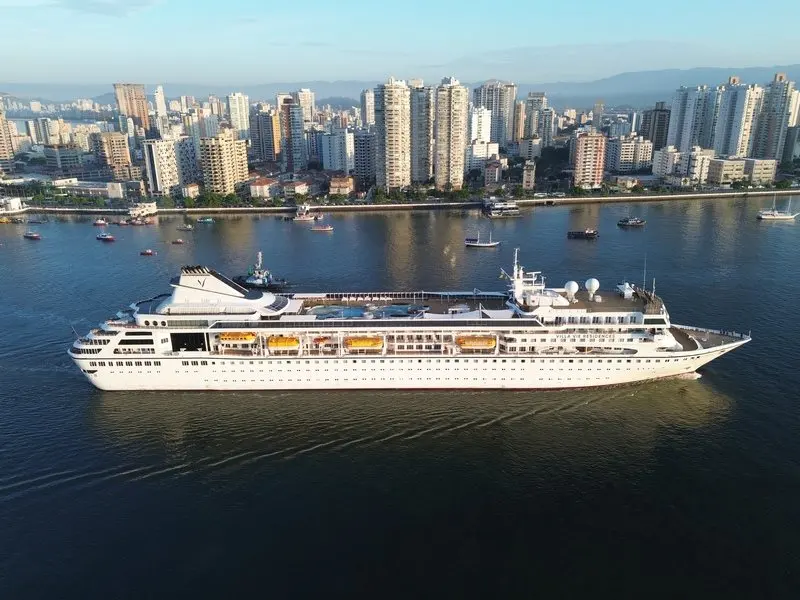
The idea of living permanently at sea just hit a very public speed bump. Villa Vie Residences' Odyssey, a residential cruise ship that set sail in September 2024, has been laid up in the Far East after the company ran out of money to buy fuel. Residents were told to disembark in Cambodia, with crew staying aboard to keep essential systems running.
CEO Kathy Villalbe broke the news in a letter to residents, saying the company had been unable to secure the fuel needed to continue operating. It wasn't a sudden shock. Randy Cassingham, a resident who writes on ResidentialCruising.com, described a cascade of problems: a shaky business model, management missteps and a crisis in fuel cost and availability all stacking up.
What's striking is how often residents were asked to plug the gaps themselves. Sources aboard told Cruise Industry News the company had made repeated funding requests, most recently asking residents for an additional $360,000 just to cover fuel. Back in April, residents received a letter offering an "Emergency Loan Investment Opportunity" seeking $3 million, with eye-watering interest rates of 12 to 24 percent, monthly interest-only payments and a balloon payment after a year. Whether that appeal raised anything remains unclear.
Two potential rescues were reportedly in play. Oneil Khosa, former CEO of Bahamas Paradise Cruise Line, spent time aboard evaluating a possible acquisition. Meanwhile, a resident-backed group operating under Sagar Capital LLC floated a multimillion-dollar fundraising plan that would have seen residents buy their own cabins outright. Neither has produced a confirmed outcome.
The Odyssey itself is a former Fred. Olsen Cruise Lines vessel called Braemar, built in 1993 and refurbished in Belfast before Villa Vie launched its residential concept from there in 2024. The pitch was simple and seductive: buy a cabin, live aboard, and circle the globe indefinitely. For the residents now looking for hotels in Cambodia, the reality has proved more complicated.
For anyone tempted by residential cruising, this episode is a case study in due diligence. These schemes ask for enormous upfront investment — often six figures per cabin — and their financial health depends on a small pool of owners plus volatile operating costs like fuel. If a company starts pitching emergency loans to its own customers, that's your signal to ask hard questions about solvency, refund terms and what happens if the ship stops sailing. It's worth remembering the broader category isn't dead: Storylines' Narrative had its own troubles, while more established lines offer long, multi-month world voyages on a lease basis that don't require buying in. The dream of waking up in a new country every morning doesn't have to mean owning the bed.
Cruise Industry News