Mandalay International Airport was built for crowds it no longer gets. When one travel writer passed through in autumn 2026, only about a third of the shops were open, the duty-free had mostly empty shelves, and the power cut out mid-check-in before a backup generator roared to life. The terminal, like Myanmar itself, is functional but running far below design capacity.
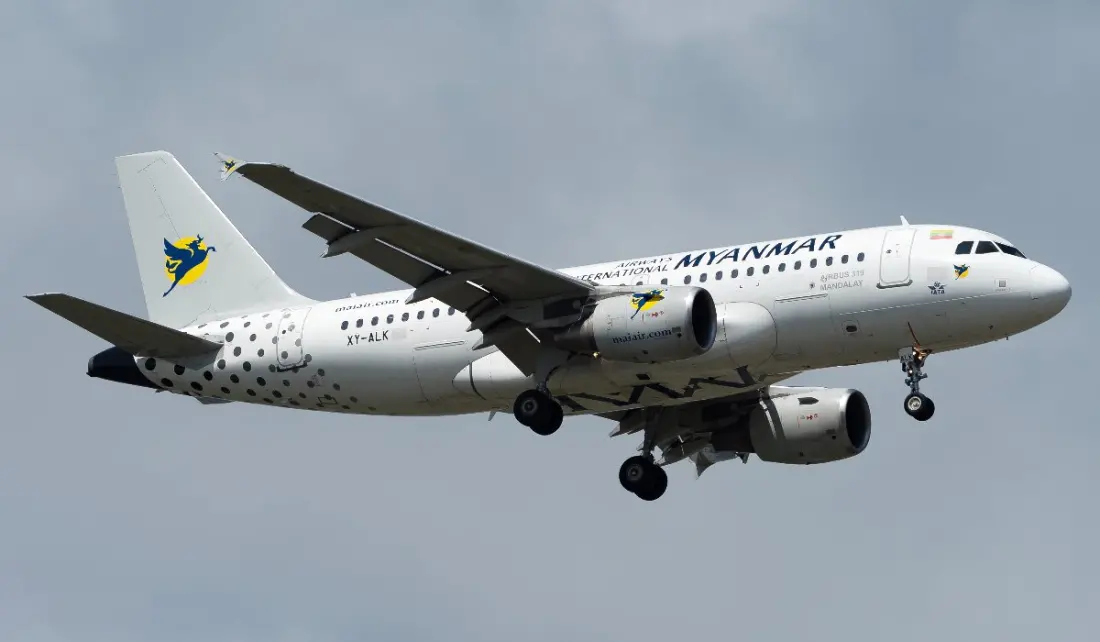
The airline keeping the Bangkok–Mandalay link alive is Myanmar Airways International (MAI), the privately owned flag carrier based in Yangon — not to be confused with state-owned Myanmar National Airlines. MAI flies the route daily from Bangkok Don Mueang with Airbus A319s, a scheduled flight time of one hour 50 minutes, and also serves Bangkok Suvarnabhumi. On board it's a standard short-haul full-service experience: a light meal, juice and snacks, with checked baggage up to 20kg included. One quirk worth knowing: the writer's booked A319 return was swapped for an ATR 72-600 turboprop, a 68-seat, all-economy 2-2 aircraft usually reserved for domestic routes but clearly available for international ones too.
The context is grim. Myanmar has been in civil war since 2021, and around the time the tickets were booked, opposition forces attacked the military side of Mandalay airport with drones — the first time they'd targeted it that way. The airport operated normally three weeks later, but the episode shows how even core infrastructure is now within reach of the conflict. Fuel shortages have reportedly suspended flights to Bagan, domestic routes shift constantly, and MAI's 12-aircraft fleet (six A319s, three ATR 72s, two A320s and one A321 freighter, averaging 16.8 years old) has no replacements on order.
Practical frictions start before you fly. The writer couldn't pay MAI directly — US and UK Mastercard and Visa attempts were repeatedly declined — and only succeeded through Booking.com. The eVisa process itself was straightforward and immigration was friendly, but foreign cards are unreliable inside Myanmar: bring crisp, unfolded US dollars, and expect exchange rates to vary wildly between the airport, Mandalay and Bagan.
The essential caveat: virtually no government advises travel to Myanmar right now. The US State Department's guidance is an unambiguous 'do not travel' due to armed conflict, landmines, arbitrary law enforcement and collapsed health infrastructure. Only a fraction of the central country is open to foreign visitors, businesses shut around dusk, and military-aged men were advised to stay off the streets after dark due to forced conscription risk. Even seasoned visitors to high-risk destinations should treat this one as off-limits for now.
So why does this story matter? Partly as a document of resilience — MAI still serves roughly 30 destinations and keeps the country connected when most international carriers have withdrawn, with China Eastern one of the few foreign airlines still reaching Mandalay. And partly as a preview: Myanmar remains one of Asia's great destinations — Bagan, Inle Lake, Yangon — and when stability returns, the travellers who understood what the country went through will appreciate just how remarkable its recovery is.