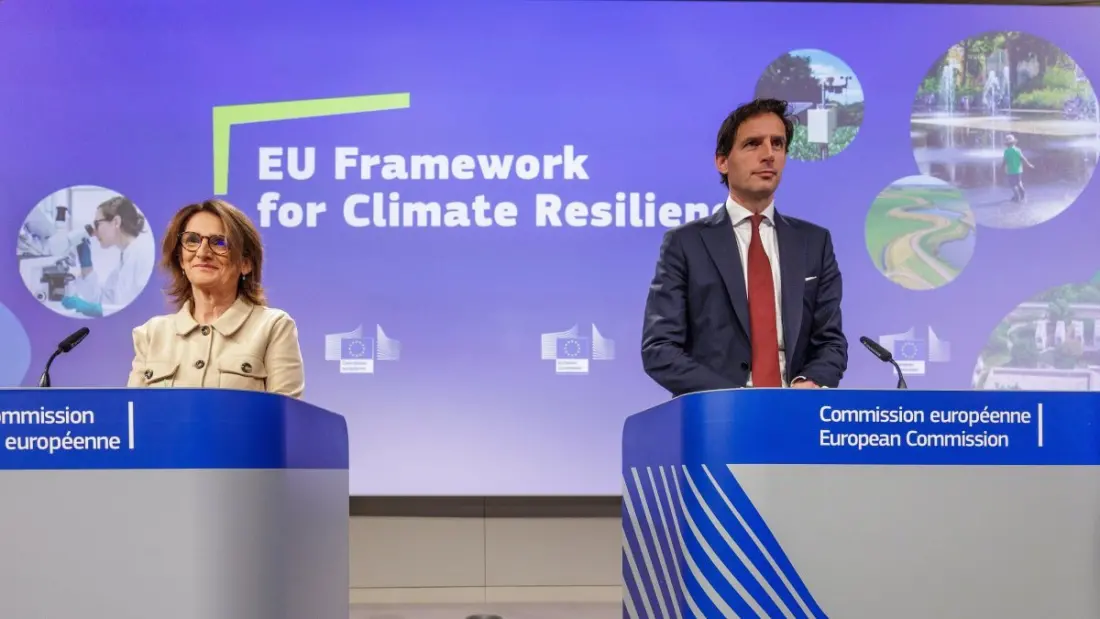
Europe is heating up faster than almost anywhere else, and the EU is finally building a coordinated response. On Tuesday the European Commission unveiled a climate strategy designed to spot and manage the continent's growing risks — droughts, floods, wildfires and deadly heat — with climate resilience folded into every major area of EU policy going forward.
The numbers behind the push are stark. The Commission puts climate-related economic losses at around €200 billion between 2022 and 2025 — roughly €50 billion a year. Copernicus data shows this past summer was the hottest on record for Western Europe, and by early September the land burned in EU wildfires was nearly double the 2006-2025 average. Scientists in the UK estimate heat killed about 50,000 people in European cities over the summer, with around 16,000 of those deaths in Germany alone, according to the Robert Koch Institute.
So what's actually changing? A planned Climate Resilience Act will require EU countries to assess their climate risks and draw up preventive plans using shared baselines — though each member state stays free to decide how it handles heat, drought or flooding based on its own priorities. The Commission also wants tools that turn data into action: a new European Climate Viewer will map hazards for specific locations and time periods, flagging things like railway routes especially exposed to extreme heat or heavy rain, while other platforms will point authorities toward proven measures for the risks they face.
Commission President Ursula von der Leyen framed it as a "whole-of-society" approach, stretching from Brussels down to town level, with investment and innovation as part of the package rather than just protection.
For travellers, this matters more than it might first appear. The Climate Viewer, once live, could become a genuinely useful trip-planning tool — checking whether your rail route through, say, southern France or Greece is prone to heat-related disruptions, or whether a region you're eyeing for August carries elevated wildfire risk. It's the same logic that has travellers checking air quality apps or hurricane forecasts, but built on official EU data rather than scattered sources.
It's also a sign of how summer holidays in Europe are shifting. With record heat and fire seasons now recurring, the shoulder months — May, June, September — look increasingly attractive for city breaks and rural trips alike. Expect more infrastructure adaptations in coming years too: shaded stations, hardened rail lines, and local alerts that may affect itineraries. Anyone travelling to the Mediterranean in high summer should plan around midday heat and keep an eye on regional warnings, and that's likely to stay true for the foreseeable future. This strategy won't cool Europe down, but it should make the risks easier to see coming — for locals and visitors alike.