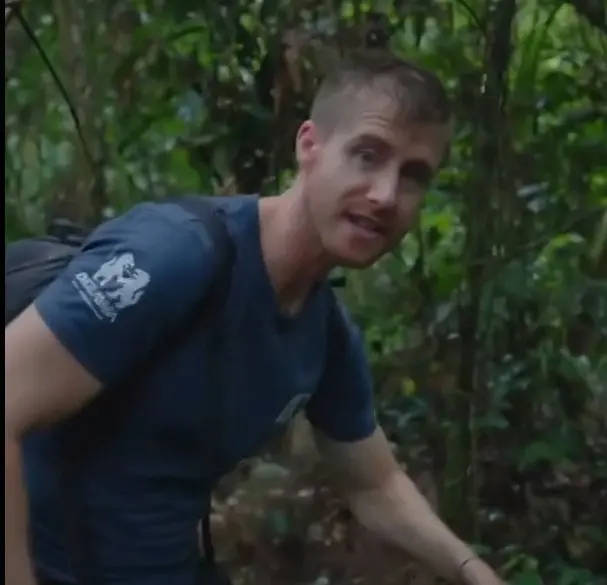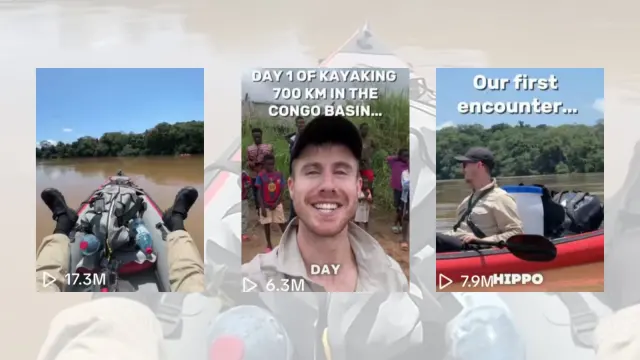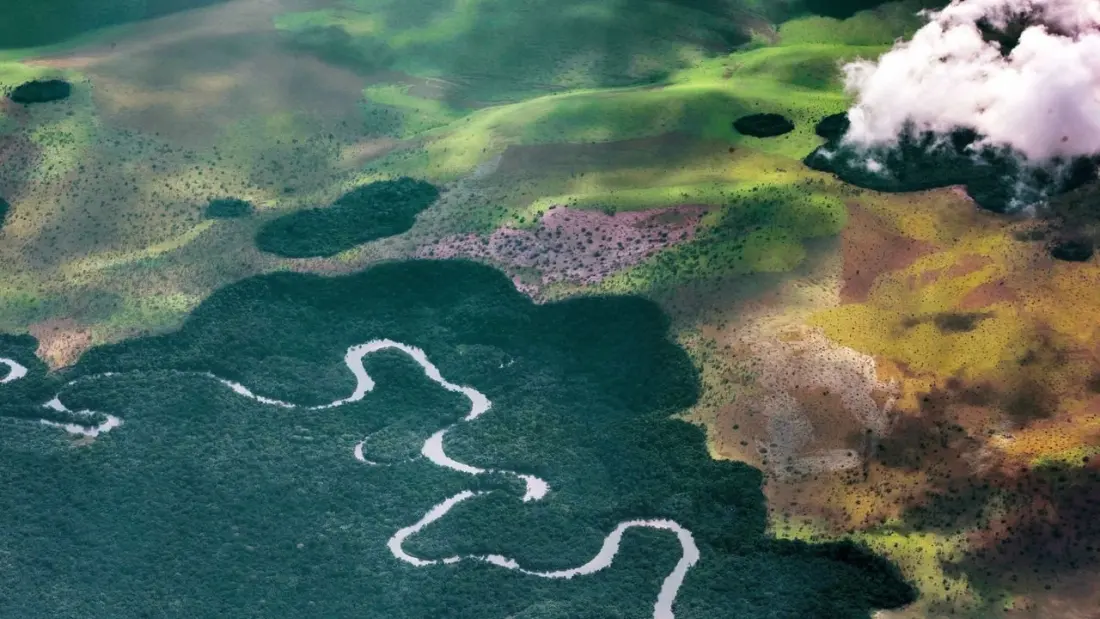
A minute-long clip of mysterious bubbles rising beneath a kayak on the Sangha River has pulled in more than 8 million views on TikTok — and it's only one chapter of a three-week paddling journey through the Congo Basin, the world's second-largest rainforest.
The man behind the footage is Ash Dykes, a Welsh adventurer who once spent nearly a year walking the length of China's 4,000-mile Yangtze River. His Sangha run — nearly 500 miles down a Congo tributary that flows through Cameroon, the Central African Republic and the Republic of the Congo — is the first leg of Project 6, a series of self-styled "impossible" feats. Next up: crossing Kyrgyzstan on horseback in subzero cold.
On the river, Dykes paddled with cameraman Will Perez and guide Obed Temba Tuyumvire, a Kigali-based conservation advocate whose company Kumbukumbu Tours arranges ecotourism in the region. Tuyumvire, who was born near Virunga National Park in the DRC and spent over a decade in a refugee camp after fleeing civil war, scouted the route and used the videos to talk about critically endangered forest elephants, deforestation, and a day spent with the Ba'Aka people in Dzanga-Sangha Protected Area, foraging and joining a traditional hunt.
The expedition's viral success came with complications. Dense forest canopy made connectivity a battle — Dykes insisted on going as live as possible, and when a power bank failed, worried followers assumed the worst. Comment threads ranged from genuinely curious to grim: some viewers bet money on how the trio might die, and Dykes has since questioned whether audiences can tell entertainment from reality. There was sharper criticism too. A Congolese academic, Guy Dieudonne Moukandi N'Kaya of Marien Ngouabi University in Brazzaville, took issue with Dykes' "heart of darkness" framing — a phrase rooted in Joseph Conrad's colonial-era novella — noting that the Sangha has been travelled by fisherfolk, traders and families in dugout canoes for centuries. "The Sangha is not empty," he wrote.
Tuyumvire himself says the viral audience hasn't converted into tour bookings — and admits he wishes he'd built in a stronger call to action, pointing to the Congo Rainforest Fund, the local NGO he works with on education and jobs. His real hope was simpler: that viewers would see a river and its people in their true context rather than through exaggerated headlines.
For travellers, the takeaway is that the Congo Basin is reachable — Dykes' own advice is that "you can go to places like this as long as you put the right preparation in" — but going with a local, knowledgeable guide is what turns a bucket-list paddle into something that actually benefits the communities who live there.