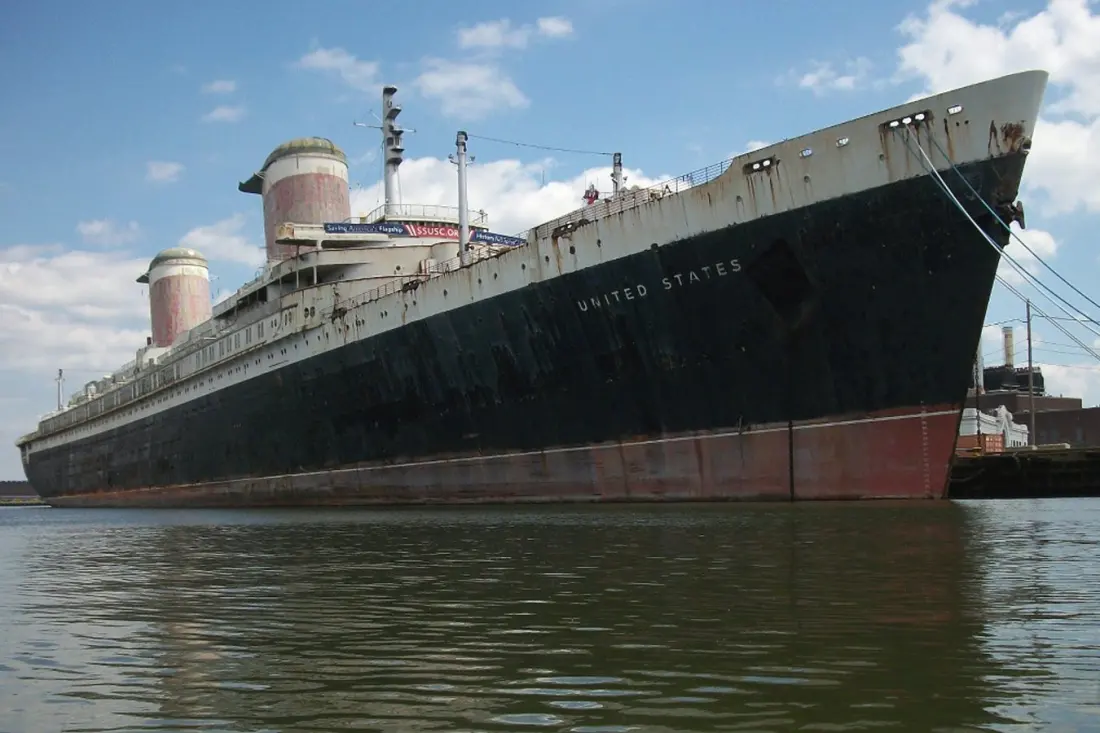
The fastest ocean liner ever to cross the Atlantic has ended its career on the seabed of the Gulf of Mexico. On November 11, the 990-foot SS United States was deliberately flooded and sunk about 22 nautical miles southwest of Destin, Florida, becoming the largest ship ever intentionally deployed as an artificial reef.
The sinking was slow and controlled rather than explosive. Crews opened valves around 1 p.m., letting seawater fill prepared compartments through the 12 decks. By around 9 p.m. the great liner rolled to port and slipped under. It now rests upright in roughly 180 feet of water, with its highest point about 50 feet below the surface — reachable, in theory, by experienced recreational divers. Divers photographed it upright the next day, though final survey work may refine those figures.
Okaloosa County bought the ship in 2024 and spent more than a year prepping it at a shipyard in Mobile, Alabama: 128 fuel tanks cleaned and ballasted, PCBs and wiring stripped out, portholes, both smokestacks, the radar mast and the propeller removed. Hundreds of artifacts will go into a planned land-based museum, and cut-through passageways were made so divers can move through the interior safely. The county's share of the project runs to US$13 million, with US$1.5 million from Visit Pensacola and US$500,000 from the Coastal Conservation Association Florida added on.
Not everyone approved. Preservationists fought for years to save the 1952-built liner — still the record holder for the fastest transatlantic passenger crossing at about 35.6 knots — and a federal lawsuit filed days before the sinking failed to win an emergency restraining order. With no funded restoration plan on the table, officials argued the reef was better than the scrap yard.
For travellers, the wreck sits near an established dive hotspot: the USS Oriskany, a 911-foot aircraft carrier sunk off Pensacola in 2006, already draws divers and anglers to the region. The new site should take years to mature into a full reef, but scientists from Woods Hole Oceanographic Institution will monitor its colonisation from the start — sampling water at 132 locations to track how metals leaching from the steel influence coral and sponge growth.
If you dive or fish Florida's Panhandle, this is now the biggest new site in the Gulf, and the Destin–Fort Walton Beach area has charter boats, hotels and restaurants geared up for wreck tourism. Less experienced divers can still enjoy the region's 500-plus existing artificial reefs while the liner's ecosystem develops.