
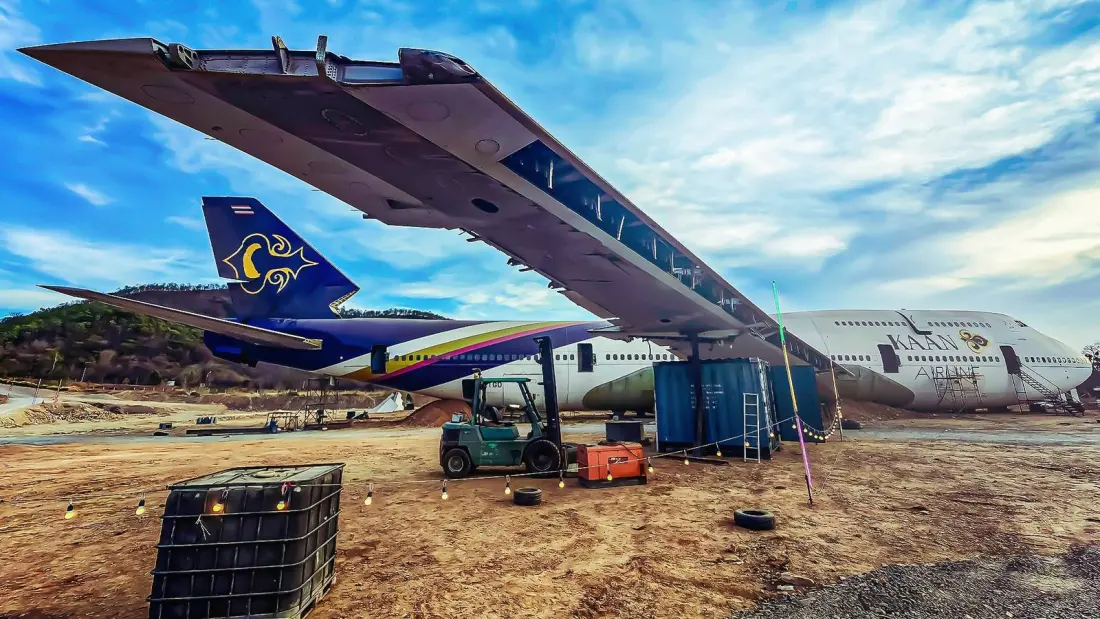
When a Boeing 747 reaches the end of its flying days, it gets ferried to a boneyard and taken apart piece by piece. What's left behind tells an odd story about where the real value in an aircraft actually sits: the stripped airframe, as raw scrap metal, is worth roughly $55,000 — less than a single landing gear assembly, which can sell for close to $300,000.
The numbers get stranger. Each of the 747's engines can fetch around $2 million on the second-hand parts market. Cockpit displays go for about $30,000 apiece, and an auxiliary power unit around $25,000. Meanwhile, storing a 747 at a boneyard costs about $60,000 per month — more than the entire scrap value of the leftover shell. In other words, once the valuable components are gone, the plane is essentially a liability.
There's a method to the dismantling. Crews first drain fluids and deactivate the explosives in evacuation slides, then pull the engines, landing gear, and avionics before inspecting the airframe for hazardous materials. Only then does the crushing and stripping begin. A 747 contains around six million parts, 170 miles of wiring, and 147,000 pounds of aluminium. Roughly 30% of a scrapped 747's components end up back on aircraft that are still flying, and only 10-15% of the plane ends up as genuine waste. Demand is real, too: production ended more than three years ago, yet a sizeable fleet of 747 freighters still needs spares.
Why do used parts beat new ones? Engines like the General Electric CF6 and Pratt & Whitney PW4000 still power plenty of widebodies, and landing gear is heavily stressed, expensive to make new, and subject to long lead times. Airlines routinely buy whole aircraft just to cannibalise them — United acquired CFM-powered Airbus A319s in the late 2010s, never flew them, sold the engines, and scrapped the rest.
The same logic applies to brand-new jets, according to analysis cited from Aviation Week. The Boeing 737 MAX 8 lists at $125 million but typically changes hands for around $56 million. A pair of spare CFM LEAP-1B engines can cost $40 million — more than many airframes. With engines, landing gear, and avionics accounting for so much, the airframe itself is appraised at almost nothing. The effect is starkest with the Airbus A320neo: young examples are being scrapped because their Pratt & Whitney PW1100G engines, plagued by durability issues and supply delays, are worth more than the planes they're bolted to.
The upshot is that the industry no longer treats an aircraft as one asset. It's a platform holding several high-value ones, and that value is only fully realised once the plane stops flying. Airbus and Boeing, meanwhile, sell airframes at thin margins under competitive pressure and make their real money on parts and servicing. For aviation enthusiasts, the takeaway is simple: the boneyard isn't the end of an aircraft's economic life — it's where the money is finally collected.