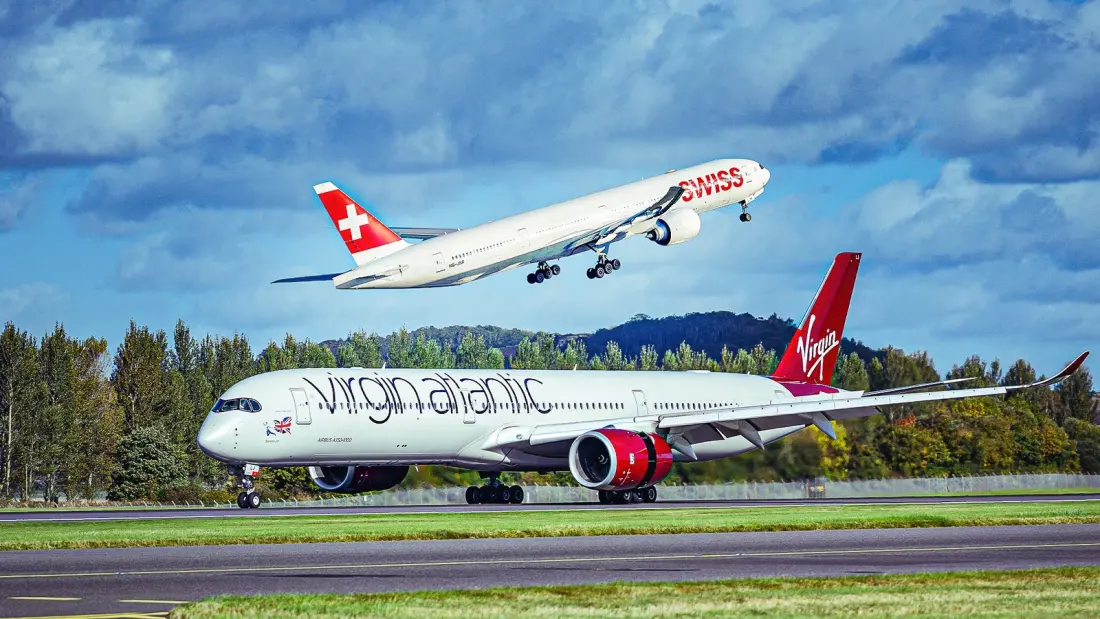
There's a real reason many long-haul flyers say the Airbus A350 leaves them feeling less wiped out than an older Boeing 777 on the same route. It comes down to how the cabin itself is engineered: lower pressurization altitude, better humidity retention and a quieter interior all work together to reduce the physical grind of a 12-hour flight.
The biggest factor is cabin altitude. Airbus targets 6,000 feet inside the A350, possible because its carbon-fibre fuselage can handle the structural demands, while conventional aluminium aircraft like older 777s typically operate closer to the regulatory ceiling of 8,000 feet. Research backs the difference: a 2007 New England Journal of Medicine study exposed 502 volunteers to simulated cabin altitudes and found that at 7,000–8,000 feet, oxygen saturation dropped and people reported more fatigue and muscular discomfort after three to nine hours. The study didn't find serious impairment, but it concluded that keeping cabins at 6,000 feet or below could reduce discomfort on long flights — exactly what the A350 is built to do.
Humidity plays a supporting role. Cruise cabins are famously dry, often 10–20% relative humidity, which dries out eyes, skin and throat over many hours. Aluminium aircraft historically limited moisture to avoid corrosion, but the A350's composite structure isn't vulnerable in the same way, so Airbus can retain more cabin moisture. Independent aviation-health research notes newer composite jets like the A350 and Boeing 787 hold more humidity than older designs, sometimes around 15%. It won't stop dehydration worries, but it removes a nagging source of discomfort.
Noise is more contested. Airbus claims the A350 is up to nine decibels quieter than competitors thanks to its Rolls-Royce Trent XWB engines and noise-optimised design, but independent measurements found widebody differences of only about three decibels — and the A380 was actually quietest in that sample. Still, a calmer cabin can make sleeping easier, especially combined with the other factors.
Don't treat this as a blanket verdict, though. The 777 has a slightly wider fuselage, and seat width depends entirely on how an airline configures it — a 777 with nine-abreast economy can offer more shoulder room than an A350 squeezed ten-abreast. Singapore Airlines is a good example: its 777-300ER economy seats can be wider than on its A350-900. Cabin class, seat location, lighting schedules and meal timing often matter more than the airframe itself. And Boeing's 777X, with its own quieter cabin and improved humidity claims, will narrow the gap further — though its headline 6,000-foot cabin altitude figure currently applies to the business-jet variant, not confirmed commercial configs.
The practical takeaway: if you're booking a long flight and two options look similar, it's worth checking which aircraft is scheduled and how the seat map looks. All else being equal, the A350's lower cabin altitude gives it a credible physiological edge, with humidity and noise adding to it — but no aircraft eliminates jet lag, and the specific airline product still decides most of your comfort.