A new European index has a surprising finding: Croatia has more than doubled its share of knowledge-intensive employment in just over a decade, and its capital now ranks among the top regions on the entire continent.
The geography of Europe's brain business jobs index, produced by the European Centre for Entrepreneurship and Policy Reform (ECEPR) with support from Nordic Capital, tracks adults working in tech, ICT, advanced services and creative professions. Croatia's share of working-age adults in these roles is estimated at 7.5 percent in 2026, up from 3.7 percent in 2014 — growth of 102 percent. Only Cyprus (159 percent) and Portugal (110 percent) grew faster among the countries that doubled their share over the period.
The contrast with Europe's big economies is stark. Since 2014, Spain's share grew 54 percent, Italy's 48 percent, Germany's 20 percent and France's just 18 percent. Croatia, in other words, has been growing at roughly twice the pace of Spain and five times that of Germany.
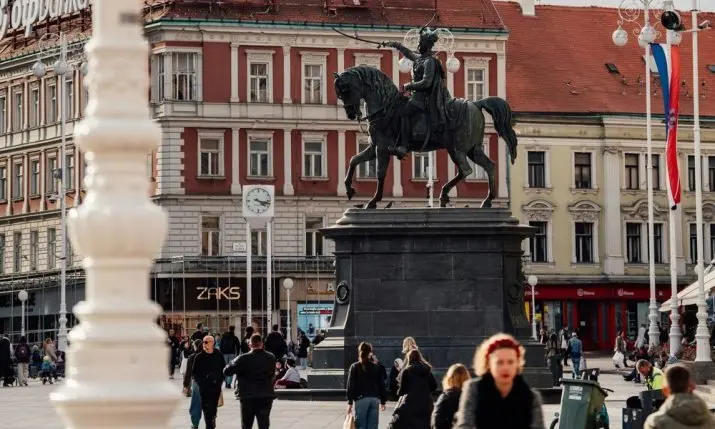
Zagreb is the engine behind it. In the capital region, 19.5 percent of adults hold brain business jobs — the sixth-highest figure of any European region with available data. ECEPR's CEO Nima Sanandaji credits Croatia's tax and regulatory settings plus a strong talent pipeline, noting that smaller countries in Central and Southern Europe are increasingly out-competing larger neighbours for these jobs. Nordic Capital's Klas Tikkanen adds that fast-growing knowledge economies tend to combine high numbers of engineers and scientists with a lower tax burden relative to GDP.
The economic payoff is tangible: each additional percentage point of the population in brain business jobs correlates with 0.18 points lower regional unemployment. Croatia also shows specific strengths in telecoms, with around 11,450 employees, and engineering and architecture, with 36,300.
Why does this matter to travellers? Zagreb is increasingly a base for remote workers, startups and digital nomads who want EU membership, a lower cost of living than Western Europe, and a growing professional community. The coffee-and-coworking scene around the city centre, plus the country's digital nomad visa, makes it easier than ever to plug in. And once work is done, the Adriatic is a short trip away — the same trend that's reshaping Zagreb's job market is also funding better cafés, flights and city amenities. For anyone weighing where to spend a working month in Europe, Zagreb now belongs on the shortlist alongside more obvious picks like Lisbon or Tallinn.