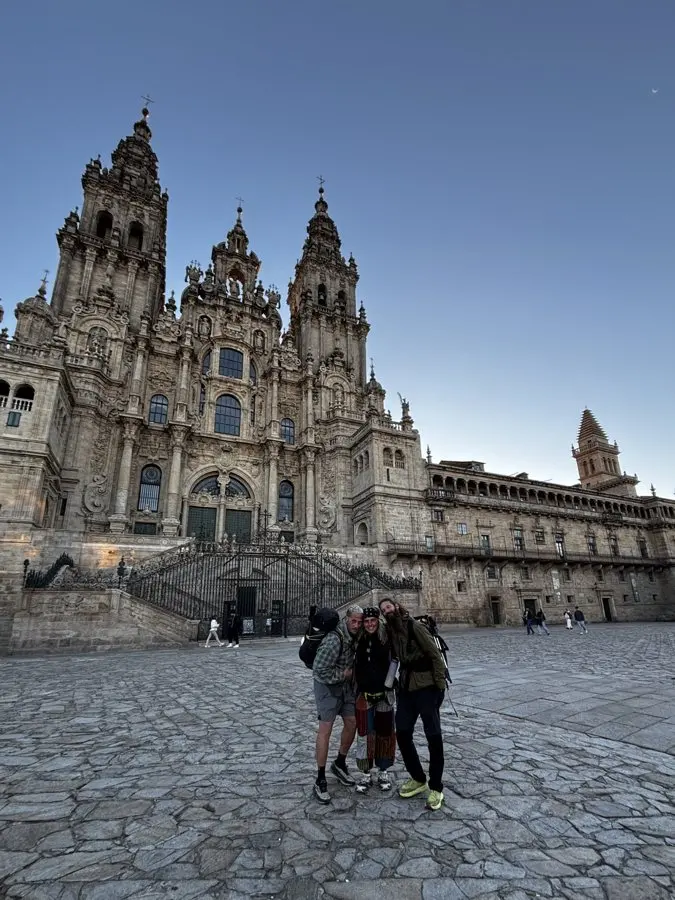
Arriving at the end of the Camino de Santiago is emotional enough. Arriving on your birthday, after 39 days on foot, alongside the friends you met on the trail? That's the kind of day one pilgrim writing for The Trek just lived through — and it's a useful preview of what the finish line in Santiago de Compostela actually looks like.
The final stretch is short but deliberate: a four-kilometre pre-dawn walk under the stars into the city, timed so the group could catch the 7:30am mass in the cathedral. Pilgrims leave their packs outside and step into the gold-anchored interior, where painted pillars frame the altar and the tomb of St James sits beneath the choir. One practical heads-up from the account: the famous botafumeiro — the giant swinging censer — wasn't running because the cathedral was under restoration, and mass was moved to a side chapel. If that ritual is on your bucket list, it's worth checking schedules before you plan your arrival.
After the cathedral, the day follows a rhythm most pilgrims will recognise. The official Compostela certificate gets issued at the pilgrims' office — bring your stamped pilgrim passport, since the required number of kilometres (100 walking, or 200 cycling) is verified there. Then comes the plaza: reunions with people met weeks earlier, group photos, café breakfasts and, in this case, birthday cake with a candle. By evening the city fills with walkers celebrating their last night together — tinto de verano and pinchos, the almond Tarta de Santiago passed around bars, darts at the well-known pilgrim hangout Pub Momo, and traditional Galician music and dancing in the old town's cellar bars.
What makes the story worth reading isn't the checklist, though. It's how quickly strangers become family over roughly five weeks of walking. One pilgrim reshaped his travel plans to stay an extra day for a birthday he'd only just learned about. Another got a tattoo of a photo taken on day one, before the group had even met. That social current is a big part of why people walk the Camino at all — the route is famously sociable, with albergue bunk rooms, shared meals and a predictable daily rhythm that turns a long hike into a moving community.
For anyone considering the Camino Francés, this account covers the payoff side of the equation. The walk itself takes most people four to six weeks from Saint-Jean-Pied-de-Port in France, though shorter segments starting in Sarria are popular with those on tighter schedules. Santiago itself rewards a slow finish: the cathedral and its rooftop tours, the pilgrim masses, the old town's granite streets, and day trips to Finisterre on the coast for those who want to keep walking to the sea. Go with time to spare — the last day in town, as this story shows, is often as memorable as the walk.