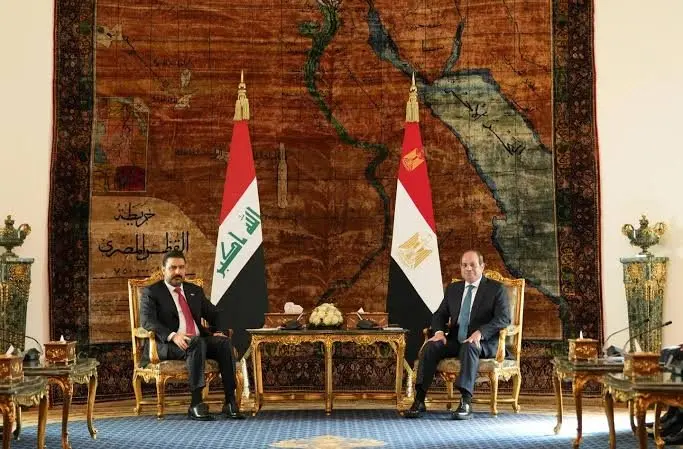
Baghdad and Cairo have agreed in principle to abolish entry visas between them, announced during Iraqi prime minister Ali Falih al-Zaidi's first official visit to Egypt on 23 November. Standing alongside President Abdel Fattah el-Sisi at Cairo's Ittihadiya Palace, al-Zaidi confirmed the deal — but left the fine print unsolved. No start date was given, and it's still unclear which categories of travellers will benefit.
For anyone who has crossed between these two countries before, the shift is striking. Iraqi passport holders were long treated with suspicion at Egyptian borders: their passports were physically held at Cairo airport on arrival, a rule only relaxed in 2019. A full visa waiver would be a genuine milestone for the families, workers and traders who move between two of the Arab world's biggest populations.
The economics explain the timing. Bilateral trade hit USD 1.1 billion in 2024, per Egypt's statistics agency CAPMAS, and Egyptian exports to Iraq climbed to roughly USD 880 million in 2025. Remittances from Egyptians working in Iraq more than doubled year on year, reaching USD 211.8 million in the 2023/2024 fiscal year. On the same visit, an Iraqi trade official floated a deal to supply Egypt with 10 million barrels of crude — potentially routed around the Strait of Hormuz — though no price or delivery schedule has been set.
The press conference also touched on regional security, with al-Zaidi calling Egypt "the heart of the Arab nation" and el-Sisi stressing that Egypt rejects any threat to shipping in the Gulf. The new prime minister, in office since 14 May, had already toured Washington, Tehran and Ankara before landing in Cairo, signalling a busy diplomatic opening few months.
So what does this mean for travellers? Right now, not much immediately — the announcement is a political commitment, not a border change you can use tomorrow. Watch for implementing rules from both governments, particularly whether the waiver covers tourism or only business and family visits. If it lands in full, overland and city-hop trips between Cairo and Baghdad become far more realistic than at any point in decades, and tour operators on both sides will likely move quickly. Until then, standard visa procedures still apply for most nationalities, and anyone planning travel between the two should check current entry requirements close to booking. It's one to keep on the radar rather than plan a trip around — but the direction of travel is clear, and the Cairo-Baghdad corridor is quietly becoming one of the region's more interesting routes to watch.
Story first reported by Egyptian Streets.