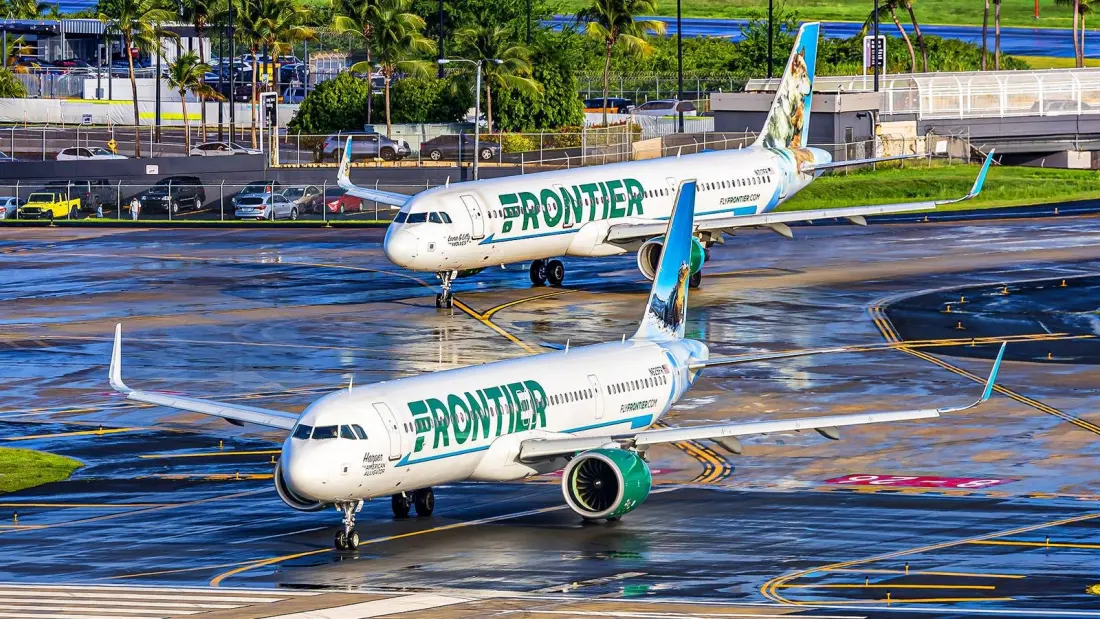
A brand-new Frontier Airlines jet found itself in genuine trouble last week — not from an engine failure or a storm, but from a dripping faucet. On November 11, flight F9-3566, a daily Denver-to-Detroit service, was cruising at 33,000 feet over eastern Iowa when the faucet in the forward lavatory sprang a serious leak. Water spilled out of the bathroom and spread across part of the cabin floor, prompting the pilots to declare 'mayday' and divert to Chicago O'Hare.
That may sound like an overreaction to a wet carpet, but on a modern airliner it is anything but. Much of an Airbus A321neo's avionics and wiring runs beneath the passenger cabin floor, so water seeping through the floor panels can threaten the systems that keep the jet flying safely. The crew reportedly told air traffic control they were worried about exactly that, and the aircraft descended through 24,000 feet on its way to an uneventful landing at O'Hare.
There were no injuries, and passengers were eventually on their way: Frontier dispatched a replacement A321neo (registered N655FR) to complete the trip, with arrival in Detroit running roughly four and a half hours late, shortly after 8:00 PM local time. The affected jet, N688FR, was only about two months old — it first flew on August 21 and was delivered to Frontier on September 3. It sat grounded for the rest of the day, then returned to commercial service on November 12.
Regulators take cabin-water leaks seriously enough to have formal rules about them. The FAA's current airworthiness directive on the subject, 2026-02-10, replaced an earlier rule issued after undetected leaks from Boeing 787 faucet modules dripped into electronics bays below the cabin floor. Different aircraft type, same underlying risk — water and avionics simply do not mix.
It has been a rocky stretch for Frontier's cabin reputation. In August, several flight attendants fell ill on one of its A321s, and more recently passengers rushed an exit door after being left aboard a hot aircraft when a jet bridge failed. Last week's diversion joins that list, though it ended far more calmly than some of the others.
For travellers, the takeaway is reassuring rather than alarming. Crews treat these situations as genuine safety events, diversions happen quickly and safely, and the aircraft concerned was inspected and cleared before flying again. Frontier remains one of the largest all-Airbus operators in the US, with 70 A321neos among its fleet, so this kind of prompt, precautionary handling is exactly what you'd hope to see if something ever went wrong on your own flight.