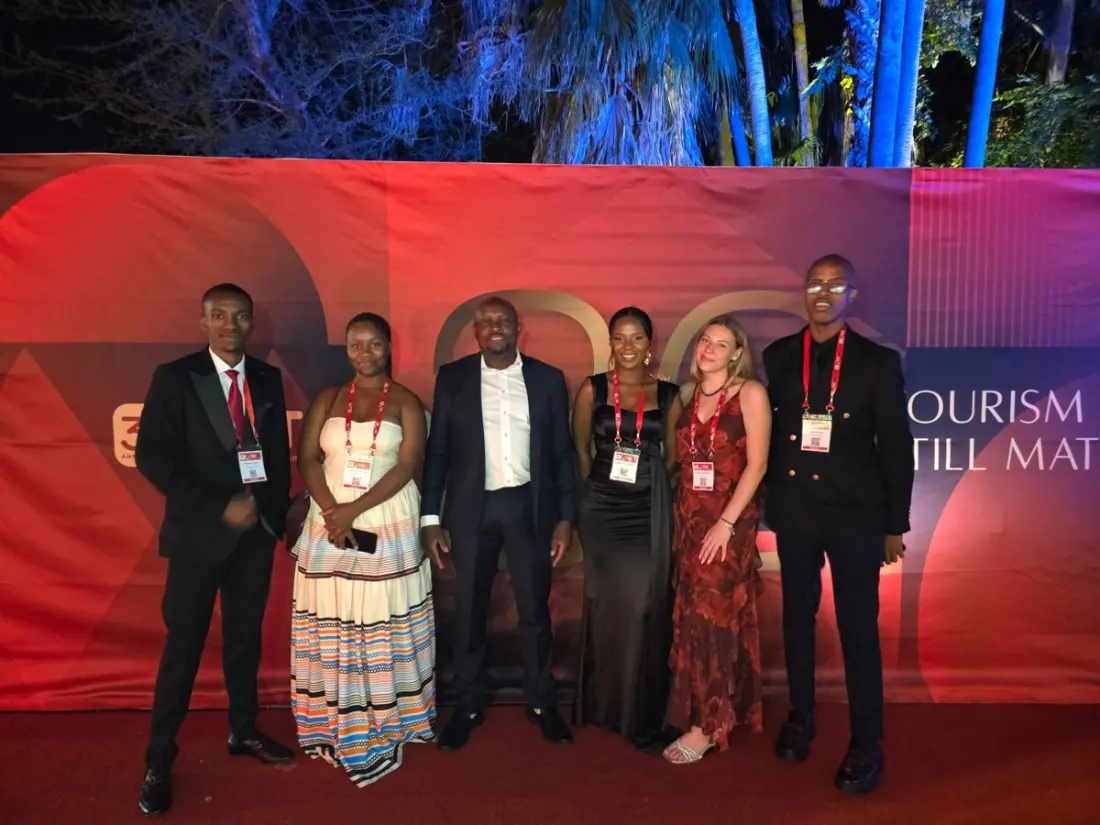
At the Tourism Business Council of South Africa's 2026 Tourism Leadership Conference, a handful of emerging operators got a seat at the table usually reserved for executives and policymakers. Chosen through the TBCSA Youth-led Tourism Initiatives Competition, they came from four different provinces and very different businesses — and they left with a shared conviction: young people should help shape South African tourism, not just work in it.
The group included Sandile Popi of Tokende Africa, an educational tourism company in Gauteng; Oyama Bam of Imbiza Cultural Tourism in the Eastern Cape; Thalente Tshezi of Florence's Grass Heritage Crafts in Bulwer, KwaZulu-Natal; and Inam Amy Siyengu of Agape Camping Site in the Northern Cape. University of Johannesburg tourism graduate Teagon Spykerman joined them as one of the sector's top achieving young professionals.
Collaboration was the recurring theme. Popi came away convinced that tourism grows through cooperation between government, business, associations and communities rather than isolated effort. Tshezi put it in regional terms: operators around the Drakensberg should stop competing and start marketing the destination as one, developing local residents in the process. Bam is now working on a network of local cooks, storytellers, musicians and dancers to build authentic Xhosa cultural experiences for visitors.
There were harder business lessons too. A leadership masterclass by businessman Mteto Nyati stuck with Popi: a vision means little without clear priorities, disciplined execution and measured results. Siyengu, who built her campsite in a rural Northern Cape community with limited resources, said the experience taught her that passion alone doesn't sustain a business — foundations, financial planning, systems and partnerships do. She now plans to make Agape investment-ready and eventually develop it into a recognised regional destination that creates rural jobs.
The ambitions got bigger across the board. Bam wants Imbiza to grow beyond East London into a cultural tourism brand with national and eventually international reach. Popi sees Tokende Africa evolving into a bridge between universities and the tourism industry. Tshezi frames his craft business around heritage preservation and market access for local artisans, including women, young people and people with disabilities. And Spykerman's message to fellow graduates is straightforward: spot the gaps in the industry and build businesses that fill them.
For travellers, this is a sign of what's coming. Community-based cultural experiences, heritage crafts and rural stays across South Africa are increasingly being shaped by a generation thinking beyond quick visitor numbers — towards ventures where local people genuinely benefit. Watch these names: the experiences they're building could be some of the most rewarding ways to see the country in the next few years.
Story via Nomad Africa.