The Isle of Wight has added another entry to its palaeontology CV — and this one was sitting in London the whole time. A fossil dug up on the island more than a century ago has been identified as a brand-new species of meat-eating dinosaur, Invictibellatrix amberina, a name that roughly translates as 'unconquered female warrior'. The find was published in Royal Society Open Science by a team led by Dr Cassius Morrison of University College London.
The fossil's story is almost as good as the dinosaur itself. Amateur collector Reginald Walter Tooley found it on the island in the early 1900s, and the Natural History Museum acquired it — along with more than 1,000 other specimens from his collection — in 1924. There it stayed, largely forgotten, until researchers ran the piece of skull through a CT scanner, built a 3D model and compared it with the brain cases of other carnivorous dinosaurs.
What emerged was a predator from around 120 million years ago, in the Early Cretaceous. Invictibellatrix belonged to the megaraptorans — agile, two-legged carnivores related to T. rex but famous for doing their hunting with huge, curved arm claws rather than their jaws. This one was modest by predator standards: three to four metres long, about 1.5 metres tall, with claws somewhere between 10 and 20cm. It likely had feathers and ate smaller dinosaurs, lizards and mammals — researchers compare its ecological role to a modern hyena.
The bigger deal for science: no megaraptoran had ever been identified in Europe before. The group is poorly understood because fossils are scarce, and the team's mathematical modelling of how these dinosaurs spread across the globe now has a key data point on the map. It's also a reminder that museum drawers can hold undiscovered species — paleontology isn't only about fieldwork.
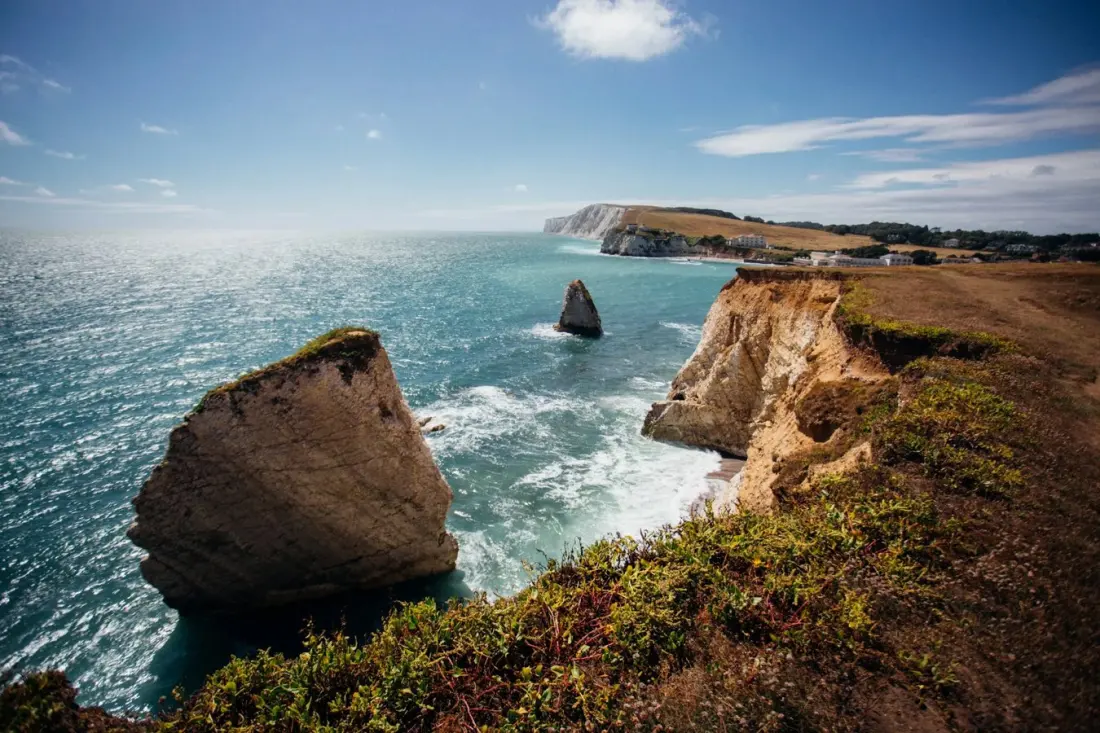
Why should holidaymakers care? Because the Isle of Wight is one of Europe's best places to see dinosaur history for yourself. Its eroding coastal cliffs at spots like Compton Bay regularly give up fossils, and the island leans into it with dinosaur-themed attractions and guided fossil walks. Anyone can try beachcombing after a storm, though local rules apply and some areas restrict collecting — check guidance before you pocket anything. It's a rare family holiday where a walk on the beach comes with a genuine chance of spotting a 120-million-year-old bone.