Spain doesn't really have one national cuisine — it has seventeen, one for each autonomous community, and many of the best dishes are tied tightly to a time of year. Time your trip right and you can eat your way through an entire calendar of regional specialities, many of them protected by EU quality labels.
Spring starts in Catalonia with the calçotada, an outdoor feast built around calçots, sweet green onions charred over vine cuttings, wrapped in newspaper and eaten by hand with romesco sauce. Valls, near Tarragona, holds a big festival for them every January. Spring is also white asparagus season in Navarre — known as "white gold" and PGI-protected — plus artichokes in La Rioja, often served in menestra de verduras or with garlic, onion and cured ham. On the northern coast, Cantabria's Santoña anchovies, salted and cured in olive oil thanks to a 19th-century Italian influence, are caught in spring but eaten as tapas all year.
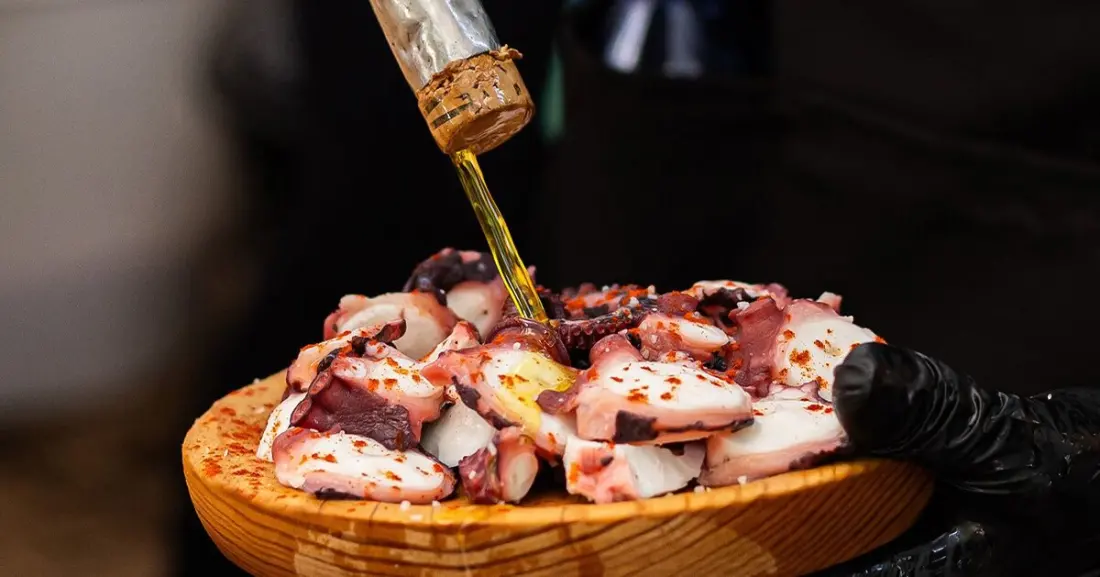
Summer belongs to the south and the islands. In hot Andalusia, gazpacho — tomatoes, peppers, cucumber, bread, garlic, olive oil, vinegar — appears everywhere, including watermelon versions. Valencia's paella valenciana, born in the rice fields around L'Albufera lagoon and declared an intangible cultural asset in 2021, has a strict ten-ingredient recipe: rice, chicken, rabbit, green beans, garrofó beans, oil, water, tomato, salt and saffron. Seafood versions are fine, but don't call one paella valenciana unless you want an argument. Galicia serves pulpo a la gallega on wooden platters with paprika and salt, Murcia dishes up juicy ensalada murciana with jarred tomatoes and tuna, and the Canary Islands champion gofio, toasted grain now used by chefs in everything from breakfast to mousse.
Autumn means Manchego cheese from Castile-La Mancha, aged anywhere from 30 days to two years, and acorn-fed Iberian ham from Extremadura's dehesa pastures, with the montanera acorn-feeding season running October to March. In Segovia, cochinillo asado (roast suckling pig) is so tender it's carved with the edge of a plate — and the plate is often smashed on the floor afterwards. Mallorca's spiral ensaimada pastry, made with lard and topped with powdered sugar or custard, chocolate or sobrasada, carries PGI protection.
Winter is for stews and cider. Asturias warms up with fabada, a white bean stew loaded with chorizo, morcilla and pork. Madrid's cocido madrileño arrives in three courses: noodle broth, chickpeas with vegetables, then meats. Aragon's ternasco lamb became Spain's first quality-designated fresh meat in 1989 and stars on Christmas tables. And from mid-January to April, cider houses around Hernani and Astigarraga near San Sebastián open their barrels — when someone shouts "Txotx!", grab your glass and line up under the pour.
The takeaway: there's no bad month to eat in Spain, only regions that fit better than others. Plan around the dish and you'll see a different Spain every time.