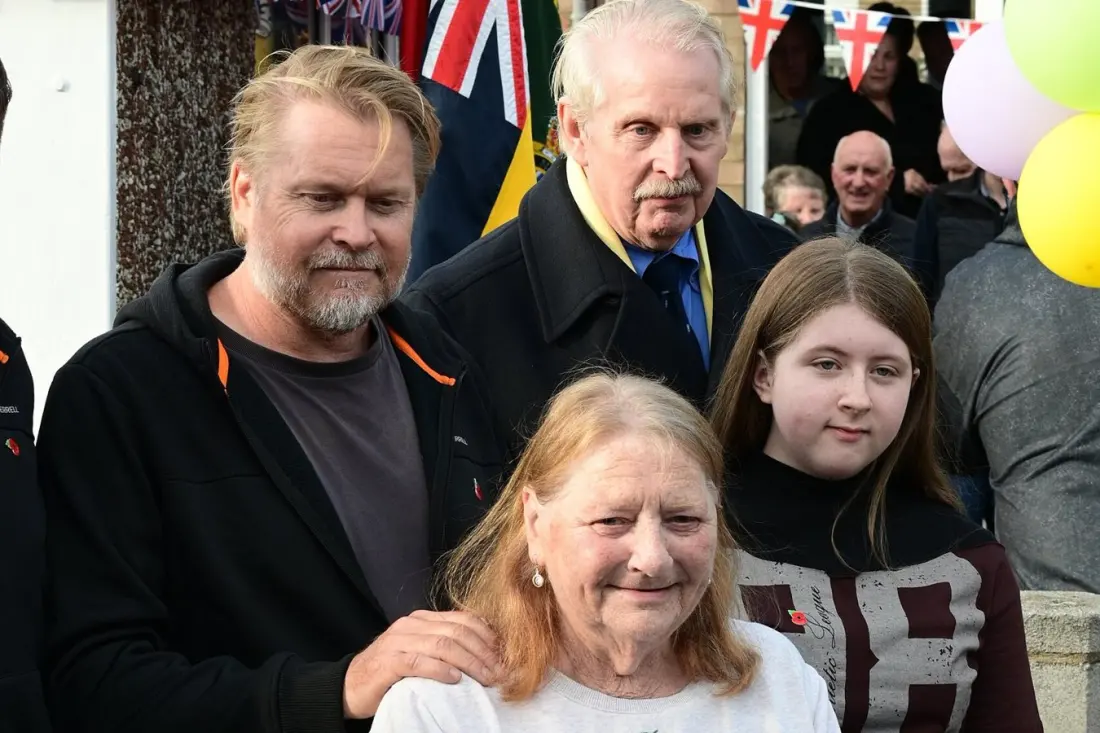
On November 2, 2026, a 57-year-old former British paratrooper knocked on his mother's door in Hull and ended one of the longest walking expeditions ever attempted. Karl Bushby left the city on November 1, 1998, and has spent the past 28 years trying to walk home from the southern tip of South America — a project he called the Goliath Expedition, with one uncompromising rule: every mile of progress had to be made under his own human power.
The numbers alone are staggering. Bushby covered roughly 50,000 kilometres (31,000 miles) across four continents and 30 countries, starting in Punta Arenas, Chile, in 1998. Some legs tested the rule to its limit: in 2024, denied viable land routes across the Caspian region, he and explorer Angela Maxwell joined two Azerbaijani champion swimmers for a 288-kilometre crossing from Kazakhstan to Azerbaijan — 31 days and over 132 hours at sea. He admitted to NPR that he swims like "a cat dropped into a bathtub."
The hardest stretch came early. Crossing the Darien Gap between Colombia and Panama in 2000–2001, Bushby moved through a live conflict zone contested by FARC guerrillas, government forces, paramilitaries and traffickers. He disguised himself as a vagrant, sewed maps and medicines into hidden pockets, and sometimes floated down rivers on his back posing as debris. At gunpoint more than once, he later reached Panama — only to be jailed for 18 days for entering a restricted area. His army intelligence background saved the expedition: he drew a map from memory for a senior Panamanian officer and was released.
The Bering Strait was its own epic. In 2006, he and French-American adventurer Dimitri Kieffer made the roughly 90-kilometre crossing from Alaska to Russia, surviving drifting ice, lost equipment and a face-to-face polar bear encounter — then were detained for entering Russia outside an official border point. Years of visa refusals followed, prompting Bushby to walk from Los Angeles to Washington, D.C., in 2012 to protest outside the Russian Embassy. The 2008 financial crisis and the pandemic stalled him further.
The finale had a distinctly English twist. Refused permission to walk through the Channel Tunnel, he swam the Channel from France over several days, reaching Dover on October 5, 2026, where his father and brothers waited on the beach. From there he pushed his equipment cart, Beast 2, about 400 kilometres to Hull, crossing the Humber Bridge to a welcome from hundreds of people at Queen Victoria Square — and then his mother's banner: "Welcome Home Son."
Beyond the adventure itself, the story is a rare reminder of what extreme travel costs the people left behind. Bushby met his 12-year-old granddaughter for the first time at the finish, and told NPR that the people he loved most "pay a price for your antics and for your ambitions." For travellers, his route reads like a map of the world's most stubborn barriers — the Darien Gap, the Bering Strait, Russian bureaucracy — places most of us will only ever cross by plane, and now know a little more intimately.