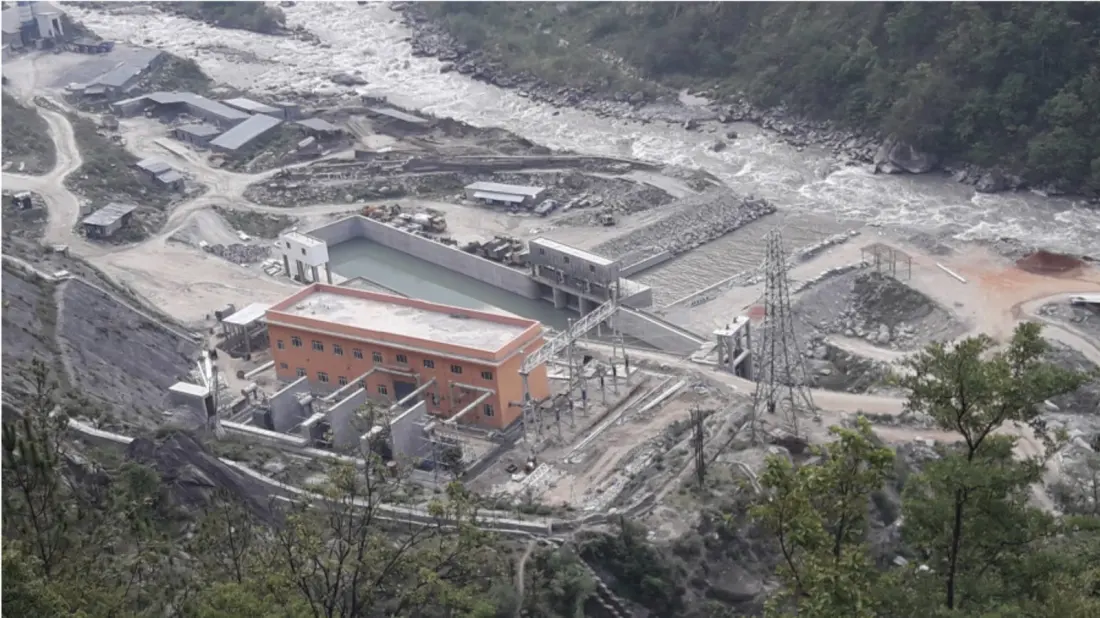
A rapid review by the World Weather Attribution team has backed up what Himalayan researchers have warned about for years: warming is fundamentally changing how the mountains behave. In Nepal, the Bhote Kosi-Trisuli disaster — a cascade of geological and hydrological failures in the high cryosphere — has become the case study for why old assumptions no longer hold.
The science is blunt. A warmer atmosphere, shifting rain and snowfall patterns, shrinking glaciers and thawing permafrost all weaken slope stability and change how water and sediment move through river valleys. When those forces combine with steep terrain and heavy infrastructure — roads cut into hillsides, hydropower plants squeezed into narrow gorges, settlements on floodplains — the result is hazards that chain together in ways past planning never anticipated.
Here's the uncomfortable part: the Himalaya is still scientifically under-served. As far back as 2007 the IPCC labelled it a 'white spot' because of sparse monitoring stations and research. Twenty years on, little has changed. Nobody fully understands how permafrost is shifting, why rain is falling at ever higher elevations, or how altered river flows — dammed, diverted and engineered for a century — will respond to new extremes.
The authors argue for a mix of tools: satellite remote sensing and AI can spot surface movement across vast, inaccessible terrain, but they can't see underground, and they're useless without field scientists, long-term data and institutions able to turn warnings into evacuations. Early-warning systems, they stress, are only as good as the last mile — the people and local bodies who actually act on them.
The deeper argument is about development itself. Roads destabilise slopes, excavation reroutes drainage, and hydropower concentrates people and assets in exactly the valleys most exposed to floods and landslides. 'Build back better' has too often stayed a slogan. The writers call for risk to be built into project design from day one, for redundancy — so one failed road or communication line doesn't cascade into catastrophe — and for cross-border cooperation among Himalayan countries.
The global backdrop isn't encouraging. Average warming in 2016–2025 hit 1.26°C above pre-industrial levels, with 1.24°C of that human-caused. UNEP's Emissions Gap Report 2025 puts the world on track for roughly 2.3–2.5°C by 2100 even if all pledges are met, and temporary breach of the 1.5°C threshold is now considered very likely this decade.
For travellers, this matters in practical terms. Trekking routes, hill roads and river valleys in Nepal face real and growing monsoon-season hazard, and infrastructure you rely on — a road, a bridge, a phone signal — may fail without backup. Check route conditions and weather advisories before heading into the hills, build slack into itineraries, and take local warnings seriously. The mountains aren't closed for business; they just demand more respect than they used to.