There are more polar bears than people in Svalbard — roughly 3,000 of them across the archipelago and neighbouring Franz Josef Land, versus about 2,100 residents in the capital, Longyearbyen. That alone tells you what kind of trip this is: raw Arctic wilderness, not a city break.
Wildlife is the obvious draw. Polar bears have been protected here since 1973 and tend to be solitary, though they'll gather where a stranded whale washes up. Walruses, seals and whales share the waters, and while only around 130 bird species breed here, some colonies are enormous — more than a million little auks. Many of the breeding grounds are deliberately hard to reach, which has kept the fragile ecosystem intact.
History buffs get something unexpected: Soviet ghost towns. Pyramiden, abandoned in winter since 1998, is a full-day snowmobile trip from Longyearbyen and feels frozen in time. Nearby Barentsburg is still inhabited, with several hundred residents living in a Khrushchyovka-style concrete block. The town struggled badly after the Soviet collapse — supplies ran short, and a 1997 methane and coal dust explosion killed around 20 miners. Renovations have since given the hotel, hospital and cultural buildings a facelift, but the Eastern Bloc atmosphere remains.
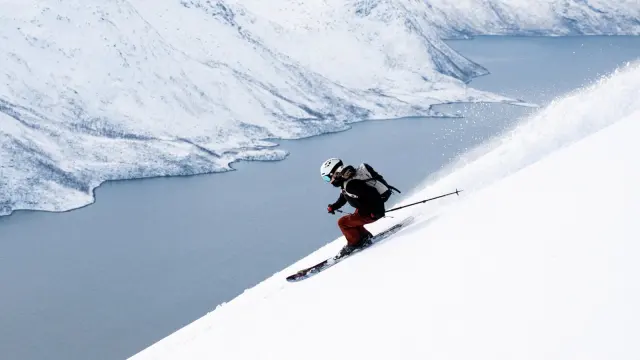
Roughly 60% of Svalbard is ice-covered, and Magdalenefjord is the postcard star: steep alpine walls with a glacier sliding into the sea, and the archipelago's most photographed landmark. Hornsund, where several glaciers terminate into side arms of the fjord, is another highlight. Skiers crossing the glaciers should aim for April to mid-June, before meltwater opens the crevasses.
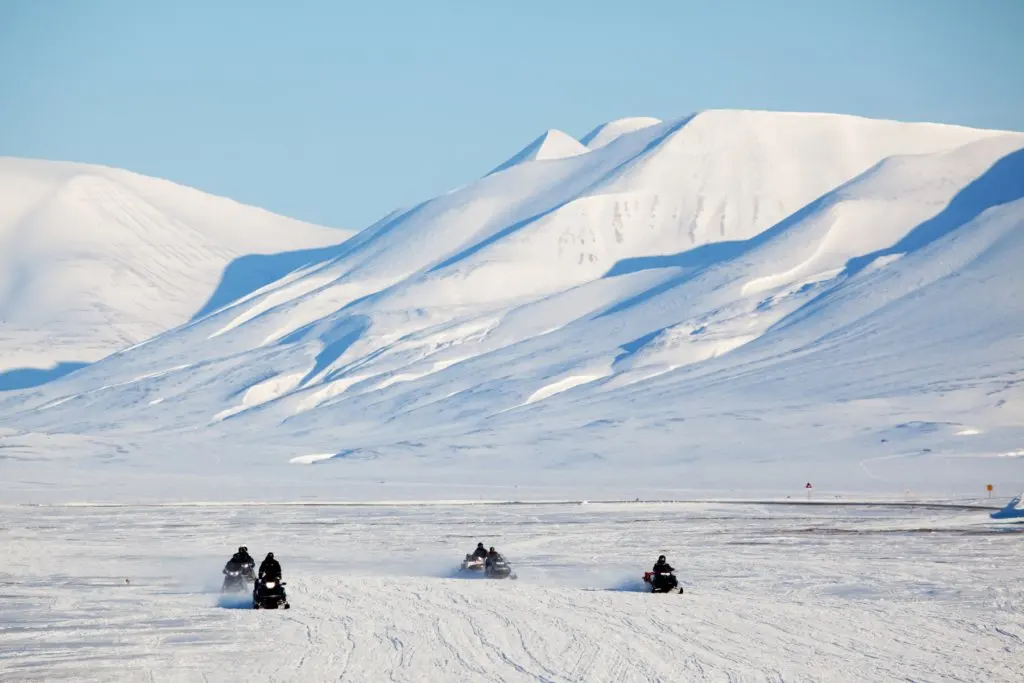
Getting around is an adventure in itself. Dog-sledding runs from late February into May, with some multi-day cabin-to-cabin trips. Snowmobiles are far faster — an hour's ride can cover what takes a sled team two days — and April is the sweet spot: cold enough for solid snowpack, but before May's melt sets in.
For the truly pioneering, organised tours to Franz Josef Land (closed to visitors for about 60 years) offer icebergs bigger than Svalbard's, big mammals at every turn, and well-preserved relics from the polar expeditions of Nansen, Jackson, Sedov and others.
Then there's the polar night. From late October to mid-February the sun doesn't rise in Longyearbyen, but the true spectacle is mid-December to early January, when it's genuinely dark around the clock — a phenomenon you won't find even in northern Scandinavia. Northern lights can appear at midday, and a near-full moon hanging above the horizon casts surprisingly strong light across the snow. On clear nights, stars alone are enough for a hike on the tundra once your eyes adjust.
Longyearbyen itself is a curiosity: the world's most northerly 'capital', claiming the northernmost hotel, newspaper, post office, swimming pool, civilian airport and even kebab shop. The mainland is only 90 minutes away by plane if you need anything it can't provide.
This is for travellers who want their holidays strange and memorable — photographers, wildlife watchers, polar history fans and anyone who'd rather experience a month without sun than another beach week.