Day 34 of a Camino Francés pilgrimage reads like a strange little snapshot of Spain's most famous walking route. The writer left Arzúa at dawn to find its streets completely empty — a modern, well-kept town with nobody in sight, feeling almost post-apocalyptic. Then 12 miles later, they rolled into O Pedrouzo, a town that exists almost entirely to serve pilgrims on the last stage before Santiago de Compostela.
The route itself was livelier than the towns. The final week of the Camino fills up with walkers, and the writer noted the trail felt more touristy than quietly spiritual these days. Most of the day wound through green woodland tracks, farm fields and stretches lined with old stone walls, with a few surprisingly sharp climbs and descents through ancient hamlets. A brief light rain — the first in weeks — cooled things to a comfortable mid-60s°F.
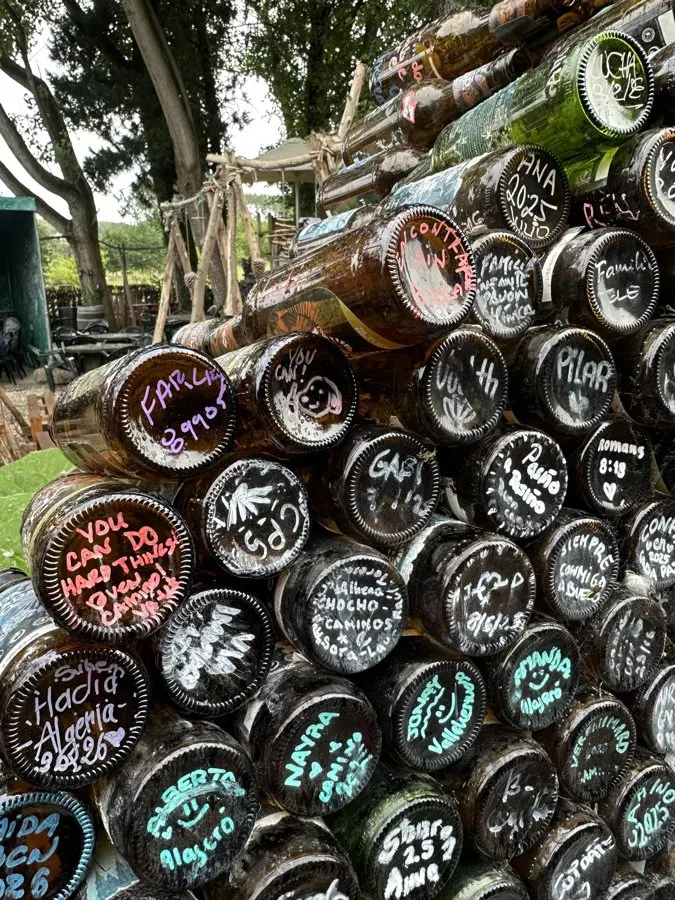
One detail worth slowing down for: on an overpass crossing a motorway, the chain-link fence was layered with thousands of wooden crosses, notes and memorials left by passing pilgrims. It's a small, unplanned monument that says a lot about what the route means to the people on it.
O Pedrouzo (also called Arca) offered little sightseeing — like Arzúa, it's a service town built around pilgrim traffic. But dinner delivered: a Mexican restaurant serving paella negra, squid-ink rice that comes out jet black and richly savoury, plus a burrito good enough to pass for home cooking. The evening finished on an albergue patio with wine and views over valleys, forests and distant mountains, the night before the final push into Santiago.
For anyone planning the Camino, this stage is a useful preview of what the last days feel like: accommodation books up fast, the path is crowded, and towns are functional rather than pretty. The reward is momentum — a tramily (trail family) of fellow walkers, easy conversation eating up the miles, and the cathedral in Santiago close enough to feel real.
Who's this for? Pilgrims in training, long-distance hikers curious about the Camino's social side, and anyone wondering whether the famous route still feels like a pilgrimage. Short answer: it's both — busy and communal, with quiet moments hiding in the details like a fence full of crosses.