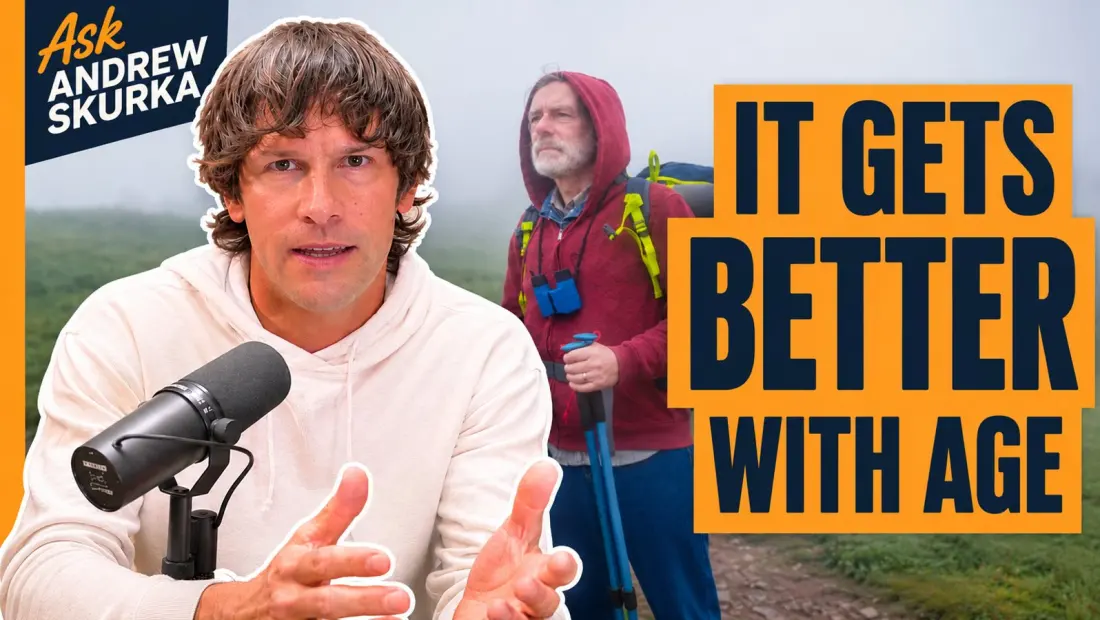
Andrew Skurka has spent long enough on trail to know both sides of the ageing question. In his twenties he notched up firsts like the C2C Route, the Great Western Loop (208 days averaging 33 miles a day, at age 27) and the Alaska-Yukon Expedition. For the past 17 years he's run a guided backpacking service, taking roughly 400-500 clients a year into southern Utah, Alaska, Yellowstone and the High Sierra. His message to hikers watching the decades tick by: your best years on trail are not behind you, but only if you adapt.
The numbers from his trips are revealing. In 2026, 24% of his clients were in their 50s and 23% in their 60s, but just 4% were in their 70s. Participation drops off sharply late in life, so his advice is blunt: don't sit on big backpacking goals. Exceptions exist - "Greybeard" recently became the oldest person to thru-hike the Appalachian Trail at 91 - but Skurka calls that a freak outlier rather than a plan.
His practical fixes fall into five buckets. First, plan less ambitious itineraries; miles and vertical simply take longer and recovery is slower. Second, expect to lose uphill power even if flat terrain still feels fine, so add weight training, climb-specific work, and shorten your stride with a quicker cadence to spare your joints. Third, agility fades on talus, scree and slickrock - slow down, use trekking poles ("four legs instead of two"), and train balance with one-legged squats or BOSU ball work.
Fourth, recovery is the big change. Build easier days into multi-day trips, choose loops with shortcuts so you can trim a route when you're flagging, carry ibuprofen (with care - it can stress kidneys), and treat self-care in camp as part of the plan: stretching, cold-water soaks, even the occasional foam roller. Fifth, sleep is where older hikers quietly fall apart. His kit upgrades: a plush thick pad (the Therm-a-Rest NeoAir XLite as a bare minimum), a real pillow instead of a stuff sack of bar wrappers, a dedicated pee bottle for night-time, and, for anyone with sleep apnoea, a lightweight CPAP machine - a couple of pounds that can be the difference between a week-long trip and a miserable three-day bail.
Why should a traveller care? Because plenty of holidays - Utah canyon country, the High Sierra, Alaska tundra - are best experienced on foot, and the barrier isn't motivation, it's planning. Older travellers typically have more time and money; what they need is realistic route design and a slightly heavier comfort kit. The 50s and 60s are peak years for guided trips; the trick is booking the ambitious stuff while the window is open. Applications for Skurka's 2027 guided trips open on December 7, 2026.