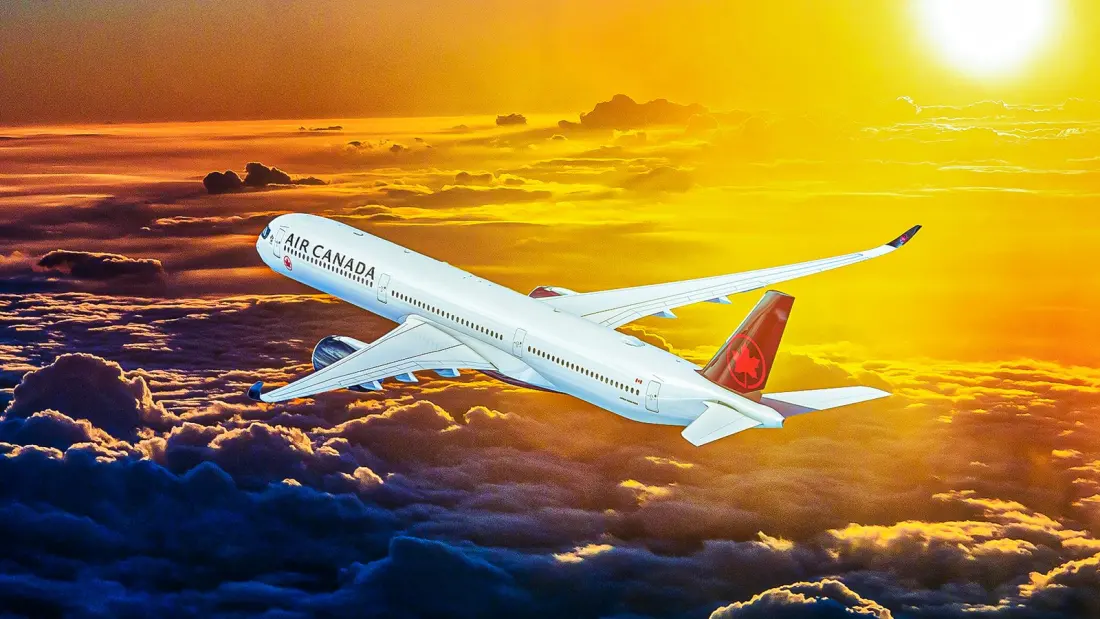
Air Canada has ordered eight Airbus A350-1000s, with deliveries starting in 2030, ending a decades-long dependence on the Boeing 777-300ER for its longest routes. On paper it's a fleet story, but for travellers it explains why some Canada–Asia flights have felt longer, pricier and less reliable since 2022 — and why the 2030s should get better.
The core issue is geography plus geopolitics. The shortest routes between North America and Asia arc over the Arctic and down through Siberia. When Russia closed its airspace to NATO-aligned carriers after invading Ukraine in February 2022, Air Canada lost those corridors. Flights to East Asia now detour over Alaska, threading a narrow airway roughly 30 miles outside Russian territory over the Bering Sea, adding about 10% to the distance — roughly two extra hours each way. One route was hit so hard that Vancouver–Delhi briefly ran with a fuel stop in London, turning a 14-hour flight into two nine-ish hour legs. Toronto–Mumbai, which once connected through Frankfurt or Heathrow, has been dropped entirely.
Those detours have a domino effect. Extra fuel pushes aircraft up against maximum takeoff weight, so airlines respond by blocking out seats and refusing cargo. Loaded-down 777s can't climb straight to their fuel-efficient cruise altitude and crawl along lower, burning more fuel and wearing engines faster. Crew duty limits kick in, hotel bills for relief crews mount, and maintenance checks arrive early. On margins already thin, that's painful — especially when competitors overflying Russia can still fly direct and undercut on price.
Enter the A350-1000. Its range of about 9,000 nautical miles — far beyond the 777-300ER's practical reach on these heavy detour routes — plus a lightweight composite airframe (more than half carbon fibre) means it can carry detour fuel without dumping passengers or cargo. Rolls-Royce Trent XWB-97 engines and an efficient wing burn roughly 25% less fuel per seat than the 777. For travellers, the cabin perks matter too: a composite fuselage lets Airbus set a lower cabin altitude (6,000 feet) and higher humidity, which genuinely reduces the headaches and dehydration of an 18-hour flight.
Why not Boeing's 777X instead? Timing and delays. Air Canada's 19-strong 777 fleet now averages over 16 years old, and the 777-9's certification has slipped to 2027 or later. The A350 arrives on a proven timeline — and complements the A321XLRs the airline is already taking delivery of.
If you fly Canada to India, Hong Kong or Japan, this story is about you. Expect current routes to stay longer and pricier until newer aircraft and, possibly, airspace realities change. From 2030, the A350s should restore lost capacity on Delhi and Hong Kong services and could revive Toronto–Mumbai as a nonstop. Frequent flyers may also notice a cabin experience edge on the Airbus jets. Until then, if a Toronto–Mumbai itinerary is still offered with a stop, that's the lasting echo of a closed Siberian corridor.