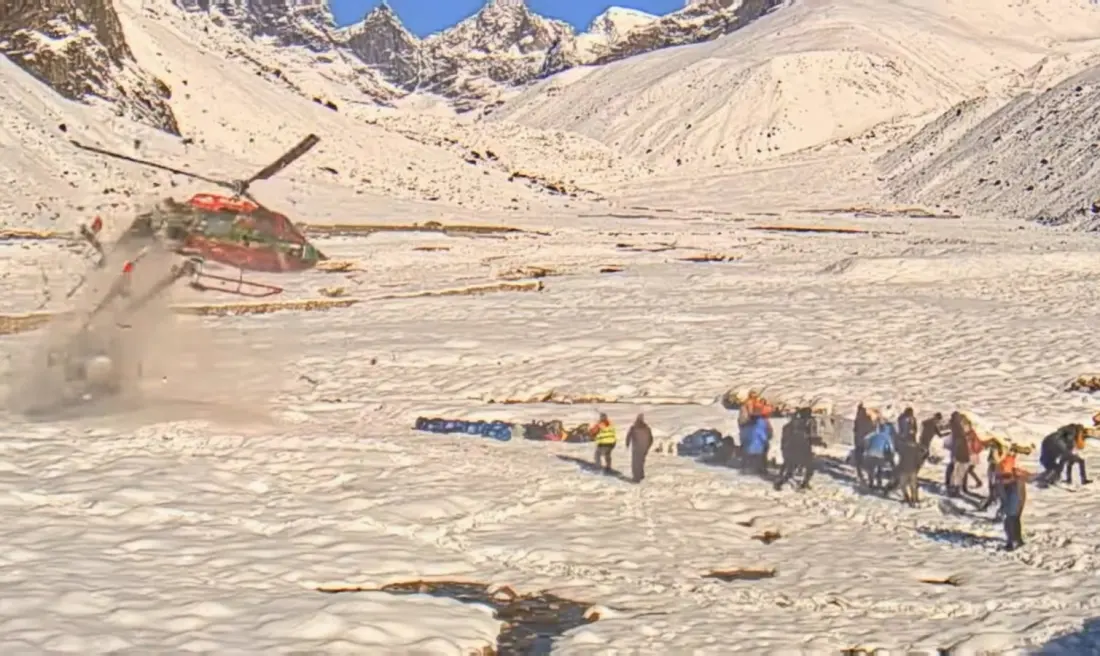
A mid-air collision between two helicopters at Pheriche, in Nepal's Khumbu region, has killed one person and injured several others, prompting an investigation into flight safety on one of the world's busiest high-altitude flight corridors.
The two aircraft — an Air Dynasty and a Fishtail Air, both operating the widely used Airbus H125 — were converging on the same snow-covered helipad on Tuesday when a rotor from one machine struck the fuselage of the other. Preliminary analysis of video footage of the crash suggests both pilots were being talked in by the same marshal on the ground, apparently without either party realising a second helicopter was heading for the pad. Those hurt were flown out to Kathmandu for treatment.
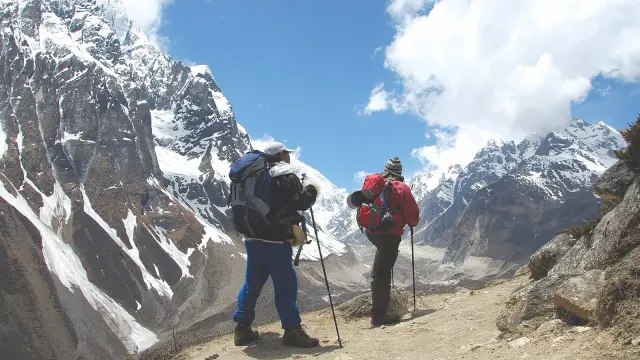
Pheriche sits on the Everest trekking and expedition route, at roughly 4,300 metres, and is a routine stop for helicopter charters ferrying trekkers, climbers, supplies and medical evacuations. The Khumbu corridor sees heavy helicopter traffic, especially in spring and autumn when Everest expeditions are underway and trekking numbers peak — yet the area has no air traffic control support. Ground marshals with radios are effectively the safety net, and Tuesday's collision shows how thin that margin can be when visibility is poor and pads are snowed in.
For travellers, the episode is worth attention rather than alarm. Helicopters are woven into Himalayan travel: many Everest Base Camp trekkers fly out of the region by chopper to skip days of walking, acclimatisation shuttles are common, and in an emergency they are the only way down. Operators like Air Dynasty and Fishtail Air run much of this traffic. The investigation now underway may lead to stricter protocols for landings at busy or shared helipads, and potentially better coordination in a corridor that has grown busier faster than its infrastructure.
If you're planning a trip that involves Himalayan helicopter hops, a few sensible habits apply. Ask your operator about their safety record and how landings are coordinated at your destination. Check whether your travel insurance explicitly covers helicopter transport and high-altitude medevac — many policies don't without an add-on. And build flexibility into mountain itineraries: snowbound pads and weather delays are normal, and in a crowded airspace, a patient wait on the ground is the safer outcome. Nobody should cancel an Everest region trip over this, but the crash is a fair reminder that flying at 4,000-plus metres in Nepal operates on very different rules from a domestic flight home.