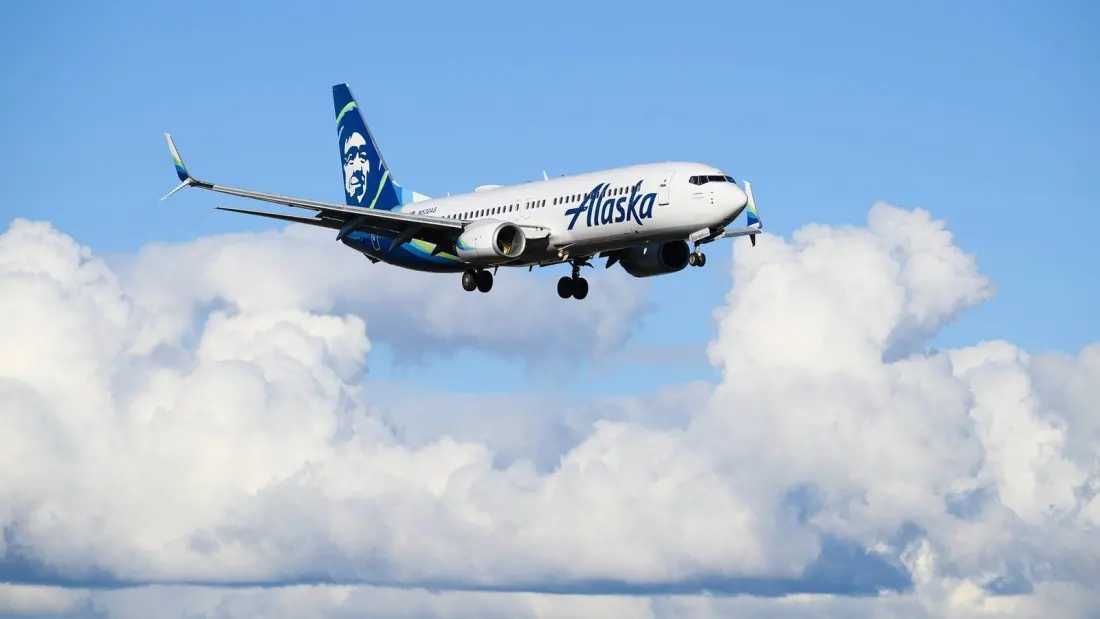
If you've flown Alaska Airlines out of Los Angeles recently, you may have noticed the route map shrinking. Over roughly two years, the carrier has scrapped seven nonstop routes from LAX — three domestic and four international — as it reshapes its network around more profitable flying.
The domestic cuts came in stages. Nonstop service to Fort Lauderdale ended in January 2025 and is unlikely to return. Washington Dulles lost its link in August 2025 after the airline reported softer demand, though flights to Reagan National (DCA) in the US capital remain. Reno was the last to go, cut in January 2026, leaving Reno connected to Alaska's network only via Seattle, Portland and San Diego.
Mexico took a hit too. Monterrey was dropped in October 2025 and Cancun followed in May 2026, both citing weak demand. That leaves Alaska serving eight Mexican destinations from Los Angeles — including Puerto Vallarta, Mazatlán, La Paz, Loreto and San José del Cabo — and holding about 3.6% of the US–Mexico market, roughly 2.13 million passengers a year.
The other two cuts sting more for holidaymakers. Nassau in the Bahamas was axed in August 2025 due to poor performance, and with the Seattle–Nassau route already gone, Alaska no longer serves the Bahamas at all. West Coast travellers heading there now have to connect through Denver or Dallas–Fort Worth with other carriers. Kelowna, the wine-country corner of British Columbia, lost its seasonal LAX nonstop in March 2026 — another route with no competing airline — though Alaska still flies there year-round from Seattle with a one-stop option from LA.
For context, Los Angeles remains Alaska's fifth-busiest airport by weekly departures, with about 533 flights a week. That sounds healthy until you compare it with Seattle–Tacoma, the airline's biggest hub, which runs roughly four times as many.
Why does this matter if you're planning a trip? Mainly as a heads-up: if you've relied on these nonstops — especially the popular Cancun, Nassau or Kelowna seasonal flights — you'll now be looking at connections or a different airline. On routes where Alaska was the only operator, like Nassau from the West Coast and Kelowna from LA, there's no like-for-like replacement. The broader takeaway is that Alaska is concentrating its aircraft on higher-yield flying, so expect further pruning of thinner routes from secondary airports rather than new ones appearing.
If one of your usual routes has vanished, it's worth booking the alternative early. Cutting nonstops tends to push demand onto fewer flights, and fares on the remaining options rarely get cheaper closer to departure.
Simple Flying